LIBER XXIII · CAPUT 6
REMEDIES DERIVED PROM THE BLOSSOMS, LEAVES, FRUIT, BRANCHES, BARK, JUICES, WOOD, ROOTS, AND ASHES OF VARIOUS KINDS OF TREES. SIX OBSERVATIONS UPON APPLES. TWENTY-TWO OBSERVATIONS UPON QUINCES. ONE OBSERVATION UPON STRUTHEA
Latine · Mayhoff 1906
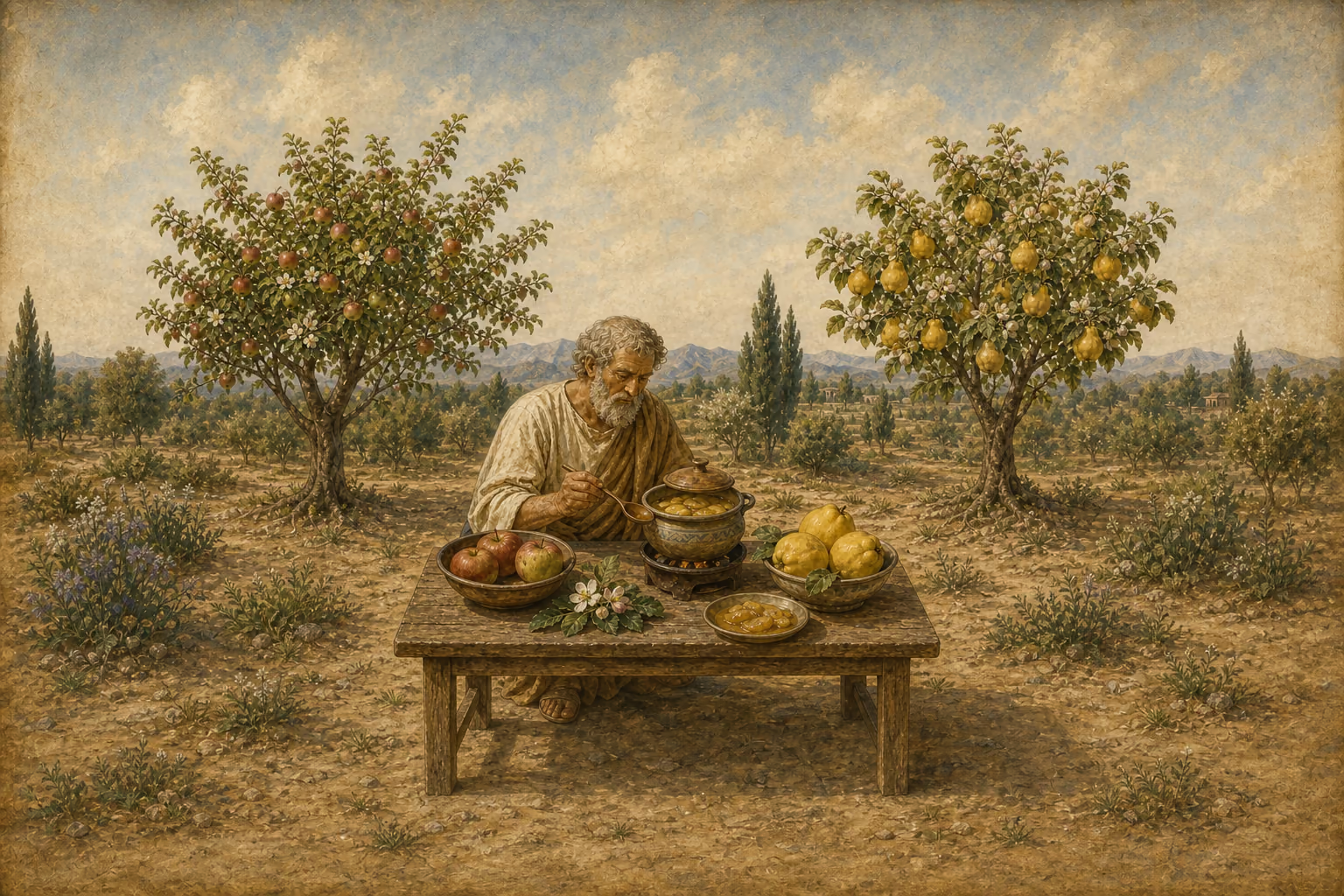
Proxime varietates generum medicinarumque mala habent. ex his verna acerba et stomacho inutilia sunt, alvum, vesicam circumagunt, nervos laedunt. cocta meliora.—Cotonea cocta suaviora, cruda tamen, dumtaxat matura, prosunt sanguinem excreantibus et dysintericis, cholericis, coeliacis. non idem possunt decocta, quoniam amittunt constringentem illam vim suci, * et tamen decocuntur in aqua caelesti ad eadem, quae supra scripta sunt. *inponuntur et pectori in febris ardoribus *, ad stomachi autem dolores cruda decoctave cerati modo inponuntur. lanugo eorum carbunculos sanat. cocta in vino et inlita cum cera alopeciis capillum reddunt. quae ex iis cruda in melle conduntur, alvum movent; mellis autem suavitati multum adiciunt stomachoque utilius id faciunt. quae vero in melle cocta conduntur, quidam ad stomachi vitia trita cum rosae foliis decoctis dant pro cibo. sucus crudorum lienibus, orthopnoicis, hydropicis prodest, item mammis, condylomatis, varicibus; flos et viridis et siccus inflammationibus oculorum, excreationibus sanguinis, mensibus mulierum. fit et sucus ex illis mitis cum vino dulci tusis, utilis coeliacis et iocineri. decocto quoque eorum foventur, si procidant, vulvae et interanea. fit et oleum exiis, quod melinum vocavimus, quotiens.... non fuerint in umidis nata. ideo utilissima quae ex Sicilia veniunt, minus utilia struthia, quamvis cognata. radix eorum circumscripta terra manu sinistra capitur ita, ut qui id faciet dicat, quare capiat et cuius causa. sic adalligata strumis medetur.
Melimela et reliqua dulcia stomachum et ventrem solvunt, siticulosa, aestuosa, sed nervos non laedunt.— Orbiculata sistunt alvum et vomitiones, urinas cient.— Silvestria mala similia sunt vernis acerbis alvumque sistunti sane in hunc usum inmatura opus sunt.
Citrea contra venenum in vino bibuntur vel ipsa vel semen. faciunt oris suavitatem decocto eorum colluti aut suco expresso. horum semen edendum praecipiunt in malacia praegnatibus, ipsa vero contra infirmitatem stomachi, sed non nisi ex aceto facile manduntur.
Punici mali novem genera nunc iterari supervacuum. ex iis dulcia, quae apyrena alio nomine appellavimus, stomacho inutilia habentur; inflationes pariunt, dentes gingivasque laedunt. quae vero ab his sapore proxima vinosa diximus, parvum nucleum habentia, utiliora paulo intelleguntur; alvum sistunt et stomachum, dumtaxat pauca, ultraque satietatem et haec minime danda, quamquam omnino nulla in febri, nec carne acinorunm utili nec suco. caventur aeque vomitionibus ac bilem reicientibus. uvam in his ac ne mustum quidem, sed protinus vinum aperuit natura. utrumque asperiore cortice; hic acerbis in magno usu. vulgus coria maxume perfici illo novit; ob id malicorium appellant medici. urinam cieri eodem monstrant mixtaque galla in aceto decoctum mobiles dentes stabilire. expetitur gravidarum malaciae, quoniam gustatu moveat infantem. dividitur malum caelestique aqua madescit ternis fere diebus; haec bibitur frigida coeliacis et sanguinem excreantibus.
Ex acerbo fit medicamentum quod stomatice vocatur, utilissimum oris vitiis, narium, aurium, oculorum caligini, pterygiis, genitalibus et iis, quas nomas vocant et quae in ulceribus excrescunt, contra leporem marinum hoc modo: acinis detracto cortice tunsis sucoque decocto ad tertias cum croci et aluminis scissi, murrae, mellis Attici selibris. alii et hoc modo faciunt: punica acida. multa tunduntur, sucus in cacabo novo coquitur mellis crassitudine ad virilitatis et sedis vitia et omnia, quae lycio curantur, aures purulentas, epiphoras incipientes, rubras maculas in manibus. rami punicorum serpentes fugant. cortices punici ex vino cocti et inpositi perniones sanant. contusum malum ex III heminis vini decoctum ad heminam tormina et taenias pellit. punicum in olla nova, coperculo inlito, in furno exustuml et contritum potumque in vino sistit alvum, discutit tormina.
Primus pomi huius partus florere incipientis cytinus vocatur a Graecis, mirae observationis multorum experimento. si quis unum ex his, solutus vinculo omni cinctus et calciatus atque etiam anuli, decerpserit II digitis, pollice et quarto, sinistrae manus atque ita lustratis levi tactu oculis in os additum devoraverit, ne dente contingat, adfirmatur nullam oculorum inbecillitatem passurus eodem anno. iidem cytini siccati tritique carnes excrescentes. cohibent, gingivis et dentibus medentur, vel si mobiles sint, decocto suco. ipsa corpuscula trita ulceribus, quae serpunt putrescuntve, inlinuntur, item oculorum inflammationi intestinorumque et fere ad omnia quae cortices malorum. adversantur scorpionibus.
Non est satis mirari curam diligentiamque priscorum, qui omnia scrutati nihil intemptatum reliquerunt. in hoc ipso cytino flosculi sunt, antequam scilicet malum ipsum prodeat, erumpentes, quos balaustium vocari diximus. hos quoque ergo experti invenere scorpionibus adversari. sistunt potu menses feminarum, sanant ulcera oris, tonsillas, uvam, sanguinis excreationes, ventris et stomachi solutiones, genitalia, ulcera quacumque in parte manantia. siccavere etiam, ut sic quoque experirentur, inveneruntque tusorum farina dysintericos a morte revocari. alum sistunt. quin et nucleos ipsos acinorum experiri non piguit. tosti tusique stomachum iuvant cibo aut potionibus. per se bibuntur ex aqua caelesti ad sistendam alvum. radix decocta sucum remittit, qui taenias necat victoriati pondere. eadem discocta in aqua quas lycium praestat utilitates.
Est et silvestre punicum a similitudine appellatum. eius radices rubro cortice denari pondere ex vino potae somnos faciunt. semine poto aqua, quae subierit cutem, siccatur. mali punici corticis fumo culices fugantur.
English · Bostock & Riley 1855–57
We next come to the medicinal properties of the various kinds of apples. The spring fruits, of this nature are sour and unwholesome to the stomach, disturb the bowels, contract the bladder, and act injuriously upon the nerves; when cooked, however, they are of a more harmless nature. Quinces are more pleasant eating when cooked; still however, eaten raw, provided they are ripe, they are very useful for spitting of blood, dysentery, cholera, and cœliac affections; indeed, they are not of the same efficacy when cooked, as they then lose the astringent properties which belong to their juice. They are applied also to the breast in the burning attacks of fever, and, in spite of what has been stated above, they are occasionally boiled in rain-water for the various purposes before-mentioned. For pains in the stomach they are applied like a cerate, either raw or boiled. The down upon them heals carbuncles.
Boiled in wine, and applied with wax, they restore the hair, when it has been lost by alopecy. A conserve of raw quinces in honey relaxes the bowels: and they add very materially to the sweetness of the honey, and render it more wholesome to the stomach. Boiled quinces preserved in honey are beaten up with a decoction of rose-leaves, and are taken as food by some for the cure of affections of the stomach. The juice of raw quinces is very good, also, for the spleen, hardness of breathing, dropsy, affections of the mamillæ, condylomata, and varicose veins. The blossoms, either fresh or dried, are useful for inflammations of the eyes, spitting of blood, and irregularities of the catamenia. By beating them up with sweet wine, a soothing sirop is prepared, which is very beneficial for cœliac affections and diseases of the liver: with a decoction of them a fomentation is made for procidence of the uterus and intestines.
From quinces an oil is also extracted, which we have spoken of under the name of “melinum:” in order to make it, the fruit must not have been grown in a damp soil; hence it is that the quinces which come from Sicily are so highly esteemed for the purpose; while, on the other hand, the strutheum, though of a kindred kind, is not so good.
A circle is traced round the root of this tree, and the root itself is then pulled up with the left hand, care being taken by the person who does so to state at the same moment the object for which it is so pulled up, and for whom. Worn as an amulet, this root is a cure for scrofula.
The apples known as “melimela,” and the other sweet apples, relax the stomach and bowels, but are productive of heat and thirst, though they do not act injuriously upon the nervous system. The orbiculata arrest diarrhœa and vomiting, and act as a diuretic. Wild apples resemble the sour apples of spring, and act astringently upon the bowels: indeed, for this purpose they should always be used before they are ripe.
Citrons, either the pulp of them or the pips, are taken in wine as an antidote to poisons. A decoction of citrons, or the juice extracted from them, is used as a gargle to impart sweetness to the breath. The pips of this fruit are recommended for pregnant women to chew when affected with qualmishness. Citrons are good, also, for a weak stomach, but it is not easy to eat them except with vinegar.
It would be a mere loss of time to recapitulate the nine different varieties of the pomegranate. The sweet pomegranates, or, in other words, those known by the name of “apyrena,” are generally considered to be injurious to the stomach; they are productive, also, of flatulency, and are bad for the teeth and gums. The kind which closely resembles the last in flavour, and which we have spoken of as the “vinous” pomegranate, has very diminutive pips, and is thought to be somewhat more wholesome than the others. They have an astringent effect upon the stomach and bowels, provided they are taken in moderation, and not to satiety; but even these, or, indeed, any other kind, should never be given in fevers, as neither the substance nor the juice of the fruit acts otherwise than injuriously under those circumstances. They should, also, be equally abstained from in cases of vomiting and bilious evacuations.
In this fruit Nature has revealed to us a grape, and, so to say, not must, but a wine ready made, both grape and wine being enclosed in a tougher skin. The rind of the sour pomegranate is employed for many purposes. It is in very common use with curriers for tanning leather, from which circumstance it has received the name of “malicorium.” Medical men assure us that the rind is diuretic, and that, boiled with nut-galls in vinegar, it strengthens loose teeth in the sockets. It is prescribed also for pregnant women when suffering from qualmishness, the flavour of it quickening the fœtus. A pomegranate is cut, and left to soak in rain-water for some three days; after which the infusion is given cold to persons suffering from cœliac affections and spitting of blood.
With the sour pomegranate a medicament is made, which is known as “stomatice,” and is extremely good for affections of the mouth, nostrils, and ears, dimness of sight, films upon the eyes, diseases of the generative organs, corrosive sores called “nomæ,” and fleshy excrescences in ulcers; it is useful, also, as an antidote to the venom of the sea-hare. The following is the method of making it: the rind is taken off the fruit, and the pips are pounded, after which the juice is boiled down to one-third, and then mixed with saffron, split alum, myrrh, and Attic honey, the proportions being half a pound of each.
Some persons have another way of making it: a number of sour pomegranates are pounded, after which the juice is boiled down in a new cauldron to the consistency of honey. This composition is used for various affections of the generative organs and fundament, and, indeed, all those diseases which are treated with lycium. It is employed, also, for the cure of purulent discharges from the ears, incipient defluxions of the eyes, and red spots upon the hands. Branches of the pomegranate have the effect of repelling the attacks of serpents. Pomegranate rind, boiled in wine and applied, is a cure for chilblains. A pomegranate, boiled down to one-third in three heminæ of wine, is a cure for griping pains in the bowels and for tape-worm. A pomegranate, put in a new earthen pot tightly covered and burnt in a furnace, and then pounded and taken in wine, arrests looseness of the bowels, and dispels griping pains in the stomach.
The Greeks have given the name of cytinus to the first germs of this tree when it is just beginning to blossom. These germs have a singular property, which has been remarked by many. If a person, after taking off everything that is fastened upon the body, his girdle, for instance, shoes, and even his ring, plucks one of them with two fingers of the left hand, the thumb, namely, and the fourth finger, and, after rubbing it gently round his eyes, puts it into his mouth and swallows it without letting it touch his teeth, he will experience, it is said, no malady of the eyes throughout all the year. These germs, dried and pounded, check the growth of fleshy excrescences; they are good also for the gums and teeth; and if the teeth are loose a decoction of the germs will strengthen them.
The young pomegranates themselves are beaten up and applied as a liniment to spreading or putrid sores; they are used also for inflammations of the eyes and intestines, and nearly all the purposes for which pomegranate-rind is used. They are remedial also for the stings of scorpions.
We cannot sufficiently admire the care and diligence displayed by the ancients, who, in their enquiries into every subject, have left nothing untried. Within the cytinus, before the pomegranate itself makes its appearance, there are diminutive flowers, the name given to which, as already stated, is “balaustium.” These blossoms, even, have not escaped their enquiries; it having been ascertained by them that they are an excellent remedy for stings inflicted by the scorpion. Taken in drink, they arrest the catamenia, and are curative of ulcers of the mouth, tonsillary glands, and uvula, as also of spitting of blood, derangement of the stomach and bowels, diseases of the generative organs, and running sores in all parts of the body.
The ancients also dried these blossoms, to try their efficacy in that state, and made the discovery that, pulverized, they cure patients suffering from dysentery when at the very point of death even, and that they arrest looseness of the bowels. They have not disdained, too, to make trial of the pips of the pomegranate: parched and then pounded, these pips are good for the stomach, sprinkled in the food or drink. To arrest looseness of the bowels, they are taken in rain-water. A decoction of the juices of the root, in doses of one victoriatus, exterminates tape-worm; and the root itself, boiled down in water to a thick consistency, is employed for the same purposes as lycium.
There is a tree, also, which is called the wild pomegranate, on account of its strong resemblance to the cultivated pomegranate. The roots of it have a red bark, which taken in wine in doses of one denarius, promotes sleep. The seed of it taken in drink is curative of dropsy. Gnats are kept at a distance by the smoke of burnt pomegranate rind.