LIBER XXIII · CAPUT 7
PEARS: TWELVE OBSERVATIONS UPON THEM
Latine · Mayhoff 1906
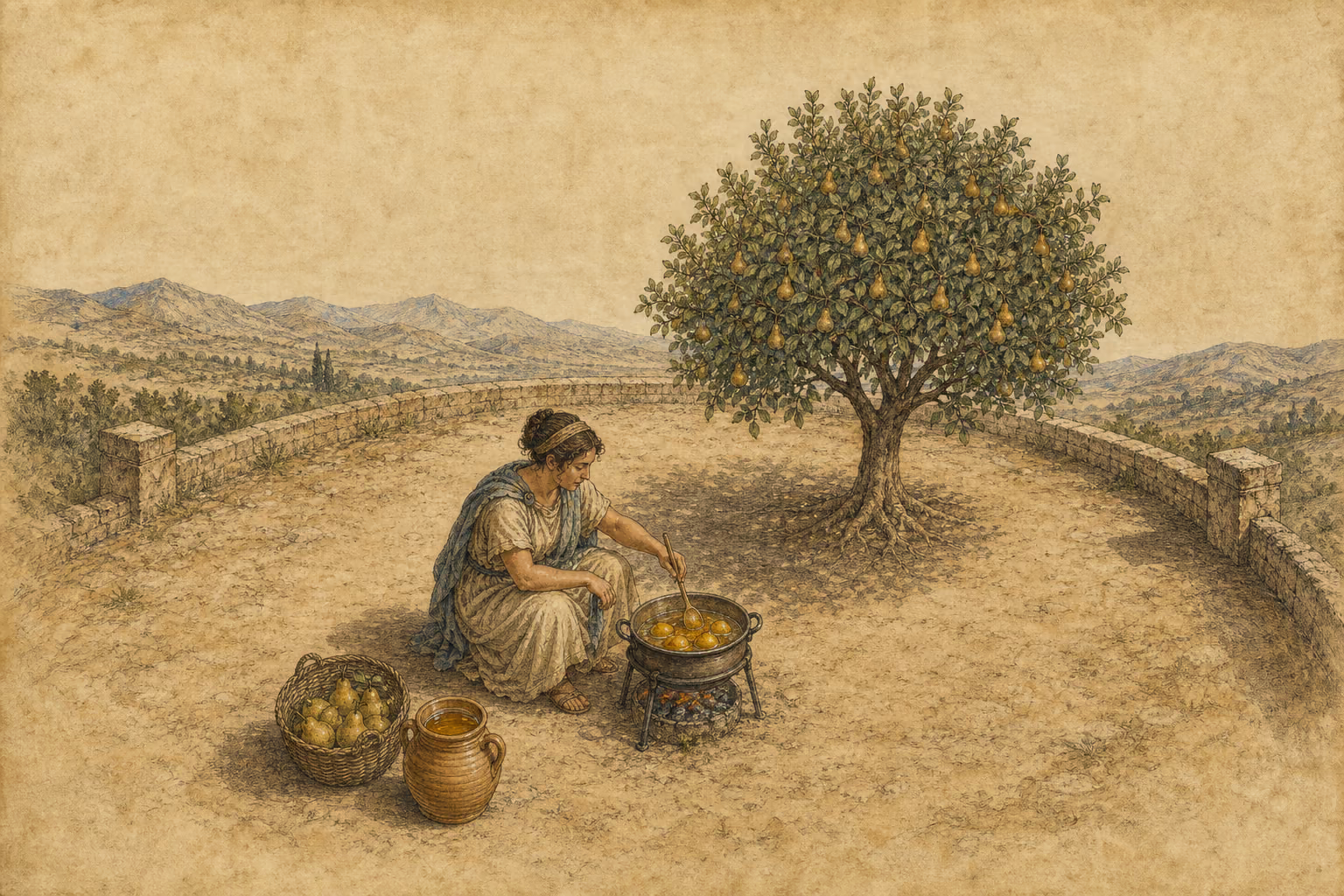
Pirorum omnium cibus, etiam valentibus onerosus, aegris vini quoque modo negatur. decocta eadem mire salubria et grata, praecipue Crustumina; quaecumque vero cum melle decocta stomachum adiuvant. fiunt cataplasmata e piris ad discutienda corporum vitia, et decocto eorum ad duritias utuntur. ipsa adversantur boletis atque fungis pelluntque pondere et pugnante suco.— Pirum silvestre tardissime maturescit. conciditur suspensumque siccatur ad sistendam alvum, quod et decoctum eius potu praestat. decocuntur et folia cum pomo ad eosdem usus. pirorum ligni cinis contra fungos etiamnum efficacius proficit.—Mala piraque iumentis portatu mire gravia sunt vel pauca. remedio aiunt esse, si prius edenda dentur aliqua aut utique ostendantur.
Fici sucus lacteus aceti naturam habet, itaque coaguli modo lac contrahit. excipitur ante maturitatem pomi et in umbra siccatur ad aperienda ulcera, cienda menstrua adpositu cum luteo ovi aut potu cum amylo. podagris inlinitur cum farina Graeci feni et aceto. piles quoque detrahit palpebrarumque scabiem emendat, item licbenas et psoras. alvum solvit. lactis ficulni natura adversatur crabronum vesparumque et similium venenis, privatim scorpionum. idem cum axungia verrucas tollit. folia et quae non maturuere fici strumis inlinuntur omnibusque, quae emollienda sint discutiendave; praestant hoc et per se folia. et alius usus eorum in fricando lichene et alopeciis et quaecumque exulcerari opus sit. et adversus canis morsus ramorum teneri cauliculi cuti inponuntur. iidem cum melle ulceribus, quae ceria vocantur, inlinuntur. extrahunt infracta ossa cum papaveris silvestris foliis; canum rabiosorum morsus folio trito ex aceto restingunt. e nigra fico candidi cauliculi inlinuntur furunculis, muris aranei morsibus cum cera. cinis earum e foliis gangraenis consumendisque quae excrescant. fici maturae urinam cient, alvum solvunt, sudorem mtovent papulasque, ob id autumno insalubres, quoniam sudantia huius cibi opera corpora perfrigescunt. nec stomacho utiles, set ad breve tempus, et voci contrariae intelleguntur. novissimae salubriores quam primae, medicatae vero numquam. iuvenum vires augent, senibus meliorem valitudinem faciunt minusque rugarum. sitim sedant, calorem refrigerant, ob id non negandae in febribus constrictis, quas stegnas vocant. siccae fici stomachum laedunt, gutturi et faucibus magnifice utiles. natura his excalfaciendi. sitim adferint, alvum molliunt, rheumatismis eius et stomacho contrariae, vesicae semper utiles et anhelatoribus ac suspiriosis, item iocinerum, renium, lienum vitiis. corpus et vires adiuvant; ob id antea athletae hoc cibo pascebantur—Pythagoras exercitator primus ad carnes eos transtulit—; recolligentes se a longa valitudine utilissime. item comitialibus et hydropicis omnibusque, quae maturanda aut discutienda sint, inponuntur, efficacius calce aut nitro aut iri admixta. coctae cum hysopo pectus purgant, pituitam, tussim veterem, cum vino autem sedem et tumores maxillarum. ad furunculos, panos, parotidas decoctae inlinuntur. utile et decocto fovere earum, femiinasque decocto eodem cum faeno Graeco. utiles sunt et pleuriticis ac peripneumonicis, cum ruta coctae torminibus. prosunt tibiarum ulceribus cum aeris flore, et parotidi, pterygiis cum punico malo, ambustis, pernionibus cum cera, hydropicis coctae in vino et cum absinthio et farina hordeacia. nitro addito manducatae alvum solvunt. scorpionum ictibus cum sale tritae inlinuntur. carbunculos extrahunt in vino coctae et inpositae. carcinomati, si sine ulcere sit, quam pinguissimam ficum inponi paene singulare remedium est, item phagedaenae. cinis non ex alia arbore acrior. purgat, conglutinat, replet, adstringit. bibitur et ad discutiendum sanguinem concretum, item percussis, praecipitatis, ruptis, convulsis cineris cyathus in singulis aquae et olei. datur tetanicis et spasticis, item potus vel infusus coeliacis et dysintericis. et si quis eo cum oleo perunguatur, excalfacit. idem cum cera et rosaceo subactus ambustis cicatricem tenuissimam obducit. lusciosos ex oleo inlitus emendat dentiumque vitia crebro fricatu. produnt etiam, si quis inclinata arbore supino ore aliquem nodum eius morsu abstulerit nullo vidente atque cum aluta inligatum licio e collo suspenderit, strumas et parotidas discuti. cortex tritus cum oleo ventris ulcera sanat. crudae grossi verrucas, thymos nitro, farina additis tollunt. spodi vicem exhibet fruticum a radice exeuntium cinis. bis lotus adiecto psimithio digeritur in pastillos ad ulcera oculorum et scabritiam.
Caprificus etiamnum multo efficacior fico; * surculo quoque eius lacte coagulatur in caseo. *lactis minus habet *; exceptum id coactumque in duritiam suavitaten carnibus adfert fricatu. dilutum aceto miscetur exulceratoriis medicamentis. alvum solvit, vulvam cum amylo aperit, menses ciet cum luteo ovi. podagricis cum farina Graeci feni inlinitur. lepras, psoras, lichenas, lentigines expurgat, item venenatorum ictus et canis morsus. dentium quoque dolori hic sucus adpositus in lana prodest aut in cava eorum additus. cauliculi et folia admixto ervo contra marinorum venena prosunt; adicitur et vinum. bubulas carnes additi caules magno ligni conpendio percoquunt. grossi inlitae strumas et omnem collectionem emolliunt et discutiunt; aliquatenus et folia. quae mollissima sunt ex iis, cum aceto ulcera manantia et epinyctidas, furfures sanant. cum melle foliis ceria sanant et canis morsus recentes, cum vino phagedaenas; cum papaveris foliis ossa extrahunt. grossi caprifici inflammationes discutiunt suffitu—resistunt et sanguini taurino poto et psimithio et lacti coagulato potae—, item in aqua decoctae atque inlitae parotidas. cauliculi aut grossi eius quam minutissimae ad scorpionum ictus e vino bibuntur. lac quoque instillatur plagae et folia inponuntur, item adversus murem araneum. cauliculorum cinis uvam faucium sedat, arboris ipsius cinis ex melle rhagadia, radix defervefacta in vino dentium dolores. hiberna caprificus in aceto cocta et trita inpetigines tollit. inlinuntur ramenta e ramo sine cortice quam minutissima ad scobis modum. caprifico quoque medicinae unius miraculum additur: corticem eius intumescentem puer impubis si defracto ramo detrahat dentibus, medullam ipsam adalligatam ante solis ortum prohibere strumas. caprificus tauros quamlibet feroces collo eorum circumdata in tantum mirabili. natura conpescit, ut inmobiles praestet.
Herbam quoque Graeci erinon vocant, reddendam in hoc loco propter gentilitatem. palmum alta est, cauliculis quinis fere, ocimi similitudine; flos candidus, semen nigrum, parvum. tritum cum Attico melle oculorum epiphoris medetur. suciinstillatio —decerpta enim manat lacte multo dulci herba—perquam utilis aurium dolori nitri exiguo addito. folia resistunt venenis.
Pruni folia decocta tonsillis, gingivis, uvae prosunt, in vino decocta et vehementius, subinde conlutoore. ipsa pruna alvum molliunt, stomacho non utilissima, sed brevi momento.
Utiliora persica sucusque eorum, etiam in vino aut in aceto expressus. neque alius eis pomis innocentior cibus; nusquam minus odoris, suci plus, qui tamen sitim stimulet..... folia eius trita inlita haemorrhagian sistunt. nuclei persicorum cum oleo et aceto capitis doloribus inlinuntur.
Silvestrium quidem prunorum bacae, vel e radice cortex, in vino austero si decoquantur ita, ut tries ex hemina supersit, alvum sistunt et tormina. satis est singulos cyathos decocti sumi.— Et in his et sativis prunis est limus arborum, quem Graeci lichena appellant rhagadiis et condylomatis mire utilis.
Mora, in Aegypto et Cypro sui generis, ut diximus, largo suco abundant summo cortice desquamato; altior plaga sicca est mirabili natura. sucus adversatur venenis serpentium, prodest dysintericis, discutit panos omnesque collectiones, vulnera conglutinat, capitis dolores sedat, item aurium. splenicis ibitur atque inlinitur et contra perfrictiones. celerrime teredinem sentit. neque apud nos suco minor usus: adversatur aconito et araneis in vino potus; alvum solvit, pituitas taeniasque et similia ventris animalia extrahit. hoc idem praestat et cortex tritus. folia tingunt capillum cum fici nigrae et vitis cortice ve simul coctis aqua caelesti. pomi ipsius sucus alvum solvit protinus. ipsa poma ad praesens stomacho utilia, refrigerant, sitim faciunt; si non superveniat alius cibus, intumescunt. ex inmaturis sucus sistit alvum, veluti animalis alicuius in hac arbore observandis miraculis quae in natura eius diximus.
Fit ex pomo panchrestos stomatice, eadem ar- teriace appellata, hoc modo: sextarii III suci e pomo leni vapore ad crassitudinem mellis rediguntur; post additur omphacii aridi pondus $X$ II aut murrae $X$ I, croci $X$ I; haec simul trita miscentur decocto. neque est aliud oris, arteriae, uvae, stomachi iucundius remedium. fit et alio modo: suci sextarii II, mellis Attici sextarius decoquuntur ut supra diximus.
Mira sunt praeterea quae produntur: prima germinatione, priusquam in folia exeant, sinistra decerpi futura poma. ricinos Graeci vocant. hi terram si non attigere, sanguinem sistunt adalligati, sive ex vulnere fluat sive ore ive naribus sive haemorrhoidis. ad hoc servantur repositi. idem praestare et ramus dicitur luna plena defractus incipiens fructum habere, si terram non adtigerit, privatim mulieribus adalligatus lacerto contra abundantiam mensum. hoc et quocumque tempore ab ipsis decerptum ita, ut terram non adtingat, adalligatumque existimant praestare. folia mori trita aut arida decocta serpentium ictibus inponuntur; aeque potu proficitur. scorpionibus adversatur e radice corticis sucus ex vino aut posca potus. reddenda est et antiquorum conpositio. sucum expressum pomi maturi inmaturique mixtum coquebant vase aereo ad mellis crassitudinem. aliqui murra adiecta et cupresso praeduratumin vaso sole torrebant, permiscentes spatha ter die. haec erat stomatice, qua et vulnera ad cicatricem perducebant. alia ratio suci: siccato exprimebant pomo, multum sapori opsoniorum conferentem, in medicina vero contra nomas et pectoris pituitas et ubicumque opus esset adstringi viscera. dentes quoque conluebant eo. tertium genus suci foliis et radice decoctis ad ambusta ex oleo inlinenda. inponuntur et folia per se. radix per messes incisa sucum dat aptissimum dentiun dolori collectionibusque et suppurationibus. alvum purgat. folia mori in urina madefacta pilum coriis detrahunt.
Cerasia alvum molliunt, stomacho inutilia; eadem siccata alvum sistunt, urinam cient. invenio apud auctores, si quis matutino roscida cum suis nucleis devoret, in tantum levari alvum, ut pedes morbo liberentur.
Mespila exceptis setaniis, quae malo propiorem vim habent, reliqua adstringunt stomachum sistuntque alvum. item sorba sicca, nam recentia stomacho et alvo citae prosunt.
English · Bostock & Riley 1855–57
All kinds of pears, as an aliment, are indigestible, to persons in robust health, even; but to invalids they are forbidden as rigidly as wine. Boiled, however, they are remarkably agreeable and wholesome, those of Crustumium in particular. All kinds of pears, too, boiled with honey, are wholesome to the stomach. Cataplasms of a resolvent nature are made with pears, and a decoction of them is used to disperse indurations. They are efficacious, also, in cases of poisoning by mushrooms and fungi, as much by reason of their heaviness, as by the neutralizing effects of their juice.
The wild pear ripens but very slowly. Cut in slices and hung in the air to dry, it arrests looseness of the bowels, an effect which is equally produced by a decoction of it taken in drink; in which case the leaves also are boiled up together with the fruit. The ashes of pear-tree wood are even more efficacious as an antidote to the poison of fungi.
A load of apples or pears, however small, is singularly fatiguing to beasts of burden; the best plan to counteract this, they say, is to give the animals some to eat, or at least to shew them the fruit before starting.
The milky juice of the fig-tree possesses kindred properties with vinegar; hence it is, that, like rennet, it curdles milk. This juice is collected before the fruit ripens, and dried in the shade; being used with yolk of egg as a liniment, or else in drink, with amylum, to bring ulcers to a head and break them, and for the purposes of an emmenagogue. With meal of fenugreek and vinegar, it is applied topically for gout; it acts also as a depilatory, heals eruptions of the eyelids, lichens and itch-scabs, and relaxes the bowels. The milk of the fig-tree is naturally curative of the stings of hornets, wasps, and similar insects, and is remarkably useful for wounds inflicted by scorpions. Mixed with axle-grease it removes warts. With the leaves and figs still green an application is made for scrofulous and other sores of a nature which requires emollients or resolvents. The leaves, too, used by themselves, are productive of a similar effect. In addition to this, they are employed for other purposes, as a friction for lichens, for example, for alopecy, and other diseases which require caustic applications. The young shoots of the branches are used as an application to the skin in cases of bites inflicted by dogs. With honey they are applied to the ulcers known as honeycomb ulcers; mixed with the leaves of wild poppies they extract splinters of bones; and the leaves beaten up in vinegar are a cure for bites inflicted by dogs. The young white shoots of the black fig are applied topically, with wax, to boils, and bites inflicted by the shrew-mouse: and the ashes of their leaves are used for the cure of gangrenes and the reduction of fleshy excrescences.
Ripe figs are diuretic and laxative; they promote the perspiration, and bring out pimples; hence it is that they are unwholesome in autumn, the perspirations which they excite being always attended with shivering. They are injurious also to the stomach, though for a short time only; and it is generally thought that they spoil the voice. The figs which are the last to ripen are more wholesome than the first, but those which are drugged for the purpose of ripening them are never wholesome. This fruit invigorates the young, and improves the health of the aged and retards the formation of wrinkles; it allays thirst, and is of a cooling nature, for which reason it should never be declined in those fevers of an astringent tendency which are known as “stegnæ.”
Dried figs are injurious to the stomach, but are beneficial in a marvellous degree to the throat and fauces. They are of a warming nature, are productive of thirst, and relax the bowels, but are unwholesome in stomachic complaints and fluxes of the bowels. In all cases they are beneficial for the bladder, hardness of breathing, and asthma, as also for diseases of the liver, kidneys, and spleen. They are nourishing and invigorating, for which reason, the athletes in former times used them as food: Pythagoras, the gymnast, being the first who introduced among them a flesh diet. Figs are extremely useful for patients recovering from a long illness, and for persons suffering from epilepsy or dropsy. They are applied topically also in all cases where sores require to be brought to a head, or dispersed; and they are still more efficacious when mixed with lime or nitre. Boiled with hyssop they act as a purgative on the pectoral organs, carry off the phlegm, and cure inveterate coughs: boiled with wine they heal maladies of the fundament, and tumours of the jaws. A decoction of them is applied also to boils, inflamed tumours, and imposthumes of the parotid glands. This decoction, too, is found very useful as a fomentation for disorders incident to females.
Boiled with fenugreek, figs are very useful in cases of pleurisy and peripneumony. A decoction of them with rue is good for griping pains in the bowels; in combination with verdigris, they are used for ulcers of the legs and imposthumes of the parotid glands; with pomegranates, for hang-nails; and with wax, for burns and chilblains. Boiled in wine, with wormwood and barley-meal, they are employed for dropsy. Eaten with nitre, they relax the bowels; and beaten up with salt they are applied to stings inflicted by scorpions. Boiled in wine, and applied topically, they bring carbuncles to a head. In cases of carcinoma, unattended with ulceration, it is a singularly good plan to apply to the part the pulpiest fig that can be procured; the same, too, with phagedænic sores.
As to the ashes of the fig, those of no tree known are of a more acrid character, being of a detergent and astringent nature, and tending to make new flesh and to promote the cicatrization of wounds. They are also taken in drink, for the purpose of dissolving coagulated blood, as also for bruises, falls with violence, ruptures, convulsions * * * * in one cyathus respectively of water and oil. They are administered also for tetanus and spasms, and are used either in a potion, or as an injection for cœliac affections and dysentery. Employed as a liniment with oil, they have a warming effect; and kneaded into a paste with wax and rose-oil, they heal burns, leaving the slightest scar only. Applied in oil, as a liniment, they are a cure for weakness of sight, and are used as a dentifrice in diseases of the teeth.
It is said, too, that if a patient draws downward a branch of a fig-tree, and turns up his head and bites off some knot or other of it, without being seen by any one, and then wears it in a leather bag suspended by a string from his neck, it is a certain cure for scrofulous sores and imposthumes of the parotid glands. The bark of this tree, beaten up with oil, cures ulcerations of the abdomen. Green figs, applied raw, with the addition of nitre and meal, remove warts and wens.
The ashes of the suckers which spring from the roots are used as a substitute for spodium. Burnt over a second time and incorporated with white lead, they are divided into cakes which are used for the cure of ulcerations of the eyes and eruptions.
The wild fig, again, is even more efficacious in its properties than the cultivated one. It has not so large a proportion of milky juice as the other: a slip of it put into milk has the effect of curdling it and turning it into cheese. This juice, collected and indurated by being subjected to pressure, imparts a fine flavor to meat, being steeped in vinegar for the purpose, and then rubbed upon it. It is used also as an ingredient in blisters, and taken internally it relaxes the bowels. Used with amylum, it opens the passages of the uterus, and combined with the yolk of an egg it acts as an emmenagogue. Mixed with meal of fenugreek it is applied topically for gout, and is used for the dispersion of leprous sores, itch-scabs, lichens, and freckles: it is an antidote also to the stings of venomous animals, and to the bites of dogs. Applied to the teeth in wool, or introduced into the cavity of a carious tooth, this juice cures tooth-ache. The young shoots and the leaves, mixed with meal of fitches, act as an antidote to the poison of marine animals, wine being added to the preparation. In boiling beef a great saving of fire-wood may be effected, by putting some of these shoots in the pot.
The figs in a green state, applied topically, soften and disperse scrofulous sores and all kinds of gatherings, and the leaves, to a certain extent, have a similar effect. The softer leaves are applied with vinegar for the cure of running ulcers, epinyctis, and scaly eruptions. With the leaves, mixed with honey, honeycomb ulcers are treated, and wounds inflicted by dogs; the leaves are applied, too, fresh, with wine, to phagedænic sores. In combination with poppy-leaves, they extract splintered bones. Wild figs, in a green state, employed as a fumigation, dispel flatulency; and an infusion of them, used as a potion, combats the deleterious effects of bullocks’ blood, white-lead, and coagulated milk, taken internally. Boiled in water, and employed as a cataplasm, they cure imposthumes of the parotid glands. The shoots, or the green figs, gathered as young as possible, are taken in wine for stings inflicted by scorpions. The milky juice is also poured into the wound, and the leaves are applied to it: the bite of the shrew-mouse is treated in a similar manner. The ashes of the young branches are curative of relaxations of the uvula; and the ashes of the tree itself, mixed with honey, have the effect of healing chaps. A decoction of the root, boiled in wine, is good for tooth-ache. The winter wild fig, boiled in vinegar and pounded, is a cure for impetigo: the branches are first barked for the purpose and then scraped; these scrapings, which are as fine as sawdust, being applied topically to the parts affected.
There is also one medicinal property of a marvellous nature attributed to the wild fig: if a youth who has not arrived at puberty breaks off a branch, and then with his teeth tears off the bark swelling with the sap, the pith of this branch, we are assured, attached as an amulet to the person before sunrise, will prevent the formation of scrofulous sores. A branch of this tree, attached to the neck of a bull, however furious, exercises such a marvellous effect upon him as to restrain his ferocity, and render him quite immoveable.
It will be as well to speak here, in consequence of the similarity of name, of the herb which is known to the Greeks as the “erineon.” This plant is a palm in height, and has mostly five small stems: in appearance it resembles ocimum, and bears a white flower, with a small, black, seed. Beaten up with Attic honey, it is a cure for defluxions of the eyes. In whatever way it is gathered, it yields a considerable abundance of sweet, milky, juice. With the addition of a little nitre, this plant is extremely useful for pains in the ears. The leaves of it have the property of neutralizing poisons.
The leaves of the plum, boiled in wine, are useful for the tonsillary glands, the gums, and the uvula, the mouth being rinsed with the decoction every now and then. As for the fruit itself, it is relaxing to the bowels; but it is not very wholesome to the stomach, though its bad effects are little more than momentary.
Peaches, again, are more wholesome than plums; and the same is the case with the juice of the fruit, extracted, and taken in either wine or vinegar. Indeed, what known fruit is there that is more wholesome as an aliment than this? There is none, in fact, that has a less powerful smell, or a greater abundance of juice, though it has a tendency to create thirst. The leaves of it, beaten up and applied topically, arrest hæmorrhage: the kernels, mixed with oil and vinegar, are used as a liniment for head-ache.
The fruit of the wild plum, or the bark of the root, boiled down to one-third in one hemina of astringent wine, arrests looseness of the bowels and griping pains in the stomach: the proper dose of the decoction is one cyathus.
Upon the bark of the wild and cultivated plums we find an excrescence growing, known to the Greeks by the name of “lichen:” it is remarkably good for chaps and condylomatous swellings.
In Egypt and in the Isle of Cyprus there are, as already stated, mulberry-trees of a peculiar kind, being of a nature that is truly marvellous; for, if the outer bark is peeled off, they emit a great abundance of juice; but if a deeper incision is made, they are found to be quite dry. This juice is an antidote to the venom of serpents, is good for dysentery, disperses inflamed tumours and all kinds of gatherings, heals wounds, and allays both head-ache and ear-ache: it is taken in drink for affections of the spleen, and is used as a liniment for the same purpose, as also for fits of shivering. This juice, however, very soon breeds worms.
Among ourselves, too, the juice which exudes from the mulberry-tree is employed for an equal number of purposes: taken in wine, it neutralizes the noxious effects of aconite and the venom of spiders, relaxes the bowels, and expels tapeworm and other animals which breed in the intestines; the bark of the tree, pounded, has also a similar effect. The leaves, boiled in rain-water with the bark of the black fig and the vine, are used for dyeing the hair.
The juice of the fruit has a laxative effect immediately upon the bowels, though the fruit itself, for the moment, acts beneficially upon the stomach, being of a refreshing nature, but productive of thirst. If no other food is taken upon them, mulberries are of a swelling tendency. The juice of unripe mulberries acts astringently upon the bowels. The marvels which are presented by this tree, and of which we have made some mention when describing it, would almost appear to belong to a creature gifted with animation.
From the fruit of the mulberry a medicament is prepared, called “panchrestos,” “stomatice,” or “arteriace:” the following is the method employed. Three sextarii of the juice are reduced, at a slow heat, to the consistency of honey; two denarii of dried omphacium or one of myrrh, with one denarius of saffron, are then added, the whole being beaten up together and mixed with the decoction. There is no medicament known that is more soothing than this, for affections of the mouth, the trachea, the uvula, and the stomach. There is also another mode of preparing it: two sextarii of mulberry juice and one of Attic honey are boiled down in the manner above stated.
There are some other marvellous properties, also, which are mentioned in reference to this tree. When the tree is in bud, and before the appearance of the leaves, the germs of the fruit must be gathered with the left hand—the Greeks give them the name of “ricini.” These germs, worn as an amulet before they have touched the ground, have the effect of arresting hæmorrhage, whether proceeding from a wound, from the mouth, from the nostrils, or from piles; for which purposes they are, accordingly, put away and kept. Similar virtues are attributed to a branch just beginning to bear, broken off at full moon, provided also it has not touched the ground: this branch, it is said, attached to the arm, is peculiarly efficacious for the suppression of the catamenia when in excess. The same effect is produced, it is said, when the woman herself pulls it off, whatever time it may happen to be, care being taken not to let it touch the ground, and to wear it attached to the body. The leaves of the mulberry-tree beaten up fresh, or a decoction of them dried, are applied topically for stings inflicted by serpents: an infusion of them, taken in drink, is equally efficacious for that purpose. The juice extracted from the bark of the root, taken in wine or oxycrate, counteracts the venom of the scorpion.
We must also give some account of the method of preparing this medicament employed by the ancients: extracting the juice from the fruit, both ripe and unripe, they mixed it together, and then boiled it down in a copper vessel to the consistency of honey. Some persons were in the habit of adding myrrh and cypress, and then left it to harden in the sun, mixing it with a spatula three times a-day. Such was their receipt for the stomatice, which was also employed by them to promote the cicatrization of wounds. There was another method, also, of dealing with the juice of this fruit: extracting the juice, they used the dried fruit with various articles of food, as tending to heighten the flavour; and they were in the habit of employing it medicinally for corroding ulcers, pituitous expectorations, and all cases in which astringents were required for the viscera. They used it also for the purpose of cleaning the teeth. A third mode of employing the juices of this tree is to boil down the leaves and root, the decoction being used, with oil, as a liniment for the cure of burns. The leaves are also applied by themselves for the same purpose.
An incision made in the root at harvest-time, supplies a juice that is extremely useful for tooth-ache, gatherings, and suppurations; it acts, also, as a purgative upon the bowels. Mulberry-leaves, macerated in urine, remove the hair from hides.
Cherries are relaxing to the bowels and unwholesome to the stomach; in a dried state, however, they are astringent and diuretic. I find it stated by some authors, that if cherries are taken early in the morning covered with dew, the kernels being eaten with them, the bowels will be so strongly acted upon as to effect a cure for gout in the feet.
Medlars, the setania excepted, which has pretty nearly the same properties as the apple, act astringently upon the stomach and arrest looseness of the bowels. The same is the case, too, with dried sorbs; but when eaten fresh, they are beneficial to the stomach, and are good for fluxes of the bowels.