LIBER XXIII · CAPUT 8
PINE-NUTS: THIRTEEN REMEDIES
Latine · Mayhoff 1906
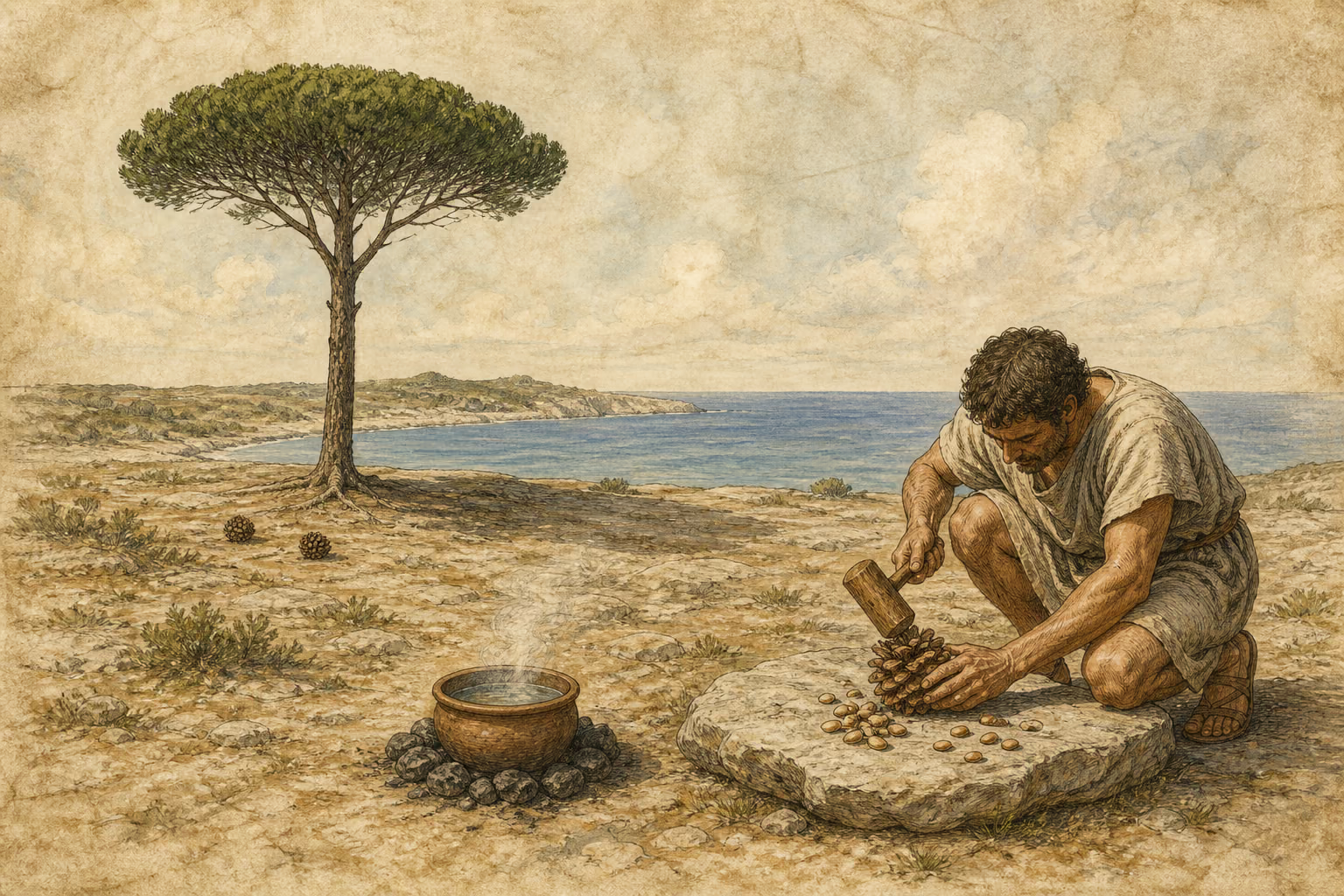
Nuces pineae, quae resinam habent, contusae leviter, additis in singulas sextariis aquae ad dimidium decoctae, sanguinis excreationi medentur ita, ut cyathi bini bibantur ex eo. corticis e pinu in vino decoctum contra tormina datur. nuclei nucis pineae sitim sedant et acrimoniam stomachi rosionesque et contrarios umores consistentes ibi. et infirmitatem virium roborant, renibus, vesicae utiles. fauces videntur exasperare et tussim. bilem pellunt poti ax aqua aut vino aut passo aut balanorum decocto. miscetur his contra vehementiores stomachi rosiones cucumeris semen et sucus porcilacae, item ad vesicae ulcera et renes, quoniam et urinam cient.
Amygdalae amarae radicum decoctum cutem in facie corrigit coloremque hilariorem facit. nuces ipsae somnum faciunt et aviditatem, urinam et menses cient. capitis dolori inlinuntur maximeque in febri; si ab ebrietate, in aceto et rosaceo et aquae sextario. sanguinem sistunt cum amylo et menta, lethargicis et comitialibus prosunt capite peruncto, epinyctidas sanant e vino vetere, ulcera putrescentia, canum morsus cum melle et furfures ex facie ante fotu praeparata, item iocineris et renium dolores ex aqua potae, set saepe et ecligmate cum resina terebinthina. calculosis et difficili urinae in passo et ad purgandam cutem in aqua mulsa tritae sunt efficaces. prosunt ecligmatecum lacte iocineri, tussi et colo cum elelisphaco modice addito e melle; sumitur nucis abellanae magnitude. aiunt quinis fere praesumptis ebrietatem non sentire potores, vulpesque, si ederint eas nec contingat e vicino aquam lambere, mori. minus valent in remediis dulces. et hae tamen purgant, urinam cient. recentes stomachum implent.
Nucibus Graecis cum absinthi semrine ex aceto sumptis morbus regius sanari dicitur, isdem inlitis per se vitia sedis et privatim condylomata, item tussis, sanguinis reiectio.
Nuces iuglandes Graeci a capitis gravedine appellavere. etenim arborum ipsarum foliorumque virus in cerebrum penetrat. hoc minore tormento, sed in cibis, nuclei faciunt. sunt autem recentes iucundiores; siccae unguinosiores et stomacho inutiles, difficiles concoctu, capitis dolorem inferentes, tussientibus inimicae, vomituris ieiunis aptae in tenesmo solo, trahunt enim pituitam. eaedem praesumptae venena hebetant, item * adversantur cepis leniuntque earum saporem. aurium inflammationi inponuntur, cum mellis exiguo et ruta mammis et luxatis, * anginae cum ruta et oleo*, cum cepa autem et sale et melle canis hominisque morsui. putamine nucis iuglandis dens cavus inuritur. putamen combustum tritumque in oleo aut vino infantium capite peruncto nutrit capillum; ideoad alopecias sic utuntur. quo plures nuces quis ederit, hoc facilius taenias pellit. quae perveteres sunt, nuces gangraenis et carbunculis medentur, item suggillatis; cortex iuglandium lichenum vitio et dysintericis, folia trita cum aceto aurium dolori. in sanctuariis Mithridatis, maximi regis, devicti Cn. Pompeius invenit in peculiari commentario ipsius manu conpositionem antidoti e II nucibus siccis, item ficis totidem et rutae foliis xx simul tritis, addito salis grano: ei, qui hoc ieiunus sumat, nullum venenum nociturum illo die. contra rabiosi quoque canis morsum nuclei a ieiuno homine commanducati inlitique praesenti remedio esse dicuntur.
Nucis abellanae capitis dolorem faciunt et inflationem stomachi, corpori et pinguitudinis conferunt plus quam sit verisimile. set tostae et destillationi medentur, tussique veteri tritae in aqua mulsa potae; quidam adiciunt grana piperis, alii e passo bibunt.—Pistacia eosdem usus habent, quos nuclei pinei, praeterque ad serpentium ictus, sive edantur sive bibantur.—Castaneae vehementer sistunt stomachi et ventris fluctiones, alvum cient, sanguinem excreantibus prosunt, carnes alunt.
Siliquae recentes, stomacho inutiles, alvum solvunt. eaedem siccatae sistunt stomachoque utiliores fiunt, urinam cient. Syriacas in dolore stomachi ternas in aquae sextariis decoquunt quidam ad dimidium eumque sucum bibunt.—Sudor virgae corni arboris, lamna candente ferrea exceptus non contingente ligno, inlitaque inde ferrugo incipientes lichenas sanat.—Arbutus sive unedo fructum fert difficilem concoctioni et stomacho inutilem.
Laurus excalfactoriam naturam habet et foliis et cortice et bacis; itaque decoctum ex his maximeque folis, prodesse volvis et vesicis convenit. inlita vero vesparum crabronumque et apium, item serpentium venenis resistunt, maxime sepos, dipsadis et viperae. prosunt et mensibus feminarum cum oleo cocta, cum polenta autem, quae tenera sunt, trita ad inflammationes oculorum, cum ruta testium, cum rosaceo capitis dolores aut cum irino. quin et commanducata atque devorata per triduum terna liberant tussi, eadem suspiriis trita cum melle. cortex radicis cavendus gravidis. ipsa radix calculos rumpit, iocineri prodest III obolis in vino odorato pota. folia potu vomitiones movent. bacae menses trahunt adpositae tritae vel potae. tussim veterem et orthopnoean sanant binae detracto cortice in vino potae, si et febris sit, ex aqua aut ecligmate ex passo aut aqua mulsa decoctae. prosunt et phthisicis eodem modo et omnibus thoracis rheumatismis; nam et concoquunt pituitam et extrahunt. adversus scorpiones quaternae ex vino bibuntur. epinyctidas ex oleo inlitae et lentigines et ulcera manantia et ulcera oris et furfures, cutis porriginem sucus bacarum emendat et phthiriasim; aurium dolori aut gravitati instillatur cum vino vetere et rosaceo. perunctos eo fugiunt venenata omnia; prodest contra ictus et potus.
Maxime autem valet aurus, quae tenuissima habet folia. bacae cum vino serpentibus et scorpionibus et araneis resistunt; ex oleo et aceto inlinuntur et lieni, iocineri, gangraenis cum melle. et in fatigatione etiam aut perfrictione suco eo perungui nitro adiecto prodest. sunt qui celeritati partus conferre multum putent radicem acetabuli mensura in aqua potam, efficacius recentem quarn aridam. quidam adversus scorpionum ictus x bacas dari iubent potui, item et in remedio uvae iacentis quadrantem pondo bacarum foliorumve decoqui in aquae sextariis III ad tertias, eam calidam gargarizare et in capitis dolore inpari numero bacas cum oleo conterere et calfacere. —Laurus Delphicae folia trita olfactaque subinde pestilentiae contagia prohibent, tanto magis si et urantur. oleum ex Delphica ad cerata acopumque, ad perfrictiones discutiendas, nervos laxandos, lateris dolores, febres frigidas utile est, item ad aurium dolorem in mali punici cortice tepefactum. folia decocta ad tertias partes aquae uvam cohibent gargarizatione, potu alvi dolores intestinorumque, tenerrima ex iis trita in vino papulas pruritusque inlita noctibus. —Proxime valent cetera laurus genera. laurus Alexandrina sive Idaea partus celeres facit radice pota III denariorum pondere in vini dulcis cyathis III, secundas etiam pellit mensesque. eodem modo pota daphnoides sire iis nominibus, quae diximus, silvestris laurus prodest, alvum solvit vel recenti folio vel arido drachmis III cum sale in hydromelite. manducata pituitas extrahit, folium et vomitus, stomacho inutile. sic et bacae quinae denae purgationis causa sumuntur.
English · Bostock & Riley 1855–57
Pine-nuts, with the resin in them, are slightly bruised, and then boiled down in water to one-half, the proportion of water being one sextarius to each nut. This decoction, taken in doses of two cyathi, is used for the cure of spitting of blood. The bark of the tree, boiled in wine, is given for griping pains in the bowels. The kernels of the pine-nut allay thirst, and assuage acridities and gnawing pains in the stomach; they tend also to neutralize vicious humours in that region, recruit the strength, and are salutary to the kidneys and the bladder. They would seem, however, to exercise an irritating effect upon the fauces, and to increase cough. Taken in water, wine, raisin wine, or a decoction of dates, they carry off bile. For gnawing pains in the stomach of extreme violence, they are mixed with cucumber-seed and juice of purslain; they are employed, too, in a similar manner for ulcerations of the bladder and kidneys, having a diuretic effect.
A decoction of the root of the bitter almond clears the complexion, and gives the face a brighter colour. Bitter almonds are provocative of sleep, and sharpen the appetite; they act, also, as a diuretic and as an emmenagogue. They are used topically for head-ache, when there is fever more particularly. Should the head-ache proceed from inebriation, they are applied with vinegar, rose-oil, and one sextarius of water. Used in combination with amylum and mint, they arrest hæmorrhage. They are useful, also, for lethargy and epilepsy, and the head is anointed with them for the cure of epinyctis. In combination with wine, they heal putrid ulcers of an inveterate nature, and, with honey, bites inflicted by dogs. They are employed, also, for the cure of scaly eruptions of the face, the parts affected being fomented first.
Taken in water, or, as is often done, in an electuary, with resin of terebinth, they remove pains in the liver and kidneys; used with raisin wine, they are good for calculus and strangury. Bruised in hydromel, they are useful for cleansing the skin; and taken in an electuary with the addition of a small proportion of elelisphacus, they are good for diseases of the liver, cough, and colic, a piece about the size of a hazel-nut being taken in honey. It is said that if five bitter almonds are taken by a person before sitting down to drink, he will be proof against inebriation; and that foxes, if they eat bitter almonds, will be sure to die immediately, if they cannot find water to lap.
As to sweet almonds, their remedial properties are not so extensive; still, however, they are of a purgative nature, and are diuretic. Eaten fresh, they are difficult of digestion.
Greek nuts, taken in vinegar with wormwood seed, are said to be a cure for jaundice. Used alone, they are employed topically for the treatment of diseases of the fundament, and condylomata in particular, as also cough and spitting of blood.
Walnuts have received their name in Greek from being oppressive to the head; for, in fact, the emanations from the tree itself and the leaves penetrate to the brain. The kernels, also, have a similar effect when eaten, though not in so marked a degree. When fresh gathered, they are most agreeable eating; for when dry, they are more oleaginous, unwholesome to the stomach, difficult of digestion, productive of head-ache, and bad for cough, or for a person when about to take an emetic fasting: they are good in cases of tenesmus only, as they carry off the pituitous humours of the body. Eaten beforehand, they deaden the effects of poison, and, employed with rue and oil, they are a cure for quinsy. They act as a corrective, also, to onions, and modify their flavour. They are applied to inflammations of the ears, with a little honey, and with rue they are used for affections of the mamillæ, and for sprains. With onions, salt, and honey, they are applied to bites inflicted by dogs or human beings. Walnut-shells are used for cauterizing carious teeth; and with these shells, burnt and then beaten up in oil or wine, the heads of infants are anointed, they having a tendency to make the hair grow; hence they are used in a similar manner for alopecy also. These nuts, eaten in considerable numbers, act as an expellent upon tapeworm. Walnuts, when very old, are curative of gangrenous sores and carbuncles, of bruises also. Green walnut-shells are employed for the cure of lichens and dysentery, and the leaves are beaten up with vinegar as an application for ear-ache.
After the defeat of that mighty monarch, Mithridates, Cneius Pompeius found in his private cabinet a recipe for an antidote in his own hand-writing; it was to the following effect: —Take two dried walnuts, two figs, and twenty leaves of rue; pound them all together, with the addition of a grain of salt; if a person takes this mixture fasting, he will be proof against all poisons for that day. Walnut kernels, chewed by a man fasting, and applied to the wound, effect an instantaneous cure, it is said, of bites inflicted by a mad dog.
Hazel-nuts are productive of head-ache, and flatulency of the stomach; they contribute, however, to the increase of flesh more than would be imagined. Parched, they are remedial for catarrhs, and beaten up and taken with hydromel, they are good for an inveterate cough. Some persons add grains of pepper, and others take them in raisin wine.
Pistachio-nuts have the same properties, and are productive of the same effects, as pine-nuts; in addition to which, they are used as an antidote to the venom of serpents, eaten or taken in drink.
Chesnuts have a powerful effect in arresting fluxes of the stomach and intestines, are relaxing to the bowels, are beneficial in cases of spitting of blood, and have a tendency to make flesh.
Fresh carobs are unwholesome to the stomach, and relaxing to the bowels; in a dried state, however, they are astringent, and are much more beneficial to the stomach; they are diuretic also. For pains in the stomach, persons boil three Syrian carobs with one sextarius of water, down to one-half, and drink the decoction.
The juices which exude from the branches of the cornel are received on a plate of red-hot iron without it touching the wood; the rust of which is applied for the cure of incipient lichens. The arbutus or unedo bears a fruit that is difficult of digestion, and injurious to the stomach.
All parts of the laurel, both the leaves, bark, and berries, are of a warming nature; and a decoction of them, the leaves in particular, is very useful for affections of the bladder and uterus. The leaves, applied topically, neutralize the poison of wasps, bees, and hornets, as also that of serpents, the seps, dipsas, and viper, in particular. Boiled in oil, they promote the catamenia; and the more tender of the leaves beaten up with polenta, are used for inflammations of the eyes, with rue for inflammations of the testes, and with rose-oil, or oil of iris, for head-ache. Three leaves, chewed and swallowed for three days in succession, are a cure for cough, and beaten up with honey, for asthma. The bark of the root is dangerous to pregnant women; the root itself disperses calculi, and taken in doses of three oboli in aromatic wine, it acts beneficially on the liver. The leaves, taken in drink, act as an emetic; and the berries, pounded and applied as a pessary, or else taken in drink, promote menstruation. Two of the berries with the skin removed, taken in wine, are a cure for inveterate cough and hardness of breathing; if, however, this is accompanied with fever, they are given in water, or else in an electuary with raisin wine, or boiled in hydromel. Employed in a similar manner, they are good for phthisis, and for all defluxions of the chest, as they have the effect of detaching the phlegm and bringing it off.
For stings inflicted by scorpions, four laurel-berries are taken in wine. Applied with oil, they are a cure for epinyctis, freckles, running sores, ulcers of the mouth, and scaly eruptions. The juice of the berries is curative of porrigo and phthiriasis; and for pains in the ears, or hardness of hearing, it is injected into those organs with old wine and oil of roses. All venomous creatures fly at the approach of persons who have been anointed with this juice: taken in drink, the juice of the small-leaved laurel in particular, it is good for stings inflicted by them. The berries, used with wine, neutralize the venom of serpents, scorpions, and spiders; they are applied also, topically, with oil and vinegar, in diseases of the spleen and liver, and with honey to gangrenous sores. In cases of lassitude and shivering fits, it is a very good plan to rub the body with juice of laurel-berries mixed with nitre. Some persons are of opinion that delivery is accelerated by taking laurel-root to the amount of one acetabulum, in water, and that, used fresh, it is better than dried. It is recommended by some authorities, to take ten of the berries in drink, for the sting of the scorpion; and in cases of relaxation of the uvula, to boil a quarter of a pound of the berries, or leaves, in three sextarii of water, down to one third, the decoction being used warm, as a gargle. For head-ache, also, it is recommended to bruise an uneven number of the berries in oil, the mixture being warmed for use.
The leaves of the Delphic laurel bruised and applied to the nostrils from time to time, are a preservative against contagion in pestilence, and more particularly if they are burnt. The oil of the Delphic laurel is employed in the preparation of cerates and the medicinal composition known as “acopum,” and is used for fits of shivering occasioned by cold, for the relaxation of the sinews, and for the cure of pains in the side and the cold attacks in fevers. Warmed in the rind of a pomegranate, it is applied topically for the cure of ear-ache. A decoction of the leaves boiled down in water to one third, used as a gargle, braces the uvula, and taken in drink allays pains in the bowels and intestines. The more tender leaves, bruised in wine and applied at night, are a cure for pimples and prurigo.
The other varieties of the laurel possess properties which are nearly analogous. The root of the laurel of Alexandria, or of Mount Ida, accelerates delivery, being administered in doses of three denarii to three cyathi of sweet wine; it acts also as an emmenagogue, and brings away the after-birth. Taken in drink in a similar manner, the wild laurel, known as “daphnoides” and by the other names which we have mentioned, is productive of beneficial effects. The leaves of it, either fresh or dried, taken in doses of three drachmæ, in hydromel with salt, act as a purgative upon the bowels. The wood, chewed, brings off phlegm, and the leaves act as an “emetic;” they are unwholesome, however, to the stomach. The berries, too, are sometimes taken, fifteen in number, as a purgative.