LIBER XXIII · CAPUT 9
MYRTLE; SIXTY OBSERVATIONS UPON IT
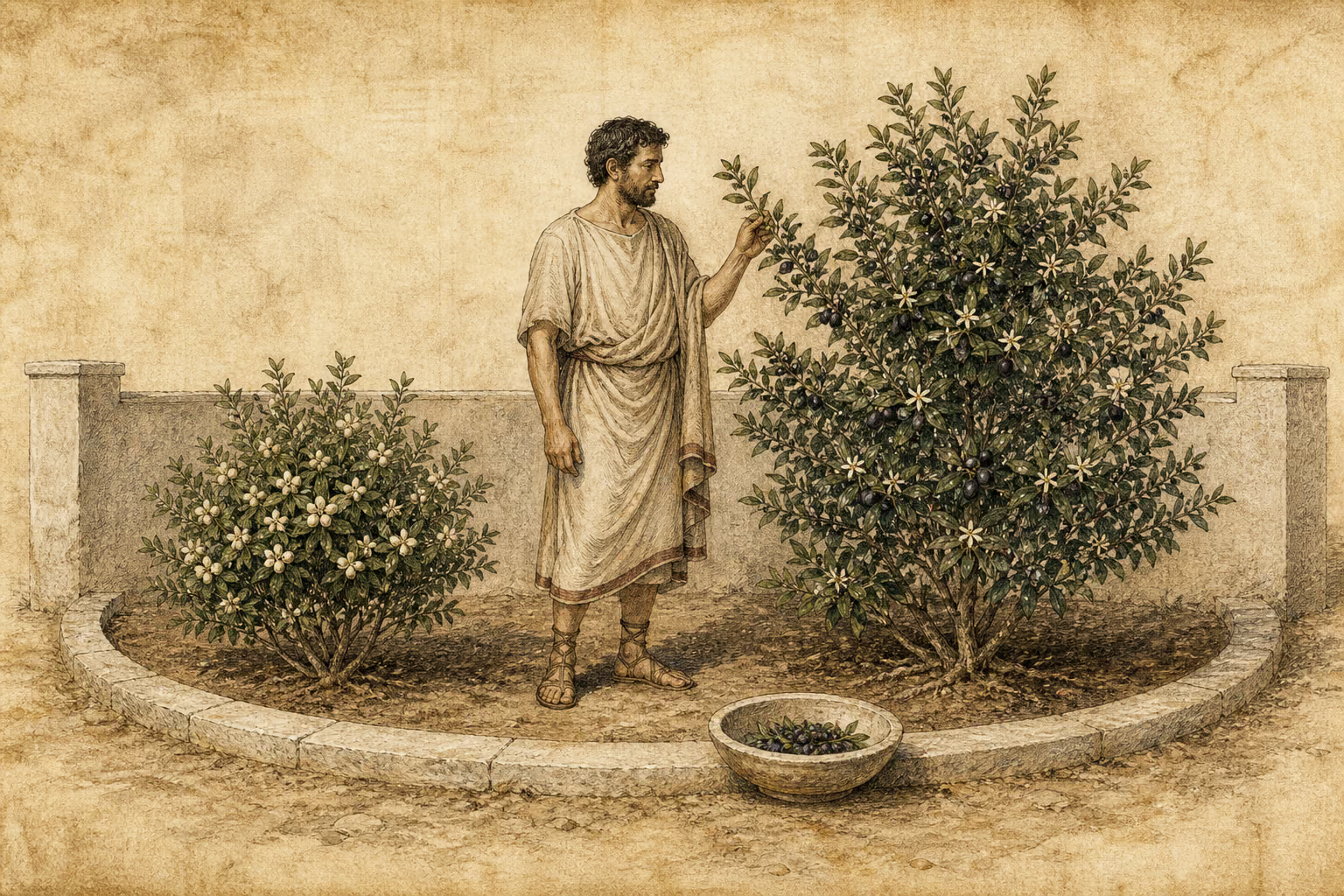
Latine · Mayhoff 1906
Myrtus sativa candida minus utilis medicinae quam nigra. semen eius medetur sanguinem excreantibus, item contra fungos in vino potum. odorem oris commendat vel pridie commanducatum; ita apud Menandrum Synaristosae hoc edunt. datur et dysintericis idem denarii pondere in vino. ulcera difficilia in extremitatibus corporis sanat cum vino subfervefactum. inponitur lippitudini cum polenta et cardiacis in mamma sinistra et contra scorpionis ictum in mero et ad vesicae vitia, capitis dolores, aegilopas, antequam suppurent, item tumoribus, exemptisque nucleis in vino vetere tritum eruptionibus pituitae. sucus seminis alvum sistit, urinam ciet. ad eruptiones pusularum pituitaeque cum cerato inlinitur et contra phalangia; capillum denigrat. lenius suco oleum est ex eadem myrto, lenius et vinum, quo numquam inebriantur. inveteratum sistit alvum et stomachum, tormina sanat, fastidium abigit. foliorum arentium farina sudores cohibet inspersa vel in febri, utilis et coeliacis, procidentiae vulvarum, sedis vitiis, ulceribus manantibus, igni sacro fotu, capillis fluentibus, furfuribus, item aliis eruptionibus, ambustis. additur in medicamenta, quae liparas vocant, eadem de causa, qua oleum ex iis, efficacissimum ad ea, quae in umore sunt, tamquam in ore et vulva. folia ipsa fungis adversantur trita ex vino, cum cera vero articulariis morbis et collectionibus. eadem in vino decocta dysintericis et hydropicis potui dantur. siccantur in farinam, quae inspergitur ulceribus aut haemorrhagiae. purgant et lentigines, pterygia et paronychia et epinyctidas, condylomata, testes, tetra ulcera, item ambusta cum cerato. ad aures purulentas et foliis crematis utuntur et suco et decocto. comburuntur et in antidota; item cauliculi in flore decerpti et in fictili novo operto cremati in furno, dein triti ex vino. et ambustis foliorum cinis medetur. inguen ne intumescat ex ulcere, satis est surculum tantum myrti habere secum nec ferro nec terra contactum.
Myrtidanum diximus quomodo fieret. vulvae prodest adpositu, fotu et inlitu, myrto efficacius et cortice et folio et semine. exprimitur et foliis sucus, mollissimis in pila tusis, adfuso paulatim vino austero, alias aqua caelesti, atque etiam expresso utuntur ad oris, sedis ulcera, vulvae et ventris, capillorum nigritiam, alarum perfusiones, purgationes lentiginum et ubi constringendum aliquid est.
Myrtus silvestris sive oxymyrsine sive chamaemyrsine bacis rubentibus et brevitate a sativa distat. radix eius in honore est, decocta vino ad renium dolores pota et difficili urinae praecipueque crassae et graveolenti, morbo regio et vulvarum purgationi trita cum vino; cauliculi quoque incipientes asparagorum modo in cibo sumpti et in cinere cocti. semen cum vino potum aut oleo et aceto calculos frangit, item in aceto et rosaceo tritum capitis dolores sedat et potum morbum regium. Castor oxymyrsinen myrti.... foliisque acutis, ex qua fiunt ruri scopae, ruscum vocavit, ad eosdem usus.
Et hactenus habent se medicinae urbanarum arborum; transeamus ad silvestres.
English · Bostock & Riley 1855–57
The white cultivated myrtle is employed for fewer medicinal purposes than the black one. The berries of it are good for spitting of blood, and taken in wine, they neutralize the poison of fungi. They impart an agreeable smell to the breath, even when eaten the day before; thus, for instance, in Menander we find the Synaristosæ eating them. They are taken also for dysentery, in doses of one denarius, in wine: and they are employed lukewarm, in wine, for the cure of obstinate ulcers on the extremities. Mixed with polenta, they are employed topically in ophthalmia, and for the cardiac disease they are applied to the left breast. For stings inflicted by scorpions, diseases of the bladder, head-ache, and fistulas of the eye before suppuration, they are similarly employed; and for tumours and pituitous eruptions, the kernels are first removed and the berries are then pounded in old wine. The juice of the berries acts astringently upon the bowels, and is diuretic: mixed with cerate it is applied topically to blisters, pituitous eruptions, and wounds inflicted by the phalangium; it imparts a black tint, also, to the hair.
The oil of this myrtle is of a more soothing nature than the juice, and the wine which is extracted from it, and which possesses the property of never inebriating, is even more so. This wine, used when old, acts astringently upon the stomach and bowels, cures griping pains in those regions, and dispels nausea.
The dried leaves, powdered and sprinkled upon the body, check profuse perspirations, in fever even; they are good, too, used as a fomentation, for cœliac affections, procidence of the uterus, diseases of the fundament, running ulcers, erysipelas, loss of the hair, scaly and other eruptions, and burns. This powder is used as an ingredient, also, in the plasters known as “liparæ;” and for the same reason the oil of the leaves is used for a similar purpose, being extremely efficacious as an application to the humid parts of the body, the mouth and the uterus, for example.
The leaves themselves, beaten up with wine, neutralize the bad effects of fungi; and they are employed, in combination with wax, for diseases of the joints, and gatherings. A decoction of them, in wine, is taken for dysentery and dropsy. Dried and reduced to powder, they are sprinkled upon ulcers and hæmorrhages. They are useful, also, for the removal of freckles, and for the cure of hang-nails, whitlows, condylomata, affections of the testes, and sordid ulcers. In combination with cerate, they are used for burns.
For purulent discharges from the ears, the ashes of the leaves are employed, as well as the juice and the decoction: the ashes are also used in the composition of antidotes. For a similar purpose the blossoms are stripped from off the young branches, which are burnt in a furnace, and then pounded in wine. The ashes of the leaves, too, are used for the cure of burns. To prevent ulcerations from causing swellings in the inguinal glands, it will suffice for the patient to carry a sprig of myrtle about him which has never touched the ground or any implement of iron.
We have already described the manner in which myrtidanum is made. Applied in a pessary, or as a fomentation or liniment, it is good for affections of the uterus, being much more efficacious than the bark of the tree, or the leaves and seed. There is a juice also extracted from the more tender leaves, which are pounded in a mortar for the purpose, astringent wine, or, according to one method, rain-water, being poured upon them a little at a time. This extract is used for the cure of ulcers of the mouth, the fundament, the uterus, and the abdomen. It is employed, also, for dyeing the hair black, the suppression of exudations at the arm-pits, the removal of freckles, and other purposes in which astringents are required.
The wild myrtle, oxymyrsine, or chamæmyrsine, differs from the cultivated myrtle in the redness of its berries and its diminutive height. The root of it is held in high esteem; a decoction of it, in wine, is taken for pains in the kidneys and strangury, more particularly when the urine is thick and fetid. Pounded in wine, it is employed for the cure of jaundice, and as a purgative for the uterus. The same method is adopted, also, with the young shoots, which are sometimes roasted in hot ashes and eaten as a substitute for asparagus.
The berries, taken with wine, or oil and vinegar, break calculi of the bladder: beaten up with rose-oil and vinegar, they allay head-ache. Taken in drink, they are curative of jaundice. Castor calls the wild myrtle with prickly leaves, or oxymyrsine, from which brooms are made, by the name of “ruscus” —the medicinal properties of it are just the same.
Thus much, then, with reference to the medicinal properties of the cultivated trees; let us now pass on to the wild ones.