LIBER XXIV · CAPUT 4
THE KERMES-BERRY OF THE HOLM-OAK: THREE REMEDIES
Latine · Mayhoff 1906
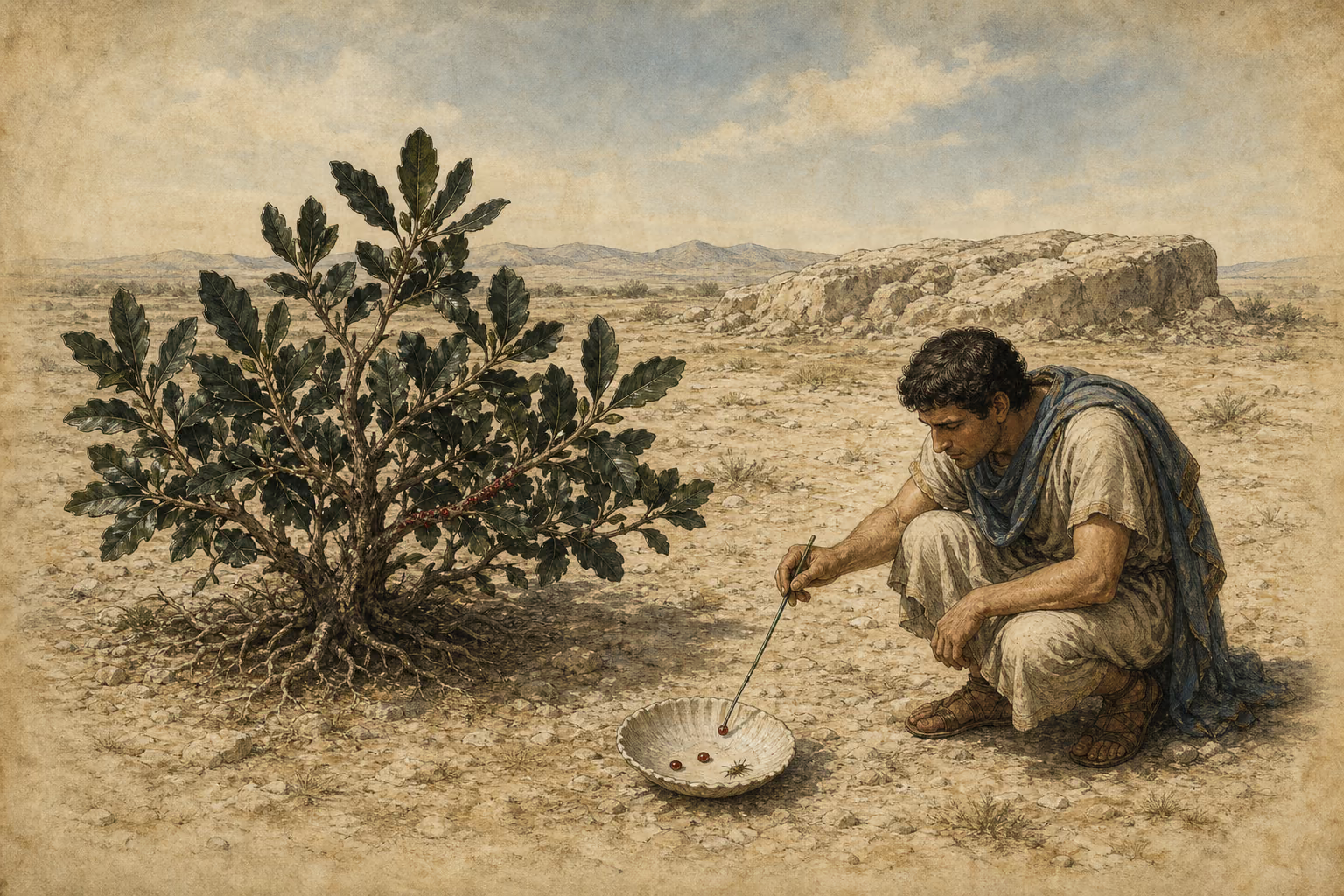
Coccum ilicis vulneribus recentibus ex aceto inponitur, epiphoris ex aqua, oculis subfusis sanguine instillatu r. est autem genus ex eo in Africa fere et Asia nascens, celerrime in vermiculum id se mutans, quod ideo 20 scolecium vocant inprobantque. principalia eius genera diximus.
Nec pauciora gallae genera fecimus, solidam perforatam, item albam nigram, maiorem minorem. vis omnium similis; optima Commagena. excrescentia in corpore tollunt, prosunt gingivis, uvae, oris exulcerationi. crematae et vino extinctae...... coeliacis, dysintericis inlinuntur, paronychiis ex melle et unguibus scabris, pterygiis, ulceribus manantibus, condylomatis, ulceribus quae phagedaenica vocantur. in vino autem decoctae auribus instillantur, oculis inlinuntur, adversus eruptiones, panos cum aceto. nucleus commanducatus dentium dolorem sedat, item intertrigines et ambusta. inmaturae ex iisex aceto potae lienem consumunt; eaedem crematae et aceto salso extinctae menses sistunt vulvasque procidentes fotu. omnis capillos denigrat.
Viscum e robore praecipuum haberi diximus et quo conficeretur modo. quidam contusum in aqua decocunt, donec nihil innatet, quidam commanducantes acinos expuunt cortices. optimum quod sine cortice quod- que levissimum, extra fulvum, intus porraceum. nihil est glutinosius. emollit, discutit tumores, siccat strumas; cum resina et cera panos mitigat omnis generis. quidam et galbanum adiciunt pari pondere singulorum eoque modo et ad vulnera utuntur. unguium scabritias expolit, si septenis diebus illinantur nitroque conluantur. quidam id religione efficacius fieri putant prima luna collectum e robore sine ferro, si terram non attigerit; comitialibus mederi, conceptum feminarum adiuvare, si omnino secum habeant; ulcera commanducato inpositoque efficacissime sanari.
Roboris pilulae ex adipe ursino alopecias capillo replent.—Cerri folia et cortex et glans siccat collectiones suppurationesque, fluctiones sistit. torpentes membrorum partes conroborat decoctum eius fotu, cui et insidere expedit siccandis adstringendisque partibus. radix cerri adversatur scorpionibus.
Suberis cortex tritus ex aqua calida potus san- is guinem fluentem ex utralibet parte sistit. eiusdem cinis ex vino calido sanguinem excreantibus magnopere laudatur.
English · Bostock & Riley 1855–57
The scarlet berry of the holm-oak is applied to fresh wounds with vinegar; and in combination with water it is dropt into the eyes in cases of defluxion of those organs or of ecchymosis. There grows also in most parts of Attica, and in Asia, a berry of this description, which becomes transformed with great rapidity into a diminutive worm, owing to which circumstance the Greeks have given it the name of “scolecion:” it is held, however, in disesteem. The principal varieties of this berry have been previously described.
And no fewer are the varieties of the gall-nut which we have described: we have, for instance, the full-bodied gall-nut, the perforated one, the white, the black, the large, the small, all of them possessed of similar properties; that, however, of Commagene is generally preferred. These substances remove fleshy excrescences on the body, and are serviceable for affections of the gums and uvula, and for ulcerations of the mouth. Burnt, and then quenched in wine, they are applied topically in cases of cœliac affections and dysentery, and with honey, to whitlows, hangnails, malformed nails, running ulcers, condylomatous swellings, and ulcerations of the nature known as phagedænic. A decoction of them in wine is used as an injection for the ears, and as a liniment for the eyes, and in combination with vinegar they are employed for eruptions and tumours.
The inner part of the gall, chewed, allays tooth-ache, and is good for excoriations between the thighs, and for burns. Taken unripe in vinegar, they reduce the volume of the spleen; and, burnt and then quenched in salt and vinegar, they are used as a fomentation for excessive menstruation and procidence of the uterus. All varieties of the gall-nut stain the hair black.
We have already stated that the best mistletoe is that which grows on the robur, and have described the manner in which it is prepared. Some persons, after bruising the berries, boil them in water, till nothing appears on the surface, while others, again, bite the berries with the teeth, and reject the skins. The best kind of viscus is that which has none of the outer skin in it, is extremely light, yellow without, and of a leek-green colour within. There is no substance more glutinous than this: it is of an emollient nature, disperses tumours, and acts as a desiccative upon scrofulous sores; combined with resin and wax, it heals inflamed swellings of every description. Some persons add galbanum as well, using equal proportions of each ingredient, and this preparation they employ also for the treatment of wounds.
The viscus of the mistletoe has the additional property also of rectifying malformed nails; but to effect this it must be taken off at the end of seven days, and the nails must be washed with a solution of nitre. Some persons have a sort of superstitious notion that the viscus will be all the more efficacious if the berries are gathered from the robur at new moon, and without the aid of iron. They have an impression too, that if it has not touched the ground, it will cure epilepsy, that it will promote conception in females if they make a practice of carrying it about them: the berries, chewed and applied to ulcers, are remarkably efficacious for their cure, it is said.
The round excrescences which grow on the robur * * * and mixed with bear’s grease, are remedial in cases of loss of the hair by alopecy.
The leaves, bark, and acorns of the cerrus act as a desiccative upon gatherings and suppurations, and arrest fluxes. A decoction of them, used as a fomentation, strengthens such parts of the body as are paralyzed; and it is a very good plan to employ it as a sitting-bath, for its desiccative or astringent effects upon the lower extremities. The root of this tree neutralizes the venom of the scorpion.
The bark of the cork-tree, pulverized and taken in warm water, arrests hæmorrhage at the mouth and nostrils; and the ashes of it, taken in warm wine, are highly extolled as a cure for spitting of blood.