LIBER XXIV · CAPUT 5
THE BEECH: FOUR REMEDIES
Latine · Mayhoff 1906
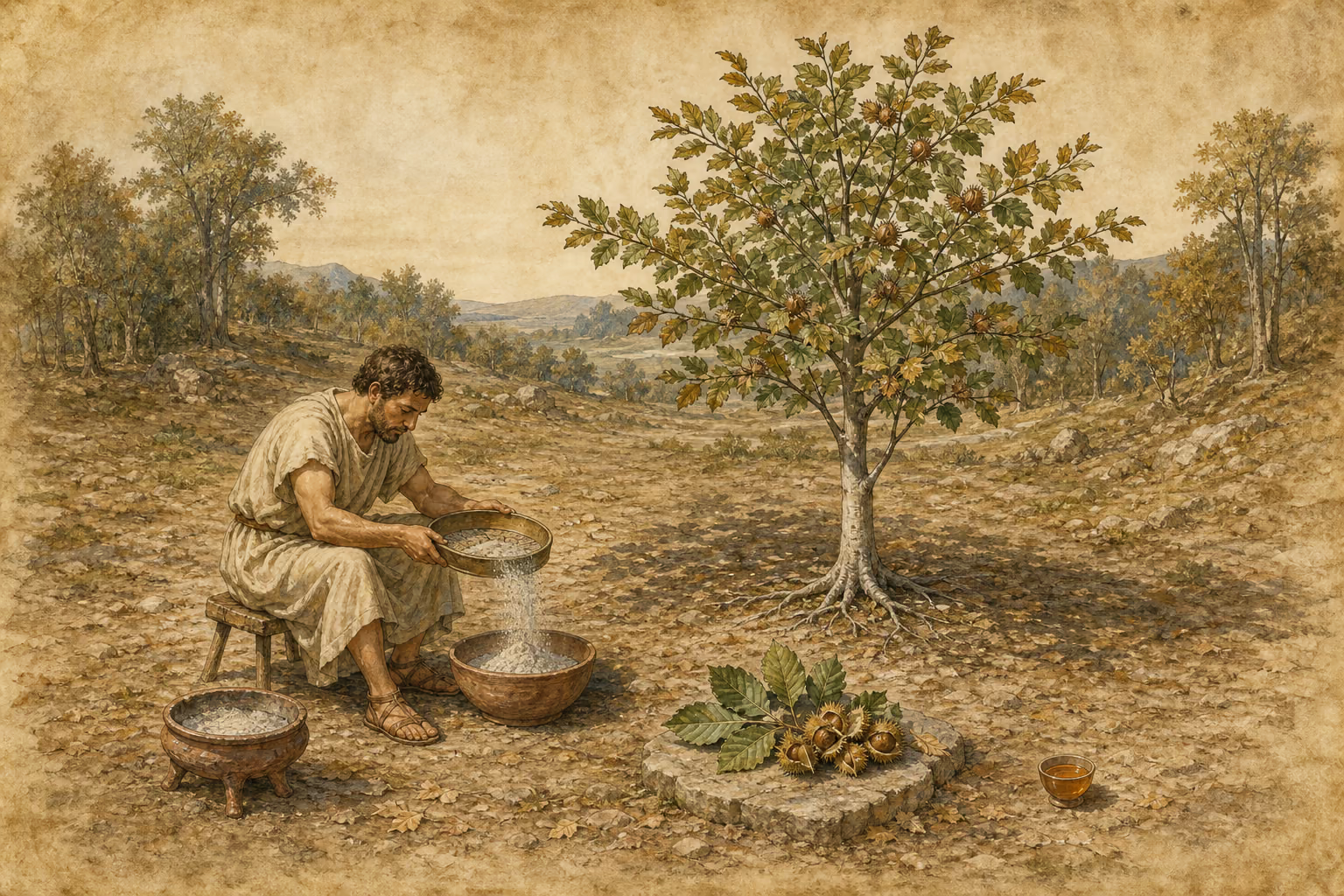
Fagi folia manducantur in gingivarum labrorumque vitiis. calculis glandis fagineae cinis inlinitur, item cum melle alopeciis.
Cupressi folia trita serpentibusulceribus inponuntur, et capiti cum polenta, si a sole doleat, item ramici, qua de causa et bibuntur. testium quoque tumori cum cera inlinuntur, capillum denigrant ex aceto. eadem trita cum II partibus panis mollis e vino Ammineo subacta pedum ac nervorum dolores sedant. pilulae adversus serpentium ictus bibuntur aut si eiciatur sanguis; collectionibus inlinuntur. ramici quoque tenerae tusae cum axungia et lomento prosunt. bibuntur ex eadem causa. parotidi et strumae cum farina inponuntur. exprimitur sucus tusis cum semine. qui mixtus oleo caliginem oculorum aufert; item victoriati pondere in vino potus inlitusve cum fico sicca pingui exemptis granis vitia testium sanat, tumores discutit et cum fermento strumas. radix cum foliis trita pota vesicae et stranguriae medetur et contra phalangia. ramenta pota menses cient, scorpionum ictibus adversantur.
Cedrus magna, quam cedrelaten vocant, dat picem, quae cedria vocatur, dentium doloribus utilissimam. frangit enim eos et extrahit, dolores sedat. cedri sucus ex ea quomodo fieret diximus. magni ad volumina usus, ni capiti dolorem inferret, defuncta corpora incorrupta aevis servat, viventia corrumpit, mira differentia, cum vitam auferat spirantibus defunctisque pro vita sit. vestes quoque corrumpit et animalia necat. ob haec non censeam in anginis hoc remedio utendum neque in cruditatibus, quod suasere aliqui, gustatu. dentes quoque conluere ex aceto in dolore timuerim vel gravitati aut vermibus aurium instillare. portentum est, quod tradunt, abortivum fieri in venere ante perfusa virilitate. phthiriasis perunguere eo non dubitaverim, item porrigines. suadent et contra venenum leporis marini bibere in passo. facilius in elephantiasi inlinant. et ulcera sordida et excrescentia in iis auctores quidam et oculorum albugines caliginesque inunxere eo et contra pulmonis ulcera cyathum eius sorberi iusserunt, item adversus taenias. fit ex eo et oleum, quod pisselaeon vocant, vehementioris ad omnia eadem usus. cedri scobe serpentes fugari certum est, item bacis tritis cum oleo si qui perunguantur.
Cedrides, hoc est fructus cedri, tussim sanant, urinam cient, alvum sistunt, utiles ruptis, convulsis, spasticis, stranguriae, vulvis, contra aconita, lepores marines, eadem quae supra, collectionibus inflammationibusque.
De galbano diximus. neque umidum neque aridum probatur et quale docuimus. per se bibitur ad tussim veterem, suspiria, rupta, convulsa, inponitur ischiadicis, lateris doloribus, panis, furunculis, corpori ab ossibus recedenti, strumis, articulorum nodis, dentium quoque doloribus. inlinitur et cum melle capitis ulceribus. purulentis infunditur auribus cum rosaceo aut nardo. odore comitialibus subvenit et vulva strangulante vel in stomachi defectu. abortus non exeuntes trahit adpositu vel suffitu, item ramo hellebori circumlitum atque subiectum. serpentes nidore urentium fugari diximus. fugiunt et perunctos galbano. medetur et a scorpione percussis. bibitur et in difficili partu fabae magnitudine in cyatho vini, vulvasque conversas corrigit, cum murra autem et vino mortuos partus extrahit. adversatur et venenis, maxime toxicis, cum murra et vino. serpentes oleo et spondylio mixto tactu necat. nocere urinae existimatur.
English · Bostock & Riley 1855–57
The leaves of the beech are chewed for affections of the lips and gums. A liniment is made of the ashes of beech-mast for urinary calculus, and, in combination with honey, for alopecy.
The leaves of the cypress are pounded and applied to wounds inflicted by serpents, and with polenta, to the head, in cases of sunstroke. They are used also for hernia, and an infusion of them is taken in drink. They are applied with wax to swellings of the testes, and mixed with vinegar they stain the hair black. Beaten up with twice the quantity of light bread, and then kneaded with Aminean wine, they are found very soothing for pains in the feet and sinews.
The excrescences of this tree are taken in drink for the stings of serpents and for discharges of blood from the mouth; they are used also as a topical application for gatherings. Fresh-gathered and beaten up with axle-grease and bean-meal, they are good for hernia; and an infusion of them is taken in drink for the same complaint. In combination with meal, they are applied topically to imposthumes of the parotid glands, and to scrofulous sores. From these excrescences, pounded along with the seed, a juice is extracted, which, mixed with oil, disperses films of the eyes. Taken in doses of one victoriatus, in wine, and applied at the same time in a pulpy, dried fig, the seeds of which have been removed, this juice cures maladies of the testes and disperses tumours: mixed with leaven, it heals scrofulous sores.
The root of the cypress, bruised with the leaves and taken in drink, is curative of diseases of the bladder, strangury, and the sting of the phalangium. The shavings of the wood, taken in drink, act as an emmenagogue, and neutralize the venom of the scorpion.
The larger cedar, known as the “cedrelates,” produces a pitch called “cedria,” which is very useful for tooth-ache, it having the effect of breaking the teeth and extracting them, and so allaying the pain. We have already stated how the juices of cedar are extracted, so remarkably useful for seasoning books, were it not for the head-ache they produce. This extract from the cedar preserves the bodies of the dead uncorrupted for ages, but exercises a noxious effect upon the bodies of the living—singular that there should be such a diversity in its properties, taking away life from animated beings, and imparting a sort of life, as it were to the dead! It injures clothing also and destroys animal life. It is for this reason that I cannot recommend it to be taken internally for the cure of quinzy and indigestion though there are some who advise it: I should be greatly in dread too, to rinse the teeth with it in combination with vinegar, for tooth-ache, or to use it as an injection for the ears in cases of hardness of hearing, or for worms in those organs. There is one very marvellous story told about it—if the male organs, they say, are rubbed with it just before the sexual congress, it will effectually prevent impregnation.
Still, however, I should not hesitate to employ it as a friction for phthiriasis or porrigo. It is strongly recommended also, in raisin wine, as an antidote to the poison of the sea-hare, but I should be more ready to use it as a liniment for elephantiasis. Some authors have prescribed it as an ointment for foul ulcers and the fleshy excrescences which grow in them, as also for spots and films on the eyes; and have recommended it to be taken, in doses of one cyathus, for ulcerations of the lungs, and for tapeworm.
There is an oil extracted from this pitch, known as “pisselæon,” the properties of which are of increased activity for all the purposes before-mentioned. It is a well-known fact that the saw-dust of cedar will put serpents to flight, and that a similar effect is produced by anointing the body with the berries bruised in oil.
Cedrides, or in other words, the fruit of the cedar, is curative of coughs, acts as a diuretic, and arrests looseness of the bowels. It is good also for ruptures, convulsions, spasms, and strangury, and is employed, as a pessary, for affections of the uterus. It is used also to neutralize the venom of the sea-hare, and for the cure of the various affections above-mentioned, as also of gatherings and inflammations.
We have already given some description of galbanum: to be good, it should be neither too moist nor too dry, but just in the state which we have mentioned. It is taken by itself for inveterate coughs, asthma, ruptures, and convulsions; and it is employed externally for sciatica, pains in the sides, inflamed tumours, boils, denudations of the bones, scrofulous sores, nodes upon the joints, and tooth-ache. It is applied with honey also, to ulcerations of the head. In combination with oil of roses or with nard, it is used as an injection for suppurations of the ears; and the odour of it is useful for epilepsy, hysterical suffocations, and faintness at the stomach. Employed as a pessary or as a fumigation, it brings away the fœtus in cases of miscarriage; branches too of hellebore covered with it and laid beneath the patient, have a similar effect.
We have already stated that serpents are driven away by the fumes of burnt galbanum, and they will equally avoid persons whose body has been rubbed with it. It is curative also of the sting of the scorpion. In protracted deliveries, a piece of galbanum the size of a bean is given in one cyathus of wine: it has the effect also of reducing the uterus when displaced, and, taken with myrrh and wine, it brings away the dead fœtus. In combination with myrrh and wine too, it neutralizes poisons—those which come under the denomination of “toxica” in particular. The very touch of it, mixed with oil and spondylium, is sufficient to kill a serpent. It is generally thought to be productive of strangury.