LIBER XXIV · CAPUT 7
PITCH: TWENTY-THREE REMEDIES
Latine · Mayhoff 1906
Pix quoque unde et quibus conficeretur modis indicavimus et eius duo genera, spissum liquidumque. spissarum utilissima medicinae Bruttia, quoniam pinguissima et resinosissima utrasque praebet utilitates, ob id et magis rutila quam ceterae. id enim quod in hoc adiciunt, ex mascula arbore meliorem esse, non arbitror posse intellegi. picis natura excalfacit, explet. adversatur privatim cerastae morsibus cum polenta, item anginae cum melle, destillationibus et sternumentis a pituita. auribus infunditur cum rosaceo, inlinitur cum cera. sanat lichenas, alvum solvit, excreationes pectoris adiuvat ecligmate aut inlitis tonsillis cum melle; sic et ulcera purgat, explet. cum uva passa et axungia carbunculos purgat et putrescentia ulcera; quae vero serpunt, cum pineo cortice aut sulpure. phthisicis cyathi mensura quidam dederunt et contra veterem tussim. rhagadas sedis et pedum panosque et ungues scabros emendat, vulvae duritias et conversiones, item odore lethargicos. strumas cum farina hordeacea et pueri inpubis urina decocta ad suppurationem perducit. et ad alopecias sicca pice utuntur, ad mulierum mammas Bruttia ex vino subfervefacta cum polline farraceo quam calidissimis linteis inpositis.
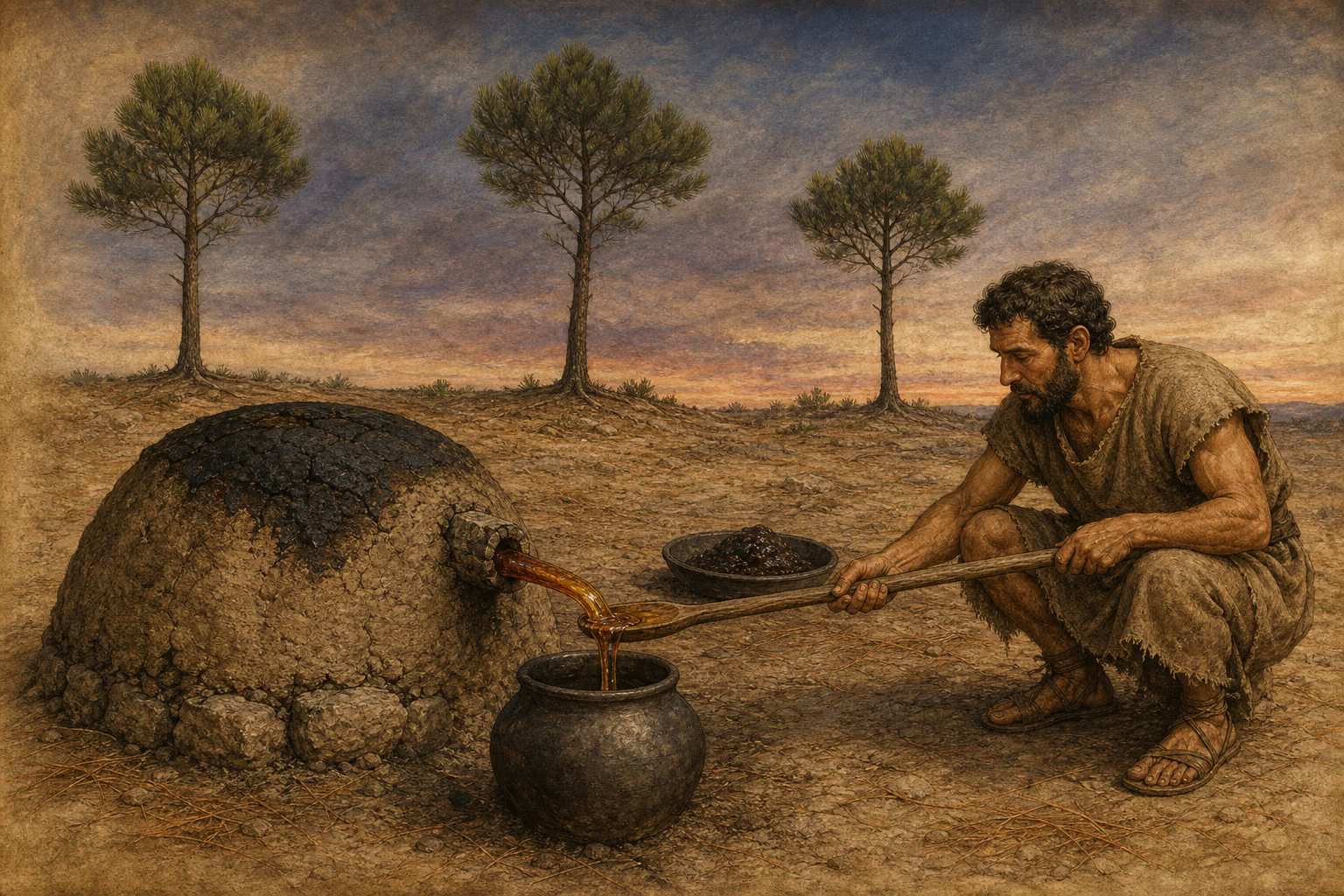
Liquida pix oleumque, quod pisselaeon vocant, quemadmodum fieret diximus. quidam iterum decocunt et vocant palimpissam. liquida anginae perunguntur intus et uva,.. aurium dolores, claritatem oculorum, oris circumlitiones, suspiriosos, vulvas, tussim veterem et crebras exscreationes pectoris, spasmos, tremores, opisthotonos, paralysis, nervorum dolores, praestantissimum ad canum et iumentorum scabiem.
Est et pissasphaltos, mixta bitumini pice naturaliter ex Apolloniatarum agro—quidam ipsi miscent—, praecipuum ad scabiem pecorum remedium aut si fetus mammas laeserit. nativum optimum ex eo, quod, cum fervet, innatat.
Zopissam eradi navibus diximus, cera marino sale macerata. optima haec a tirocinio navium. additur autem in malagmata ad discutiendas collectiones.
Taedae..... decoctaeque in aceto dentium dolores efficaciter colluunt.
Lentisci arboris et semen et cortex et lacrima urinam cient, alvum sistunt; decoctum eorum ulcera, quae serpunt, fotu. inlinitur in umidis et igni sacro, gingivas conluit. folia dentibus in dolore atteruntur; mobiles decocto colluuntur; rcapillum tingunt. lacrima sedis vitiis prodest, cum quid siccari excalfierive opus sit. decoctum et [e lacrima] stomacho utile, ructum et urinam movens. quod et capitis doloribus cum polenta illinitur. folia tenera oculis inflammatis illinuntur. mastiche lentisci replicandis palpebris et ad extendendam cutem in facie et zmegmata adhibetur et sanguinem reicientibus, tussi veteri et ad omnia, quae acaciae vis. medetur et attritis partibus sive oleo e semine eius facto ceraeque mixto sive foliis ex oleo decoctis, sihae cum aqua ita foveantur. scio Democratem medicum in valitudine Considiae, M. Servili consularis filiae, omnem curationem austeram recusantis diu efficaciter usum lacte caprarum, quas lentisco pascebat.
English · Bostock & Riley 1855–57
We have also stated on a previous occasion from what tree pitch is extracted, and the methods employed for that purpose. Of this also there are two kinds; thick pitch and liquid pitch. Of the several varieties of thick pitch the most useful for medicinal purposes is that of Bruttium; for being both extremely unctuous and very resinous, it reunites the properties both of resin and of pitch, that of a yellow reddish colour being the most highly esteemed. As to the statement made in addition to this, that the produce of the male tree is the best, I do not believe that any such distinction is at all possible.
Pitch is of a warming, cicatrizing tendency: mixed with polenta it is particularly useful as a neutralizer of the venom of the cerastes, and in combination with honey it is used for quinzy, catarrhs, and fits of sneezing caused by phlegm. With oil of roses it is used as an injection for the ears, and employed as a liniment with wax it heals lichens. It relaxes the bowels, also, and used as an electuary, or applied with honey to the tonsillary glands, it facilitates expectoration. Applied topically, it acts as a detergent upon ulcers, and makes new flesh. Mixed with raisins and axle-grease, it forms a detergent plaster for carbuncles and putrid ulcers, and, with pine-bark or sulphur, for serpiginous sores. Pitch has been administered too by some, in doses of one cyathus, for phthisis and inveterate coughs. It heals chaps of the feet and rectum, inflamed tumours, and malformed nails; and used as a fumigation, it is curative of indurations and derangements of the uterus, and of lethargy. Boiled with barley-meal and the urine of a youth, who has not arrived at puberty, it causes scrofulous sores to suppurate. Dry pitch is used also for the cure of alopecy. For affections of the mamillæ, Bruttian pitch is warmed in wine with fine spelt meal, and applied as hot as can be borne.
We have already described the way in which liquid pitch and the oil known as pisselæon are made. Some persons boil the pitch over again, and give it the name of “palimpissa.” For quinzy and affections of the uvula, liquid pitch is employed internally. It is used also for the cure of ear-ache, for the improvement of the sight, and as a salve for the lips; and is employed for hysterical suffocations, inveterate coughs, profuse expectorations, spasms, nervousness, opisthotony, paralysis, and pains in the sinews. It is a very excellent remedy too for itch in dogs and beasts of burden.
There is pissasphaltos too, a natural production of the territory of the Apolloniates, and consisting of pitch mixed with bitumen. Some persons, however, make this mixture artificially, and employ it for the cure of itch in cattle, and of injuries done by the young sucklings to the mamillæ. The most esteemed portion of it is that which floats on the surface when boiled.
We have already stated that zopissa is the pitch, macerated with salt-water and wax, that has been scraped from off the bottoms of ships. The best kind is that taken from ships which have been to sea for the first time. It is used as an ingredient in plasters of an emollient nature, employed to disperse gatherings.
A decoction in vinegar of the wood of the torch-tree makes a most efficacious gargle for tooth-ache.
The seed, bark, and tear-like juices of the lentisk are diuretics, and act astringently upon the bowels: a decoction of them, used as a fomentation, is curative of serpiginous sores, and is applied topically for humid ulcerations and erysipelas; it is employed also as a collutory for the gums. The teeth are rubbed with the leaves in cases of tooth-ache, and they are rinsed with a decoction of the leaves when loose: this decoction has the effect also of staining the hair. The gum of this tree is useful for diseases of the rectum, and all cases in which desiccatives and calorifics are needed; a decoction too of the gum is good for the stomach, acting as a carminative and diuretic; it is applied also to the head, in cases of headache, with polenta. The more tender of the leaves are used as an application for inflammations of the eyes.
The mastich produced by the lentisk is used as a bandoline for the hairs of the eye-lids, in compositions for giving a plumpness to the face, and in cosmetics for smoothing the skin. It is employed for spitting of blood and for inveterate coughs, as well as all those purposes for which gum acacia is in request. It is used also for the cure of excoriations; which are fomented either with the oil extracted from the seed, mixed with wax, or else with a decoction of the leaves in oil. Fomentations too are made of a decoction of it in water for diseases of the male organs. I know for a fact, that in the illness of Considia, the daughter of M. Servilius, a personage of consular rank, her malady, which had long resisted all the more severe methods of treatment, was at last successfully treated with the milk of goats that had been fed upon the leaves of the lentisk.