LIBER XXIV · CAPUT 8
THE PLANE-TREE: TWENTY-FIVE REMEDIES
Latine · Mayhoff 1906
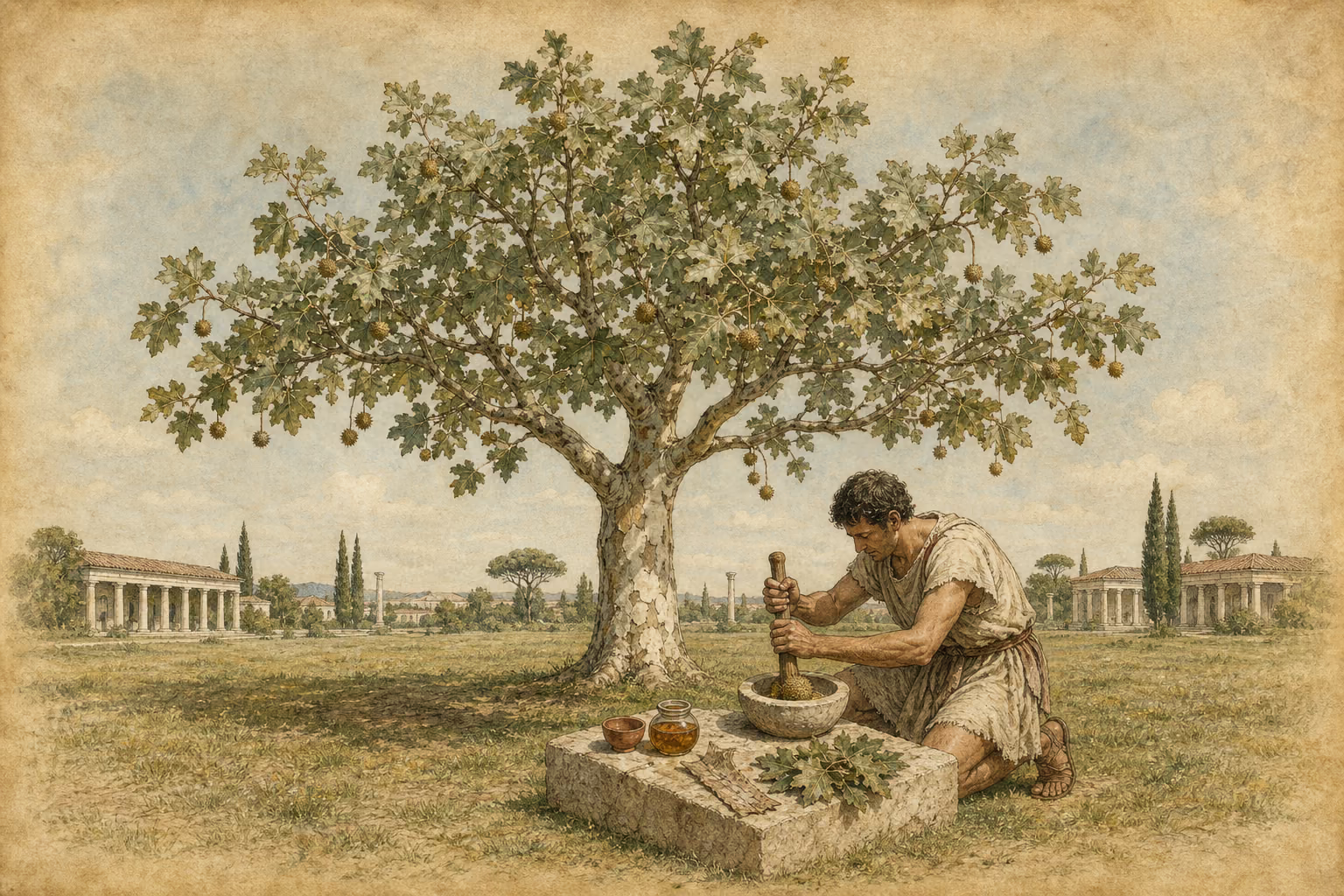
Platani adversantur vespertilionibus, pilulae earum in vino potae $X$ IIII pondere omnibus serpentium et scorpionum venenis, item ambustis. tunsae autem cum aceto acri magisque scillite sanguinem omnem sistunt et lentiginem et carcinomata malandriasque veteres addito melle emendant. folia autem et cortex inlinuntur collectionibus et suppurationibus, his et decoctum eorum, corticis autem in aceto dentinm remedium est, foliorum tenerrima in vino albo decocta oculorum. lanugo foliorum auribus et oculis inutilis. cinis pilularum sanat ambusta igni vel frigore. cortex e vino scorpionum ictus restinguit.
Fraxinus quam vim adversus serpentes haberet indicavimus. semen foliis eius inest, quo medentur iocineris, laterum doloribus in vino, aquam, quae subit cutem, extrahunt. corpus obesum levant onere sensim ad maciem reducentibus isdem foliis cum vino tritis ad virium portionem, ita ut puero v folia III cyathis diribeantur, robustioribus VII folia quinis vini. non omittendum ramenta eius et scobem a quibusdam cavenda praedici.
Aceris radix contunsa e vino iocineris doloribus efficacissime inponitur.
Populi albae uvarum in unguentis usum exposuimus. cortex potus ischiadicis, stranguriae prodest, foliorum sucus calidus aurium dolori. virgam populi in manu tenentibus intertrigo non metuitur. populus nigra efficacissima habetur, quae in Creta nascitur; comitialibus semen ex acetoutile. fundit illa et resinam exiguam, qua utuntur ad malagmata. folia podagris in aceto decocta inponuntur. umor e cavis populi nigrae effluens verrucas papulasque —est attritu odoratus —tollit. populi ferunt et in foliis guttam, ex qua apes propolim faciunt. gutta quoque ad quae propolis ex aqua efficax.
Ulmi et folia et cortex et rami vim habent spissandi et volnera contrahendi. corticis utique interior tilia lepras sedat et folia ex aceto inlita. corticis denarii pondus potum in hemina aquae frigidae alvum purgat pituitasque et aquas privatim trahit. inponitur et collectionibus lacrima et volneribus et ambustis, quae decocto fovere prodest. umor in folliculis arboris huius nascens cuti nitorem inducit faciemque gratiorem praestat. cauliculi foliorum primi vino decocti tumores sanant extrahuntque per fistulas. idem praestant et tiliae corticis. multi corticem commanducatum volneribus utilissimum putant, folia trita aqua adspersa pedum tumori. umor quoque e medulla, uti diximus, castratae arboris effluens capillum reddit capiti inlitus defluentesque continet.
Arbor tilia lenius ad eadem fere utilis est, ad quae oleaster. folia autem tantum in usu et ad infantium ulcera et in ore et commanducata et decocta. urinam cient, menses sistunt inlita, sanguinem pota detrahunt.
Sabucus habet alterum genus magis silvestre, quod Graeci chamaeacten, alii helion vocant, multo brevius. utriusque decoctum in vino vetere foliorum vel seminis vel radicis ad cyathos binos potum stomacho inutile, set alvo detrahens aquam. refrigerat etiam inflammationem, maxime recentia ambusta et canis morsus, cum polenta mollissimis foliorum inlitis. sucus cerebri collectiones privatimque membranae, quae circa cerebrum est, lenit infusus. acini eius infirmiores quam reliqua; tingunt capillum, poti acetabuli mensura urinam movent.foliorum mollissima ex oleo et sale eduntur ad pituitam bilemque detrahendam. ad omnia efficacior quae minor. radicis eius decoctae in vino II cyathi poti hydropicos exinaniunt, volvas emolliunt, has et foliorum decoctum insidentium. caules teneri mitioris sabuci in patinis cocti alvum solvunt. resistunt folia et serpentium ictibus in vino pota. podagris cum sebo hircino vehementer prosunt cauliculi inliti. iidem in aqua macerantur, ut sparsa ea pulices necentur; foliorum decocto si locus spargatur, muscae necantur. boa appellatur morbus papularum, cum rubent corpora; sabuci ramo verberatur. cortex interior tritus ex vino albo potus alvum solvit.
lunipirus vel ante cetera omnia excalfacit, extenuat, cedro alias similis. et huius duo genera, altera minor. utraque accensa serpentes fugat. semen stomachi, pectoris, lateris doloribus utile. inflationes algoresque discutit, tusses; concoquit duritias. inlitum tumores sistit, item alvum bacis ex vino nigro potis, item ventris tumores inlitis. miscetur et antidotis, oxyporis. urinas ciet. inlinitur et oculis in epiphoris. datur convolsis, ruptis, torminibus, volvis, ischiadicis cum vino albo potum pilulis quaternis aut decoctis xx in vino. sunt qui et perunguant corpus suco e semine eius in serpentium metu.
English · Bostock & Riley 1855–57
The plane-tree neutralizes the bad effects of bites inflicted by the bat. The excrescences of this tree, taken in doses of four denarii, in wine, act as an antidote to the venom of serpents of all kinds and of scorpions, and are curative of burns. Pounded with strong vinegar, squill vinegar in particular, they arrest hæmorrhage of every kind; and with the addition of honey, they remove freckles, carcinomatous sores, and black spots of long standing on the skin.
The leaves again, and the bark of this tree, are used in the form of liniments for gatherings and suppurations, and a decoction of them is employed for a similar purpose. A decoction of the bark in vinegar is remedial for affections of the teeth, and the more tender of the leaves boiled in white wine are good for the eyes. The down which grows upon the leaves is injurious to both the ears and eyes. The ashes of the excrescences of this tree heal such parts of the body as have been burnt or frost-bitten. The bark, taken in wine, reduces the inflammation caused by the stings of scorpions.
We have already made some mention of the virtues possessed by the ash as an antidote to the venom of serpents. The seed of it is enclosed in follicules, which are good for diseases of the liver, and, in combination with wine, for pains in the sides: they are employed also for drawing off the water in dropsy. They have the property, too, of diminishing obesity, and of gradually reducing the body to a state of comparative emaciation, the follicules being pounded in wine and administered in proportion to the bodily strength; thus, for instance, to a child, five of them are given in three cyathi of wine, but for persons in more robust health, seven are prescribed, in five cyathi of wine.
We must not omit to state that the shavings and saw-dust of this wood are of a highly dangerous nature, according to some.
The root of the maple, beaten up in wine, is extremely efficacious as a topical application for pains in the liver.
We have already mentioned, when speaking of the unguents, the use that is made of the berries of the white poplar. A potion prepared from the bark is good for sciatica and strangury, and the juice of the leaves is taken warm for ear-ache. So long as a person holds a sprig of poplar in his hand, there is no fear of chafing between the thighs.
The black poplar which grows in Crete is looked upon as the most efficacious of them all. The seed of it, taken in vinegar, is good for epilepsy. This tree produces a resin also to a small extent, which is made use of for emollient plasters. The leaves, boiled in vinegar, are applied topically for gout. A moisture that exudes from the clefts of the black poplar removes warts, and pimples caused by friction. Poplars produce also on the leaves a kind of sticky juice, from which bees prepare their propolis: indeed this juice, mixed with water, has the same virtues as propolis.
The leaves, bark, and branches of the elm have the property of filling up wounds and knitting the flesh together: the inner membrane too, of the bark, and the leaves, steeped in vinegar, are applied topically for leprosy. The bark, in doses of one denarius, taken in one hemina of cold water, acts as a purgative upon the bowels, and is particularly useful for carrying off pituitous and aqueous humours. The gum also which this tree produces is applied topically to gatherings, wounds, and burns, which it would be as well to foment with the decoction also. The moisture which is secreted on the follicules of the tree gives a finer colour to the skin, and improves the looks. The foot-stalks of the leaves that first appear, boiled in wine, are curative of tumours, and bring them to a head: the same, too, is the effect produced by the inner bark.
Many persons are of opinion that the bark of this tree, chewed, is a very useful application for wounds, and that the leaves, bruised and moistened with water are good for gout. The moisture too that exudes from the pith of the tree, as already stated, on an incision being made, applied to the head, causes the hair to grow and prevents it from falling off.
The linden-tree is useful, though in a less marked degree, for nearly all the same purposes as the wild olive. The leaves, however, are the only part that is made use of for ulcers upon infants; chewed, too, or employed in the form of a decoction, they are diuretic. Used as a liniment they arrest menstruation when in excess, and an infusion of them, taken, in drink, carries off superfluous blood.
There are two kinds of elder, one of which grows wild and is much smaller than the other; by the Greeks it is known as the “chamæacte,” or “helion.” A decoction of the leaves, seed, or root of either kind, taken in doses of two cyathi, in old wine, though bad for the upper regions of the stomach, carries off all aqueous humours by stool. This decoction is very cooling too for inflammations, those attendant upon recent burns in particular. A poultice is made also of the more tender leaves, mixed with polenta, for bites inflicted by dogs. The juice of the elder, used as a fomentation, reduces abscesses of the brain, and more particularly of the membrane which envelopes that organ. The berries, which have not so powerful an action as the other parts of the tree, stain the hair. Taken in doses of one acetabulum, in drink, they are diuretic. The softer leaves are eaten with oil and salt, to carry off pituitous and bilious secretions.
The smaller kind is for all these purposes the more efficacious of the two. A decoction of the root in wine, taken in doses of two cyathi, brings away the water in dropsy, and acts emolliently upon the uterus: the same effects are produced also by a sitting-bath made of a decoction of the leaves. The tender shoots of the cultivated kind, boiled in a saucepan and eaten as food, have a purgative effect: the leaves taken in wine, neutralize the venom of serpents. An application of the young shoots, mixed with he-goat suet, is remarkably good for gout; and if they are macerated in water, the infusion will destroy fleas. If a decoction of the leaves is sprinkled about a place, it will exterminate flies. “Boa” is the name given to a malady which appears in the form of red pimples upon the body; for its cure the patient is scourged with a branch of elder. The inner bark, pounded and taken with white wine, relaxes the bowels.
The juniper is of a warming and resolvent nature beyond all other plants: in other respects, it resembles the cedar. There are two species of this tree, also, one of which is larger than the other: the odour of either, burnt, repels the approach of serpents. The seed is good for pains in the stomach, chest, and sides; it dispels flatulency and sudden chills, soothes cough, and brings indurations to a head. Applied topically, it checks the growth of tumours; and the berries, taken in red wine, act astringently upon the bowels: they are applied also to tumours of the abdomen. The seed is used as an ingredient in antidotes of an aperient nature, and is diuretic in its effects. It is used as a liniment for defluxions of the eyes, and is prescribed for convulsions, ruptures griping pains in the bowels, affections of the uterus, and sciatica, either in a dose of four berries in white wine, or in the form of a decoction of twenty berries in wine.
There are persons who rub the body with juniper berries as a preventive of the attacks of serpents.