LIBER XXVII · CAPUT 5
APARINE, OMPHALOCARPOS, OR PHILANTHROPOS: THREE REMEDIES
Latine · Mayhoff 1906
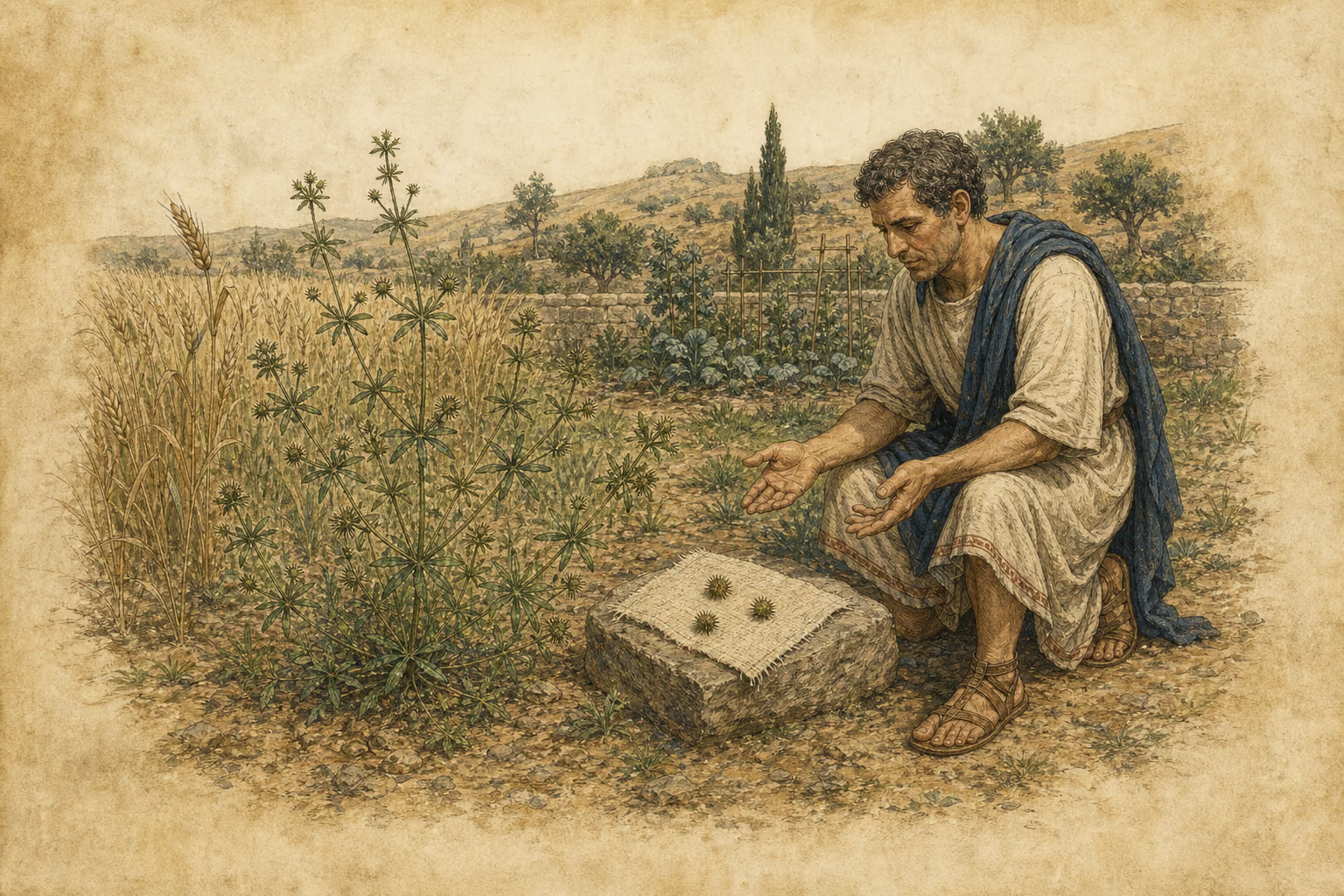
Aparinen aliqui omphalocarpon, alii philanthropon vocant, ramosam, hirsutam, quinis senisve in orbem circa ramos foliis per intervalla. semen rotundum, durum, concavum, subdulce. nascitur in frumentario agro aut hortis pratisve, asperitate etiam vestium tenaci. efficax contra serpentes semine poto ex vino drachma et contra phalangia. sanguinis abundantiam ex volneribus reprimunt folia inposita, sucus auribus infunditur. — Arction aliqui potius arcturum vocant. similis est verbasco foliis, nisi quod hirsutiora sunt, caule longo, molli, semine cumini. nascitur in petrosis radice tenera, alba, dulci, quae decoquitur in vino ad dentium dolorem, ut ore ita contineatur. decoctum bibitur propter ischiada et stranguriam. ex vino ambustis inponitur et pernionibus; foventur eadem cum radice semine trito in vino. — Asplenon sunt qui hemionion vocant, foliis trientalibus, multis, radice limosa, cavernosa sicut felicis, candida hirsuta. nec caulem nee florem nec semen habet. nascitur in petris parietibusque opacis, umidis, laudatissima in Creta. huius foliorum in aceto decocto per dies XXX poto lienem absumi aiunt; et illinuntur autem eadem. sedant et singultus. feminis non danda, quoniam sterilitatem facit. — Asclepias folia hederae habet, ramos longos, radices numerosas, tenues, odoratas, floris virus grave, semen securiclatum. nascitur in montibus. radices torminibus medentur et contra serpentium ictus non solum potu, sed et inlitu. — Aster ab aliquis bubonion appellatur, quoniam inguinum praesentaneum remedium est. cauliculus foliis oblongis II aut III, in cacumine capitula stellae modo radiata. bibitur et adversus serpentes. sed ad inguinum medicinam sinistra manu decerpi iubent et iuxta cinctus alligari. prodest et coxendicis dolori adalligata. — Ascyron et ascyroides similia sunt inter se et hyperico, sed maiores habet ramos quod ascyroides vocatur, ferulaceos, coma rubentes, capitulis parvis, luteis. semen in caliculis pusillum, nigrum, resinosum. comae tritae velut cruentant, qua de causa quidam hanc androsaemon vocavere. usus seminis ad ischiadicos poti II drachmis in hydromelitis sextario. alvum solvit, bilem detrahit. inlinitur et ambustis. — Aphaca tenuia admodum folia habet, pusilla. altior lenticula et siliquas maiores fert, in quibus terna aut quaterna semina sunt, nigriora et minora lenticula. nascitur in arvis. natura ad spissandum efficacior quam lenti; reliquos usus 15 eosdem habet. stomachi alvique fluctiones sistit semen decoctum. — Alcibium qualis esset herba, non repperi apud auctores, sed radicem eius et folia trita ad serpentis morsum inponi et bibi, folia quantum manus capiat trita cum vini meri cyathis III aut radicem drachmarum III pondere cum vini eadem mensura.— Alectoros lophos, quae apud nos crista dicitur, folia habet similia gallinacei cristae plura, caulem tenuem, semen nigrum in siliquis. utilis tussientibus cocta cum faba fresa, melle addito et caligini oculorum. solidum semen coicitur in oculum nec turbat, sed in se caliginem contrahit; mutat colorem et ex nigro albicare incipit et intumescit ac per se exit. —
English · Bostock & Riley 1855–57
Aparine, otherwise called “omphalocarpos” or “philanthropos,” is a ramose, hairy, plant, with five or six leaves at regular intervals, arranged circularly around the branches. The seed is round, hard, concave, and of a sweetish taste. It grows in cornfields, gardens, and meadows, and, by the aid of its prickly points, adheres to the clothes. The seed is employed to neutralize the venom of serpents, being taken in doses of one drachma, in wine: it is useful also for the bite of the phalangium. The leaves, applied topically, arrest hæmorrhage from wounds. The juice is used as an injection for the ears.
The arction is by some called “arcturum” in preference: the leaves of it are like those of verbascum, except that they are more hairy; the stem is long and soft, and the seed resembles that of cummin. It grows in rocky localities, and has a tender root, white and sweet. A decoction of it is made with wine for tooth-ache, being retained for that purpose in the mouth. The plant is taken in drink for sciatica and strangury, and is applied with wine to burns and chilblains, which are fomented also with the root and seed bruised in wine.
Some persons call the asplenon by the name of “hemionion.” It has numerous leaves, a third of a foot in length, and a slimy root, pierced with holes like that of fern, white, and hairy. It is destitute of stem, flower, and seed, and is found growing upon rocks or sheltered damp walls. The most approved kind is that of Crete. A decoction of the leaves in vinegar, taken in drink for a period of thirty days, will consume the spleen, it is said, the leaves being applied simultaneously. The leaves give relief also in hiccup. This plant should never be given to females, being productive of sterility.
The asclepias has leaves like those of ivy, long branches, and numerous roots, thin, and odoriferous. The flower has a strong offensive smell, and the seed is like that of securidaca: it is found growing in mountainous districts. The roots are used for the cure of griping pains in the bowels, and of stings inflicted by serpents, either taken in drink or applied topically.
The aster is called “bubonion” by some, from the circumstance of its being a sovereign remedy for diseases of the groin. It has a diminutive stem with oblong leaves, two or three in number; and at the summit it is surmounted with small radiated heads, like stars. This plant is taken also in drink as an antidote to the venom of serpents: but if required for the cure of inguinal complaints, it is recommended that it should be gathered with the left hand, and attached to the body near the girdle. It is of great service also, worn as an amulet, for sciatica.
Ascyron and ascyroïdes are plants similar to one another, and to hypericon as well, except that the plant known as “ascyroïdes” has larger branches, ferulaceous, red all over, and bearing small yellow heads. The seed, enclosed in small calyces, is diminutive, black, and resinous. The tops of the branches, when bruised, stain like blood; for which reason some persons have given it the name of “androsæmon.” The seed is used for the cure of sciatica, being taken in doses of two drachmæ, in one sextarius of hydromel. It relaxes the bowels, and carries off bile: it is applied also to burns.
The aphaca has remarkably diminutive leaves, and is but little taller than the lentil. The pods are of a larger size, and enclose some three or four seeds, of a darker colour, moister, and more diminutive than those of the lentil: it grows in cultivated fields. It is naturally more astringent than the lentil, but in other respects is applied to much the same purposes. The seed, used in a decoction, arrests fluxes of the stomach and bowels.
I have not found it stated by authors what kind of plant alcibium is; but the root, I find, and the leaves, are pounded and employed, both externally and internally, for injuries inflicted by serpents. When the leaves are used, a handful of them is bruised in three cyathi of undiluted wine: the root is employed in the proportion of three drachmæ to the same quantity of wine.
Alectoroslophos, or crista, as we call it, has numerous leaves resembling a cock’s comb, a thin stem, and a black seed enclosed in pods. Boiled with broken beans and honey, it is useful for cough and for films upon the eyes. The seed, too, is sprinkled whole into the eyes, and so far is it from injuring them, that it attracts and collects the filmy matter. When thus used, it changes colour, and from black becomes white, gradually swells, and comes out of itself.