LIBER XXVII · CAPUT 9
THE COCCUS CNIDIUS, OR GRAIN OF CNIDOS: TWO REMEDIES
Latine · Mayhoff 1906
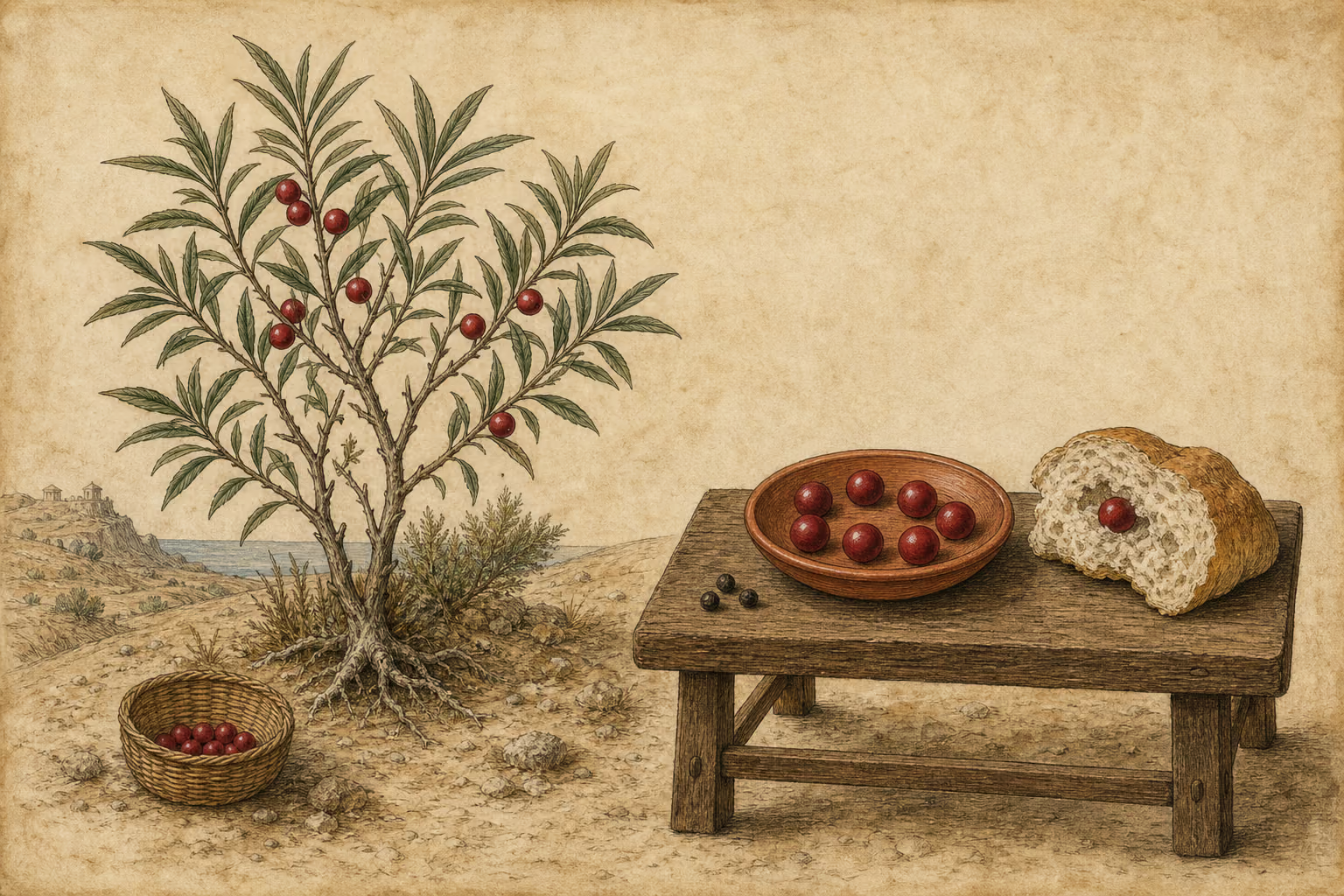
Cocco Cnidio color cocci, magnitudo grano piperis maior, vis ardens; itaque in pane devoratur, ne adurat gulam transitu. vis praesentanea contra cicutam, sistit alvum.
Dipsacos folia habet lactucae bullasque spinosas in dorsi medio, caulem II cubitorum iisdem spinis horridum, genicula eius binis foliis amplectentibus concavo alarum sinu, in quo subsistit ros salsus. in cacumine capitula sunt echinata spinis. nascitur in aquosis. sanat rimas sedis, item fistulas decocta in vino radice usque, dum sit crassitudo cerae, ut possit in fistulas collyrium mitti, item verrucas omnium generum. quidam et alarum, quas supra diximus, sucum inlinunt iis. — Dryopteris felici similis in arboribus nascitur, tenui foliorum subdulcium incisura, radice hirsuta. vis ei caustica, et ideo psilotrum est radix tusa, inlinitur enim usque, dum sudores evocet, iterum et tertium ita, ne sudor abluatur.— Drabe phono similis herba est, cauliculis tenuibus, cubitalibus, circumdatis utrimque foliis pollicari amplitudine, qualia oxymyrsines, sed candidioribus mollioribusque, flore candido sabuci. edunt cauliculos decoctos, semine vero eius pro pipere utuntur.
Elatine folia habet casiae, pusilla, pilosa, rotunda, semipedalibus ramulis quinis senisque, a radice statim foliosis. nascitur in segete, acerba gustu et ideo oculorum fluctionibus efficax foliis cum polenta tritis et inpositis, subdito linteolo. eadem cum lini semine cocta sorbitionis usu dysinteria liberat. — Empetros, quam nostri ealcifragam vocant, nascitur in montibus maritimis, fere in saxo. quae propius maria fuit, salsa est potaque trahit bilem ac pituitas; quae longius magisque terrena, amarior sentitur. trahit aquam; sumitur autem in iure aliquo aut in hydromelite. vetustate vires perdit, recens urinas ciet decoctum in aqua vel tritum calculosque frangit. qui fidem promisso huic quaerunt, adfirmant lapillos, qui subfervefiant, una rumpi. — Epicactis ab aliis elleborine vocatur, parva herba, exiguis foliis, iocineris vitiis utilissima et contra venena pota.— Epimedion caulis est non magnus, hederae foliis denis atque duodenis, numquam florens, radice tenui, nigra, gravi odore ac..... in umidis nascitur. et huic spissandi refrigerandique natura, feminis cavenda. folia in vino trita virginum mammas cohibent.— Enneaphyllon longa folia novena habet, causticae naturae. inponitur lana circumdatum, ne urat latius—continuo pusulas excitat—, lumborum doloribus et coxendicum utilissimum.
Felicis duo genera nec florem habent nec semen. pterim vocant Graeci, alii blachnon, cuius ex una radice conplures exeunt felices bina etiam cubita excedentes longitudine, non graves odore; hanc marem existimant. alterum genus thelypterim Graeci vocant, alii nymphaeam pterim; est autem singularis atque non fruticosa, brevior molliorque et densior, foliis ad radicem canaliculata. utriusque radice sues pinguescunt. folia utriusque lateribus pinnata, unde nomen Graeci inposuere. radices utriusque longae in. oblicum, nigrae, praecipue cum inaruere; siccari autem eas sole oportet. nascuntur ubique, sed maxime frigido solo. effodi debent vergiliis occidentibus. usus radicis in trimatu tantum, neque ante nec postea. pellunt interaneorum animalia, ex his taenias cum melle, cetera ex vino dulci triduo potae, utraque stomacho inutilissima. alvum solvit primo bilem trahens, mox aquam, melius taenias cum scamonii pari pondere. radix eius pondere II obolorum ex aqua post unius diei abstinentiam bibitur, melle praegustato contra rheumatismos. neutra danda mulieribus, quoniam gravidis abortum, ceteris sterilitatem facit. farina earum ulceribus taetris inspergitur, iumentorum quoque in cervicibus. folia cimicem necant, serpentem non recipiunt; ideo substerni utile est in locis suspectis, usta etiam fugant nidore. fecere medici huius quoque herbae discrimen: optima Macedonica est, secunda Cassiopica.— Femur bubulum appellatur herba, nervis et ipsa utilis recens in aceto ac sale trita.
Galeopsis aut, ut alii, galeobdolon vel gallon caulem et folia habet urticae leviora et quae gravem odorem trita reddant, flore purpureo. nascitur circa saepes ac semitas ubique. folia caulesque duritias et carcinomata ex aceto trita et inposita, item strumas, panos, parotidas discutiunt. ex usu est et decoctae suco fovere. putrescentia quoque et gauigraenas sanat cum sale.— Glaux antiquitus eugalacton vocabatur, cytiso et lenticulae foliis similis; aversa candidiora. rami in terra serpunt quini seni, admodum tenues, a radice. flosculi purpurei exeunt. invenitur iuxta mare. coquitur in sorbitione similaginis ad excitandam ubertatem lactis; eam qui hauserint, balineis uti convenit.
English · Bostock & Riley 1855–57
The Cnidian grain has just the colour of the kermes berry. It is larger than a peppercorn, and has very heating properties: hence it is that when used, it is taken in crumb of bread, that it may not burn the throat in passing downwards. It is a sovereign remedy for hemlock, and arrests looseness of the bowels.
The dipsacos has leaves like those of the lettuce, with prickly tubercles on the middle of the back. The stem of it, two cubits in length, is bristling all over with prickles of a similar nature. The joints of the stem are closely covered with two leaves, which form a concave axil in which a saltish dew-like liquid collects. At the summit of the stem there are small heads covered with prickles: it grows in watery localities.
This plant is used for the cure of chaps of the fundament and of fistula; in which latter case the root is boiled down in wine to the consistency of wax, to allow of its being introduced into the fistula in the form of a salve. It is employed too, for the cure of all kinds of warts: as a liniment for which, the juice collected in the axils, as above mentioned, is also used by some.
The dryopteris, which resembles fern in appearance, is found growing upon trees; the leaves are of a somewhat sweetish flavour and marked with slight indentations, and the root is hairy. This plant is possessed of caustic properties, and hence the root is pounded and used as a depilatory. In using it the skin is rubbed with it till perspiration is excited, the operation being repeated a second and a third time, care being taken not to remove the perspiration.
The dryophonon is a similar plant, with thin stems a cubit in length, and surrounded on either side with leaves about as large as the thumb and like those of the oxymyrsine in appearance, only whiter and softer: the blossom is white, and similar to that of the elder. The shoots of it are eaten boiled, and the seed is used as a substitute for pepper.
The elatine has leaves like those of the helxine, diminutive, round, and hairy; its branches are small, half a foot in length, five or six in number, and covered with leaves from the root upwards. It grows in corn-fields, and has a rough flavour: hence it is found very useful for defluxions of the eyes, the leaves being beaten up and applied with polenta in a linen pledget. A decoction of this plant with linseed, taken in pottage, is good for dysentery.
Empetros, by the people of our country called “calcifraga,” grows on mountains near the sea, and is generally found upon rocks: the nearer it grows to the sea the salter it is, acting as an evacuant of bile and pituitous secretions. That, on the other hand, which grows at a greater distance and more inland, is of a more bitter flavour. It carries off the aqueous humours of the body, being taken for that purpose in broth of some kind, or else hydromel. When old, it loses its strength; but used fresh, either boiled in water or pounded, it acts as a diuretic, and disperses urinary calculi. Authorities who wish full credence to be given to this asserted property, assure us that pebbles boiled with it will split asunder.
The epipactis, called “elleborine” by some, is a diminutive plant with small leaves. Taken in drink, it is extremely useful for diseases of the liver, and as an antidote to poisons.
The epimedion consists of a stem of moderate size, with ten or twelve leaves like those of ivy: it never flowers, and has a thin, black root, with a powerful smell. It grows in humid soils. This plant also has certain astringent and cooling properties, but females must be on their guard against it. The leaves, beaten up in wine, prevent the bosom from growing too large in young girls.
The enneaphyllon has nine long leaves, and is of a caustic nature. It is employed topically, but when used it is wrapped in wool to prevent it from cauterising further than desirable, for it blisters immediately. For lumbago and sciatica it is of the greatest utility.
Of fern there are two varieties, equally destitute of blossom and of seed. The Greeks give the name of “pteris,” and sometimes “blachnon,” to the kind in which numerous shoots take their rise from a single root, exceeding two cubits even in length, and with a not unpleasant smell: this plant is thought to be the male fern.
The other kind is known to the Greeks as “thelypteris,” and sometimes, “nymphæa pteris:” it has a single stem only, with comparatively few branches, is shorter, softer, and more tufted than the other, and has channelled leaves growing near the root. Swine are fattened upon the roots of either kind. The leaves of both kinds are arranged on either side in the form of wings, whence the Greek name “pteris.” The roots are long, run obliquely, and are of a swarthy colour, more particularly when dried: when wanted for use, they should be dried in the sun. These plants are found growing everywhere, but in cold soils more particularly; they should be taken up, too, at the setting of the Vergiliæ. The root is only used at the end of three years, neither before that period nor after. They act as an expellent of intestinal worms; for tapeworm honey is taken with them, but in other cases sweet wine, for three days.
They are, both of them, extremely detrimental to the stomach, but are laxative to the bowels, carrying off first the bile and then the aqueous humours of the body. When used for tapeworm, it is the best plan to take scammony with them, in equal proportions. For rheumatic defluxions, the root is taken in doses of two oboli, in water, after a day’s abstinence from food, a little honey being taken first. Neither kind must ever be given to females; for in pregnancy they are productive of abortion, and in other cases entail sterility. Powdered fern is sprinkled upon sordid ulcers, as also upon the necks of beasts of burden, when chafed. Fern-leaves kill bugs, and serpents will never harbour among them: hence it is a good plan to strew them in places where the presence of those reptiles is suspected. The very smell, too, of burnt fern will put serpents to flight. Medical men have made this distinction as to ferns; that of Macedonia, they say, is the best, and that of Cassiope the next.
The name of femur bubulum is given to a plant which is good for the sinews, applied fresh, and beaten up with salt and vinegar.
Galeopsis, or as some call it, “galeobdolon” or “galion,” is a plant with a stem and leaves like those of the nettle, only smaller; and which, when bruised, emit a powerful smell. The flower is purple, and the plant is found growing everywhere, about hedges and foot-paths. The leaves and stems, bruised in vinegar, and applied topically, are curative of indurations, carcinomata, and scrofulous sores. They disperse also inflammatory tumours and imposthumes of the parotid glands, and it is found a useful plan to foment the parts affected with a decoction of them. Applied with salt, this plant is curative of putrid ulcers and gangrenous sores.
The glaux was known in ancient times as the “eugalacton.” In the leaves it resembles the cytisus and the lentil, only that they are whiter beneath. The branches, five or six in number, are extremely thin, and, springing from the root, creep upon the ground, with small purple blossoms upon them. This plant is found in localities near the sea. It is boiled in a pottage made of similago, to increase the milk: females, however, after taking it, must immediately use the bath.