LIBER III · CAPUT 9
SICILY
Latine · Mayhoff 1906
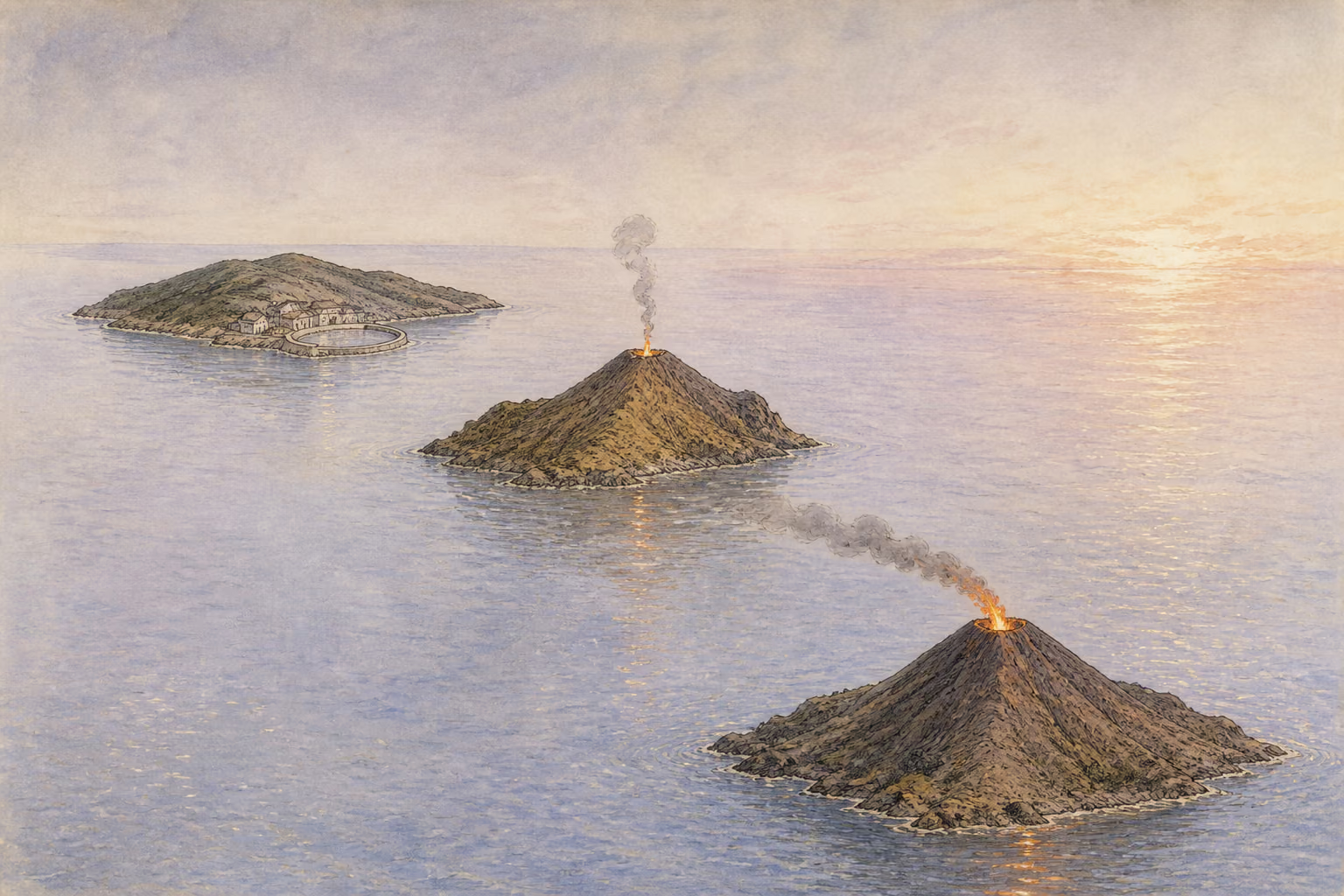
Lipara cum civium Romanorum oppido, dicta a Liparo rege, qui successit Aeolo, antea Milogonis vel Meligunis vocitata, abest XXV ab Italia, ipsa circuitu paulo minor V???. inter hanc et Siciliam altera, antea Therasia appellata, nunc Hiera, quia sacra Volcano est, colle in ea nocturnas evomente flammas. tertia Strongyle, a Lipara VI p. ad exortum solis vergens, in qua regnavit Aeolus; quae a Lipara liquidiore tantum flamma differt, e cuius fumo, quinam flaturi sint venti in triduo, praedicere incolae traduntur; unde ventos Aeolo paruisse existimatum. quarta Didyme, minor quam Lipara. quinta Ericusa, sexta phoenicusa, pabulo proximarum relictae. novissima eademque minima Euonymos. hactenus de primo Europae sinu.
English · Bostock & Riley 1855–57
Lipara, with a town whose inhabitants enjoy the rights of Roman citizens, is so called from Liparus, a former king who succeeded Æolus, it having been previously called Melogonis or Meligunis. It is 25 miles distant from Italy, and in circumference a little less. Between this island and Sicily we find another, the name of which was formerly Therasia, but now called Hiera, because it is sacred to Vulcan: it contains a hill which at night vomits forth flames. The third island is Strongyle, lying one mile to the east of Lipara, over which Æolus reigned as well; it differs only from Lipara in the superior brilliancy of its flames. From the smoke of this volcano it is said that some of the inhabitants are able to predict three days beforehand what winds are about to blow; hence arose the notion that the winds are governed by Æolus. The fourth of these islands is Didyme, smaller than Lipara, the fifth Ericusa, the sixth Phœnicusa, left to be a pasture-ground for the cattle of the neighbouring islands, and the last and smallest Euonymos. Thus much as to the first great Gulf of Europe.