LIBER XXXIII · CAPUT 10
INSTANCES OF IMMENSE WEALTH. PERSONS WHO HAVE POSSESSED THE GREATEST SUMS OF MONEY
Latine · Mayhoff 1906
Non erat apud antiquos numerus ultra centum milia; itaque et hodie multiplicantur haec, ut decies centena aut saepius dicantur. faenus hoc fecit nummusque percussus, et sic quoque aes alienum etiam nunc appellatur. postea Divites cognominati, dummodo notum sit eum, qui primus hoc cognomen acceperit, decoxisse creditoribus suis. ex eadem gente M. Crassus negabat locupletem esse nisi qui reditu annuo legionem tueri posset. in agris Es |MM| possedit Quiritium post Sullam divitissimus, nec fuit satis nisi totum Parthorum usurpasset aurum; atque ut memoriam quidem opum occupaverit —iuvat enim insectari inexplebilem istam habendi cupidinem—: multos postea cognovimus servitute liberatos opulentiores, pariterque tres Claudii principatu paulo ante Callistum, Pallantem, Narcissum. atque ut hi omittantur, tamquam adhuc rerum potiantur, C. Asinio Gallo C. Marcio Censorino cos. a. d. VI Kal. Febr. C. Caecilius C. l. Isidorus testamento suo edixit, quamvis multa bello civili perdidisset, tamen relinquere servorumIIII CXVI, iuga boumIII DC, reliqui pecoris CCLVII, in numerato HS |DC|, funerari se iussit HS |X|. congerant excedentes numerum opes, quota tamen portio erunt Ptotemaei, quem Varro tradit Pompeio res gerente circa Iudaeam octona milia equitum sua pecunia toleravisse, mille convivas totidem aureis potoriis, mutantem ea vasa cum ferculis, saginasse! quota vero ille ipse—neque enim de regibus loquor—portio fuerit Pythis Bithyni, qui platanum auream vitemque nobiles illas Dario regi donavit, Xerxis copias, hoc est |VII|LXXXVIII hominum, excepit epulo, stipendium quinque mensum frumentumque pollicitus, ut e quinque liberis in dilectu senectuti suae unus saltem concederetur! hunc quoque ipsum aliquis comparet Croeso regi! quae, malum, amentia est id in vita cupere, quod aut et servis contigerit aut ne in regibus quidem invenerit finem!
Populus R. stipem spargere coepit Sp. Postumio Q. Marcio cos.; tanta abundantia pecuniae erat, ut earn conferret L. Scipioni, ex qua is ludos fecit. nam quod Agrippae Menenio sextantes aeris in funus contulit, honoris id necessitatisque propter paupertatem Agrippae, non largitionis esse duxerim.
English · Bostock & Riley 1855–57
The ancients bad no number whereby to express a larger sum than one hundred thousand; and hence it is that, at the present day, we reckon by multiples of that number, as, for instance, ten times one hundred thousand, and so on. For these multiplications we are indebted to usury and the use of coined money; and hence, too, the expression “æs alienum,” or “another man’s money,” which we still use. In later times, again, the surname “Dives” was given to some: only be it known to all, that the man who first received this surname became a bankrupt and so bubbled his creditors. M. Crassus, a member of the same family, used to say that no man was rich, who could not maintain a legion upon his yearly income. He possessed in land two hundred millions of sesterces, being the richest Roman citizen next to Sylla. Nor was even this enough for him, but he must want to possess all the gold of the Parthians too! And yet, although he was the first to become memorable for his opulence—so pleasant is the task of stigmatizing this insatiate cupidity—we have known of many manumitted slaves, since his time, much more wealthy than he ever was; three for example, all at the same time, in the reign of the Emperor Claudius, Pallas, Callistus, and Narcissus.
But to omit all further mention of these men, as though they were still the rulers of the empire, let us turn to C. Cæcilius Claudius Isidorus, who, in the consulship of C. Asinius Gallus and C. Marcius Censorinus, upon the sixth day before the calends of February, declared by his will, that though he had suffered great losses through the civil wars, he was still able to leave behind him four thousand one hundred and sixteen slaves, three thousand six hundred pairs of oxen, and two hundred and fifty-seven thousand heads of other kind of cattle, besides, in ready money, sixty millions of sesterces. Upon his funeral, also, he ordered eleven hundred thousand sesterces to be expended.
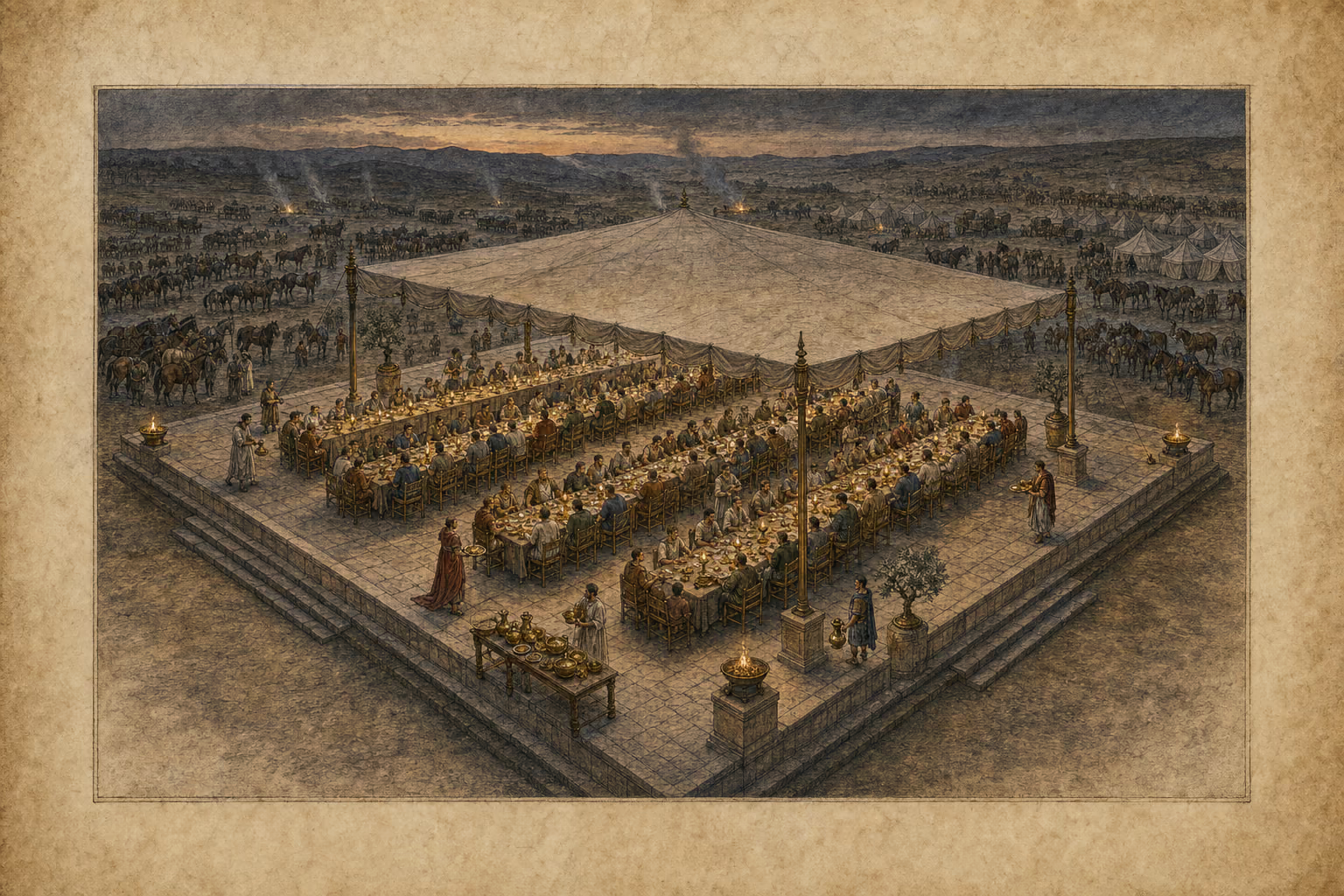
And yet, supposing all these enormous riches to be added together, how small a proportion will they bear to the wealth of Ptolemæus; the person who, according to Varro, when Pompeius was on his expedition in the countries adjoining Judæa, entertained eight thousand horsemen at his own expense, and gave a repast to one thousand guests, setting before every one of them a drinking-cup of gold, and changing these vessels at every course! And then, again, how insignificant would his wealth have been by the side of that of Pythius the Bithynian —for I here make no mention of kings, be it remarked. He it was who gave the celebrated plane-tree and vine of gold to King Darius, and who entertained at a banquet the troops of Xerxes, seven hundred and eighty-eight thousand men in all; with a promise of pay and corn for the whole of them during the next five months, on condition that one at least of his five children, who had been drawn for service, should be left to him as the solace of his old age. And yet, let any one compare the wealth of Pythius to that possessed by King Crœsus!
In the name of all that is unfortunate, what madness it is for human nature to centre its desires upon a thing that has either fallen to the lot of slaves, or else has reached no known limit in the aspirations even of kings!
The Roman people first began to make voluntary contributions in the consulship of Spurius Posthumius and Quintus Marcius. So abundant was money at that period, that the people assessed themselves for a contribution to L. Scipio, to defray the expenses of the games which he celebrated. As to the contribution of the sixth part of an as, for the purpose of defraying the funeral expenses of Agrippa Menenius, I look upon that to have been a mark of respect paid to him, an honour, too, that was rendered necessary by his poverty, rather than in the light of a largess.