LIBER XXXIII · CAPUT 11
INSTANCES OF LUXURY IN SILVER PLATE
Latine · Mayhoff 1906
Vasa ex argento mire inconstantia humani ingenii variat nullum genus officinae diu probando. nunc Furniana, nunc Clodiana, nunc Gratiana—etenim tabernas mensis adoptamus—, nunc anaglypta asperitatemque exciso circa liniarum picturas quaerimus, iam vero et mensas repositoriis inponimus ad sustinenda opsonia, interradimus alia, ut quam plurimum lima perdiderit. vasa cocinaria ex argento fieri Calvus orator quiritat; at nos carrucas argento caelare invenimus, nostraque aetate Poppaea coniunx Neronis principis soleas delicatioribus iumentis suis ex auro quoque induere iussit.
Triginta duo libras argenti Africanus sequens heredi reliquit idemque, cum de Poenis triumpharet, IIII CCCLXX pondo transtulit. hoc argenti tota Carthago ha buit illa terrarum aemula, quot mensarum postea apparatu victa! Numantia quidem deleta idem Africanus in triumpho militibus $X$ VII dedit. o viros illo imperatore dignos, quibus hoc satis fuit! frater eius Allobrogicus primus omnium pondo mille habuit, at Drusus Livius in tribunatu plebei X. nam propter quinque pondo notatum a censoribus triumphalem senem fabulosum iam videtur, item Catum Aelium, cum legati Aetolorum in consulatu prandentem in fictilibus adissent, missa ab iis vasa argentea non accepisse neque aliud habuisse argenti ad supremum vitae diem quam duo pocula, quae L. Paulus socer ei ob virtutem devicto Perseo rege donavisset. invenimus legatos Carthaginiensium dixisse nullos hominum inter sese benignius vivere quam Romanos. eodem enim argento apud omnes cenitavisse ipsos. at, Hercules, Pompeium Paulinum, Arelatensis equitis Romani filium paternaque gente pellitum, XII pondo argenti habuisse apud exercitum ferocissimis gentibus oppositum scimus; lectos vero iam pridem mulierum totos operiri argento, quaedam et triclinia. quibus argentum addidisse primus traditur Carvilius Pollio eques Romanus, non ut operiret aut Deliaca specie faceret, sed Punicana; eadem et aureos fecit, nee multo post argentei Deliacos imitati sunt. quae omnia expiavit bellum civile Sullanum.
Paulo enim ante haec factae sunt lances e centenis libris argenti, quas tune super CL numero fuisse Romae constat multosque ob eas proscriptos dolo concupiscentium. erubescant annales, qui bellum civile illud talibus vitiis inputavere; nostra aetas fortior fuit. Claudii principatu servus eius Drusilianus nomine Rotundus, dispensator Hispaniae citerioris, quingenariam lancem habuit, cui fabricandae officina prius exaedificata fuerat, et comites eius octo ad CCL libras, quaeso, ut quam multi eas conservi eius inferrent, aut quibus cenantibus? Cornelius Nepos tradit ante Sullae victoriam duo tantum triclinia Romae fuisse argentea, repositoriis argentum addi sua memoria coeptum. Fenestella, qui obiit novissimo Tiberii Caesaris principatu, ait et testudinea tum in usum venisse, ante se autem paulo lignea, rotunda, solida nec multo maiora quam mensas fuisse, se quidem puero quadrata et conpacta aut acere operta aut citro coepisse, mox additum argentum in angulos lineasque per commissuras, tympana vero se iuvene appellata, tum a stateris et lances, quas antiqui magides vocaverant.
Nec copia argenti tantum furit vita, sed valdius paene manipretiis, idque iam pridem, ut ignoscamus nobis. delphinos quinis milibus sestertium in libras emptos C. Gracchus habuit, L. vero Crassus orator duos scyphos Mentoris artificis manu caelatos HS C???, confessus tamen est numquam iis uti propter verecundiam ausum. scimus eundem HS VI in singulas libras vasa empta habuisse. Asia primum devicta luxuriam misit in Italiam, siquidem L. Scipio in triumpho transtulit argenti caelati pondo milleet CCCC et vasorum aureorum pondo MD [anno conditae urbis DLXV]. at eadem Asia donata multo etiam gravius adflixit mores, inutiliorque victoria illa hereditas Attalo rege mortuo fuit. tum enim haec emendi Romae in auctionibus regiis verecundia exempta est urbis anno DCXXII, mediis LVII annis erudita civitate amare etiam, non solum admirari, opulentiam externam, inmenso et Achaicae victoriae momento ad inpellendos mores, quae et ipsa in hoc intervallo anno urbis DCVIII parta signa et tabulas pictas invexit. ne quid deesset, pariter quoque luxuria nata est et Carthago sublata, ita congruentibus fatis, ut et liberet amplecti vitia et liceret. petiere et dignationem hine aliqui veterum. C. Marius post victoriam Cimbricam cantharis potasse Liberi patris exemplo traditur, ille arator Arpinas et manipularis imperator.
English · Bostock & Riley 1855–57
The caprice of the human mind is marvellously exemplified in the varying fashions of silver plate; the work of no individual manufactory being for any long time in vogue. At one period, the Furnian plate, at another the Clodian, and at another the Gratian, is all the rage—for we borrow the shop even at our tables. —Now again, it is embossed plate that we are in search of, and silver deeply chiselled around the marginal lines of the figures painted upon it; and now we are building up on our sideboards fresh tiers of tables for supporting the various dishes. Other articles of plate we nicely pare away, it being an object that the file may remove as much of the metal as possible.
We find the orator Calvus complaining that the saucepans are made of silver; but it has been left for us to invent a plan of covering our very carriages with chased silver, and it was in our own age that Poppæa, the wife of the Emperor Nero, ordered her favourite mules to be shod even with gold!
The younger Scipio Africanus left to his heir thirty-two pounds’ weight of silver; the same person who, on his triumph over the Carthaginians, displayed four thousand three hundred and seventy pounds’ weight of that metal. Such was the sum total of the silver possessed by the whole of the inhabitants of Carthage, that rival of Rome for the empire of the world! How many a Roman since then has surpassed her in his display of plate for a single table! After the destruction of Numantia, the same Africanus gave to his soldiers, on the day of his triumph, a largess of seven denarii each—and right worthy were they of such a general, when satisfied with such a sum! His brother, Scipio Allobrogicus, was the very first who possessed one thousand pounds’ weight of silver, but Drusus Livius, when he was tribune of the people, possessed ten thousand. As to the fact that an ancient warrior, a man, too, who had enjoyed a triumph, should have incurred the notice of the censor for being in possession of five pounds’ weight of silver, it is a thing that would appear quite fabulous at the present day. The same, too, with the instance of Catus Ælius, who, when consul, after being found by the Ætolian ambassadors taking his morning meal off of common earthenware, refused to receive the silver vessels which they sent him; and, indeed, was never in possession, to the last day of his life, of any silver at all, with the exception of two drinking-cups, which had been presented to him as the reward of his valour, by L. Paulus, his father-in-law, on the conquest of King Perseus.
We read, too, that the Carthaginian ambassadors declared that no people lived on more amicable terms among themselves than the Romans, for that wherever they had dined they had always met with the same silver plate. And yet, by Hercules! to my own knowledge, Pompeius Paulinus, son of a Roman of equestrian rank at Arelate, a member, too, of a family, on the paternal side, that was graced with the fur, had with him, when serving with the army, and that, too, in a war against the most savage nations, a service of silver plate that weighed twelve thousand pounds!
For this long time past, however, it has been the fashion to plate the couches of our women, as well as some of our banquetting-couches, entirely with silver. Carvilius Pollio, a Roman of equestrian rank, was the first, it is said, to adorn these last with silver; not, I mean, to plate them all over, nor yet to make them after the Delian pattern; the Punic fashion being the one he adopted. It was after this last pattern too, that he had them ornamented with gold as well: and it was not long after his time that silver couches came into fashion, in imitation of the couches of Delos. All this extravagance, however, was fully expiated by the civil wars of Sulla.
In fact, it was but very shortly before that period that these couches were invented, as well as chargers of silver, one hundred pounds in weight: of which last, it is a well-known fact, that there were then upwards of one hundred and fifty in Rome, and that many persons were proscribed through the devices of others who were desirous to gain possession thereof. Well may our Annals be put to the blush for having to impute those civil wars to the existence of such vices as these!
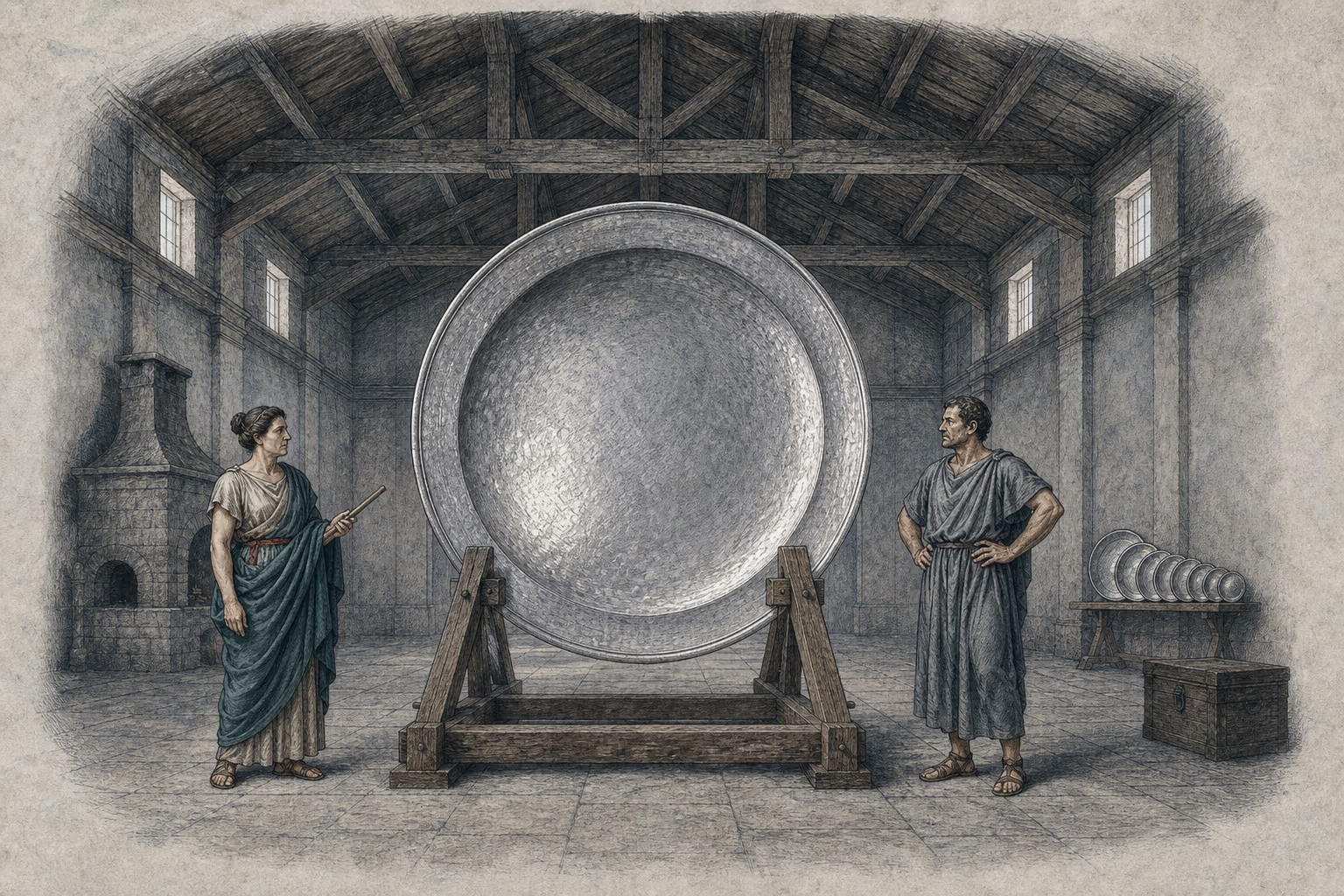
Our own age, however, has waxed even stronger in this respect. In the reign of Claudius, his slave Drusillanus, surnamed Rotundus, who acted as his steward in Nearer Spain, possessed a silver charger weighing five hundred pounds, for the manufacture of which a workshop had had to be expressly built. This charger was accompanied also by eight other dishes, each two hundred and fifty pounds in weight. How many of his fellow-slaves, pray, would it have taken to introduce these dishes, or who were to be the guests served therefrom?
Cornelius Nepos says that before the victory gained by Sylla, there were but two banquetting couches adorned with silver at Rome, and that in his own recollection, silver was first used for adorning sideboards. Fenestella, who died at the end of the reign of Tiberius Cæsar, informs us that at that period sideboards, inlaid even with tortoiseshell, had come into fashion; whereas, a little before his time, they had been made of solid wood, of a round shape, and not much larger than our tables. He says, however, that when he was quite a boy, they had begun to make the sideboards square, and of different pieces of wood, or else veneered with maple or citrus: and that at a later period the fashion was introduced of overlaying the corners and the seams at the joinings with silver. The name given to them in his youth, he says, was “tympana;” and it was at this period, too, that the chargers which had been known as “magides” by the ancients, first received the name of “lances,” from their resemblance to the scales of a balance.
It is not, however, only for vast quantities of plate that there is such a rage among mankind, but even more so, if possible, for the plate of peculiar artists: and this too, to the exculpation of our own age, has long been the case. C. Gracchus possessed some silver dolphins, for which he paid five thousand sesterces per pound. Lucius Crassus, the orator, paid for two goblets chased by the hand of the artist Mentor, one hundred thousand sesterces: but he confessed that for very shame he never dared use them, as also that he had other articles of plate in his possession, for which he had paid at the rate of six thousand sesterces per pound. It was the conquest of Asia that first introduced luxury into Italy; for we find that Lucius Scipio, in his triumphal procession, exhibited one thousand four hundred pounds’ weight of chased silver, with golden vessels, the weight of which amounted to one thousand five hundred pounds. This took place in the year from the foundation of the City, 565. But that which inflicted a still more severe blow upon the Roman morals, was the legacy of Asia, which King Attalus left to the state at his decease, a legacy which was even more disadvantageous than the victory of Scipio, in its results. For, upon this occasion, all scruple was entirely removed, by the eagerness which existed at Rome, for making purchases at the auction of the king’s effects. This took place in the year of the City, 622, the people having learned, during the fifty-seven years that had intervened, not only to admire, but to covet even, the opulence of foreign nations. The tastes of the Roman people had received, too, an immense impulse from the conquest of Achaia, which, during this interval, in the year of the City, 608, that nothing might be wanting, had introduced both statues and pictures. The same epoch, too, that saw the birth of luxury, witnessed the downfall of Carthage; so that, by a fatal coincidence, the Roman people, at the same moment, both acquired a taste for vice and obtained a license for gratifying it.
Some, too, of the ancients sought to recommend themselves by this love of excess; for Caius Marius, after his victory over the Cimbri, drank from a cantharus, it is said, in imitation of Father Liber; Marius, that ploughman of Arpinum, a general who had risen from the ranks!