LIBER XXXIII · CAPUT 2
PARTICULARS CONNECTED WITH THE EQUESTRIAN ORDER
Latine · Mayhoff 1906
decuriae quoque ipsae pluribus discretae nominibus fuere, tribunorum aeris et selectorum et iudicum. praeter hos etiamnum nongenti vocabantur ex omnibus electi ad custodiendas suffragiorum cistas in comitiis. et divisus hic quoque ordo erat superba usurpatione nominum, cum alius se nongentum, alius selectum, alius tribunum appellaret.
Tiberii demum principatu nono anno in unitatem venit equester ordo, anulorumque auctoritati forma constituta est C. Asinio Pollione C. Antistio Vetere cos. anno urbis conditae DCCLXXV, quod miremur, futtili paene de causa, cum C. Sulpicius Galba, iuvenalem famam apud principem popinarum poenis aucupatus, questus esset in senatu, volgo institores eius culpae defendi anulis. hac de causa constitutum, ne cui ius esset nisi qui ingenuus ipse, patre, avo paterno HS CCCC census fuisset et lege Iulia theatrali in quattuordecim ordinibus sedisset. postea gregatim insigne id adpeti coeptum. propter haec discrimina C. princeps decuriam quintam adiecit, tantumque enatum est fastus, ut, quae sub divo Augusto impleri non potuerant, decuriae non capiant eum ordinem, passimque ad ornamenta ea etiam servitute liberati transiliant, quod antea numquam erat factum, quoniam ferreo anulo et equites iudicesque intellegebantur. adeoque id promiscuum esse coepit, ut apud Claudium Caesarem in censura eius unus ex equitibus Flavius Proculus cccc ex ea causa reos postularet. ita dum separatur ordo ab ingenuis, communicatus est cum servitiis. iudicum autem appellatione separare eum ordinem primi omnium instituere Gracchi discordi popularitate in contumeliam senatus, mox debellata auctoritas nominis vario seditionum eventu circa publicanos substitit et aliquamdiu tertiae sortis viri publicani fuere. M. Cicero demum stabilivit equestre nomen in consulatu suo Catilinianis rebus, ex eo ordine profectum se celebrans eiusque vires peculiari popularitate quaerens. ab illo tempore plane hoc tertium corpus in re p. factum est, coepitque adici senatui populoque Romano et equester ordo. qua de causa et nunc post populum scribitur, quia novissime coeptus est adici.
Equitum quidem etiam nomen ipsum saepe variatum est, in iis quoque, qui id ab equitatu trahebant. celeres sub Romulo regibusque sunt appellati, deinde flexuntes, postea trossuli, cum oppidum in Tuscis citra Volsinios p. VIIII sine ullo peditum adiumento cepissent eius vocabuli, idque duravit ultra C. Gracchum. Iunius certe, qui ab amicitia eius Gracchanus appellatus est, scriptum reliquit his verbis: Quod ad equestrem ordinem attinet, antea trossulos vocabant, nunc equites vocant ideo, quia non intellegunt trossulos nomen quid valeat, multosque pudet eo nomine appellari. et causam, quae supra indicata est, exponit invitosque etiamnum tamen trossulos vocari.
Sunt adhuc aliquae non omittendae in auro differentiae. auxilia quippe et externos torquibus aureis donavere, at cives non nisi argenteis, praeterque armillas civibis dedere, quas non dabant externis.
lidem, quo magis miremur, coronas ex auro dedere et civibus. quis primus donatus sit ea, non inveni equidem; quis primus donaverit, a L. Pisone traditur: A. Postumius dictator apud lacum Regillum castris Latinorum expugnatis eum, cuius maxime opera capta essent. hanc coronam ex praeda is deditII l., item L. Lentulus consul Servio Cornelio Merendae Samnitum oppido capto, sed hic quinque librarum; trium Piso Frugi filium ex privata pecunia donavit eamque coronam testamento ei praelegavit.
English · Bostock & Riley 1855–57
These decuries, too, were themselves distinguished by several denominations—“tribunes of the treasury,” “selecti,” and “judices:” in addition to whom, there were the persons styled the “nine hundred,” chosen from all the decuries for the purpose of keeping the voting-boxes at the comitia. From the ambitious adoption, however, of some one of these names, great divisions ensued in this order, one person styling himself a member of the nine hundred, another one of the selecti, and a third a tribune of the treasury.
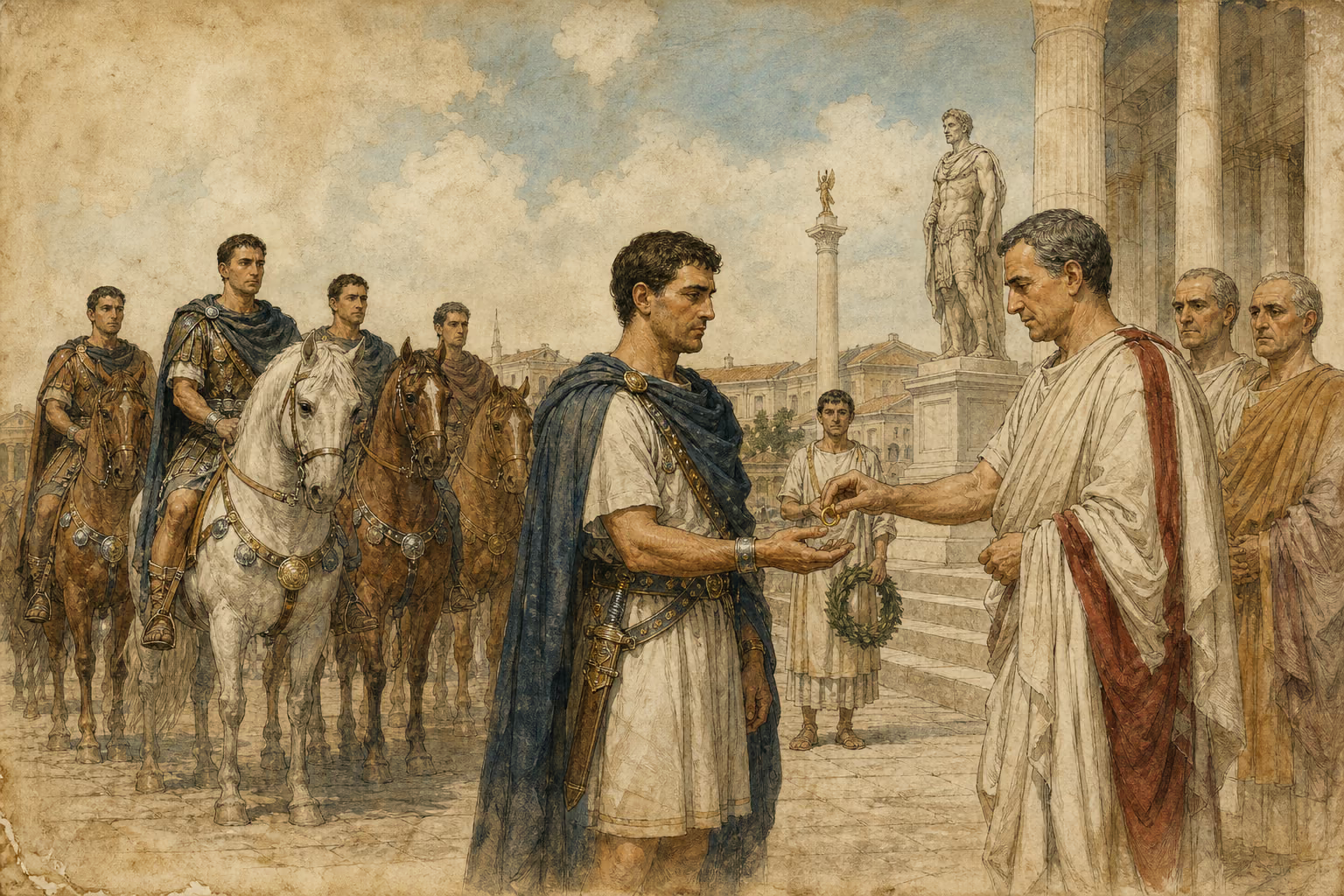
At length, however, in the ninth year of the reign of the Emperor Tiberius, the equestrian order was united in a single body; and a decree was passed, establishing to whom belonged the right of wearing the ring, in the consulship of C. Asinius Pollio and C. Antistius Vetus, the year from the foundation of the City, 775. It is a matter for surprise, how almost futile, we may say, was the cause which led to this change. C. Sulpicius Galba, desirous in his youth to establish his credit with the Emperor by hunting out grounds for prosecuting the keepers of victualling-houses, made complaint in the senate that the proprietors of those places were in the habit of protecting themselves from the consequences of their guilt by their plea of wearing the golden ring. For this reason, an ordinance was made that no person whatsoever should have this right of wearing the ring, unless, freeborn himself as regarded his father and paternal grandfather, he should be assessed by the censors at four hundred thousand sesterces, and entitled, under the Julian Law, to sit in the fourteen tiers of seats at the theatre. In later times, however, people began to apply in whole crowds for this mark of rank; and in consequence of the diversities of opinion which were occasioned thereby, the Emperor Caius added a fifth decury to the number. Indeed to such a pitch has conceit now arisen, that whereas, under the late Emperor Augustus, the decuries could not be completed, at the present day they will not suffice to receive all the members of the equestrian order, and we see in every quarter persons even who have been but just liberated from slavery, making a leap all at once to the distinction of the golden ring: a thing that never used to happen in former days, as it was by the ring of iron that the equites and the judices were then to be recognized.
Indeed, so promiscuously was this privilege at last conferred, that Flavius Proculus, one of the equites, informed against four hundred persons on this ground, before the Emperor Claudius, who was then censor: and thus we see, an order, which was established as a mark of distinction from other private individuals of free birth, has been shared in common with slaves!
The Gracchi were the first to attach to this order the separate appellation of “judices,” their object being at the same moment a seditious popularity and the humiliation of the senate. After the fall of these men, in consequence of the varying results of seditious movements, the name and influence of the equestrian order were lost, and became merged in those of the publicani, who, for some time, were the men that constituted the third class in the state. At last, however, Marcus Cicero, during his consulship, and at the period of the Catilinarian troubles, re-established the equestrian name, it being his vaunt that he himself had sprung from that order, and he, by certain acts of popularity peculiar to himself, having conciliated its support. Since that period, it is very clear that the equites have formed the third body in the state, and the name of the equestrian order has been added to the formula—“The Senate and People of Rome.” Hence it is, too, that at the present day even, the name of this order is written after that of the people, it being the one that was the last instituted.
Indeed, the name itself of the equites even, has been frequently changed, and that too, in the case of those who only owed their name to the fact of their service on horseback. Under Romulus and the other kings, the equites were known as “Celeres,” then again as “Flexuntes,” and after that as “Trossuli,” from the fact of their having taken a certain town of Etruria, situate nine miles on this side of Volsinii, without any assistance from the infantry; a name too which survived till after the death of C. Gracchus.
At all events, in the writings left by Junius, who, from his affection for C. Gracchus, took the name of Gracchanus, we find the following words—“As regards the equestrian order, its members were formerly called ‘Trossuli,’ but at the present day they have the name of ‘Equites;’ because it is not understood what the appellation ‘Trossuli’ really means, and many feel ashamed at being called by that name.” —He then goes on to explain the reason, as above mentioned, and adds that, though much against their will, those persons are still called “Trossuli.”
There are also some other distinctions connected with gold, the mention of which ought not to be omitted. Our ancestors, for instance, presented torcs of gold to the auxiliaries and foreign troops, while to Roman citizens they only granted silver ones: bracelets too, were given by them to citizens, but never to foreigners.
But, a thing that is more surprising still, crowns of gold were given to the citizens as well. As to the person who was first presented with one, so far as I have enquired, I have not been able to ascertain his name: L. Piso says, however, that the Dictator A. Posthumius was the first who conferred one: on taking the camp of the Latins at Lake Regillus, he gave a crown of gold, made from the spoil, to the soldier whose valour had mainly contributed to this success. L. Lentulus, also, when consul, presented one to Servius Cornelius Merenda, on taking a town of the Samnites; but in his case it was five pounds in weight. Piso Frugi, too, presented his son with a golden crown, at his own private expense, making it a specific legacy in his will.