LIBER XXXIII · CAPUT 6
SILVER
Latine · Mayhoff 1906
Ab his argenti metalla dicantur, quae sequens insania est. non nisi in puteis reperitur nullaque spe sui nascitur, nullis, ut in auro, lucentibus scintillis. terra est alias rubra, alias cineracea. excoqui non potest, nisi cum plumbo nigro aut cum vena plumbi—galenam vocant—, quae iuxta argenti venas plerumque reperitur. et codem opere ignium discedit pars in plumbum, argentum autem innatat superne, ut oleum aquis. reperitur in omnibus paene provinciis, sed in Hispania pulcherrimum, id quoque in sterili solo atque etiam montibus, et ubicumque una inventa vena est, non procul invenitur alia. hoc quidem et in omni fere materia, unde metalla Graeci videntur dixisse. mirum, adhuc per Hispanias ab Hannibale inchoatos durare puteos. sua nomina ab inventoribus habent, ex quis Baebelo appellatur hodie, qui ccc pondo Hannibali subministravit in dies, ad MD passus iam cavato monte, per quod spatium Aquitani stantes noctibus diebusque egerunt aquas lucernarum mensura amnemque faciunt. argenti vena in summo reperta crudaria appellatur. finis antiquis fodiendi solebat esse alumen inventum; ultra nihil quaerebatur. nuper inventa aeris vena infra alumen nullam fine spei fecit. odor ex argenti fodinis inimicus omnibus animalibus, sed maxime canibus.—Aurum argentumque quo mollius, eo pulchrius. lineas ex argento nigras praeduci plerique mirantur.
Est et lapis in iis venis, cuius vomica liquoris aeterni argentum vivum appellatur. venenum rerum omnium est perrumpitque vasa permanans tabe dira. omnia ei innatant praeter aurum; id unum ad se trahit. ideo et optime purgat, ceteras eius sordes expuens crebro iactatu fictilibus in vasis. ita vitiiseiectis ut et ipsum ab auro discedat, in pelles subactas effunditur, per quas sudoris vice defluens purum relinquit aurum. ergo et cum aera inaurentur, sublitum bratteis pertinacissime retinet, verum pallore detegit simplices aut praetenues bratteas. quapropter id furtum quaerentes ovi liquore candido usum eum adulteravere, mox et hydrargyro, de quo dicemus suo loco. et alias argentum vivum non largum inventu est.
In isdem argenti metallis invenitur, ut proprie dicatur, spumae lapis candidae nitentisque, non tamen tralucentis; stimi appellant, alii stibi, alii alabastrum, aliqui larbasim. duo eius genera, mas ac femina. magis probant feminam, horridior est mas scabriorque et minus ponderosus minusque radians et harenosior, femina contra nitet, friabilis fissurisque, non globis, dehiscens.
Vis eius adstringere ac refrigerare, principalis autem circa oculos, namque ideo etiam plerique platyophthalmon id appellavere, quoniam in calliblepharis mulierum dilatet oculos, et fluctiones inhibet oculorum exulcerationesque farina eius ac turis cummi admixto. sistit et sanguinem e cerebro profluentem, efficacissime et contra recentia volnera et contra veteres canum morsus inspersa farina et contra ambusta igni cum adipe ac spuma argenti cerussaque et cera. uritur autem offis bubuli fimi circumlitum in clibanis, dein restinguitur mulierum lacte teriturque in mortariis admixta aqua pluvia; ac subinde turbidum transfunditur in aereum vas emundatum nitro. faex eius intellegitur plumbosissima, quae subsedit in mortario abiciturque. dein vas, in quod turbida transfusa sint, opertum linteo per noctem relinquitur et postero die quidquid innatet effunditur spongeave tollitur. quod ibi subsedit, flos intellegitur ac linteo interposito in sole siccatur, non ut perarescat, iterumque in mortario teritur et in pastillos dividitur. ante omnia autem urendi modus necessarius est, ne plumbum fiat. quidam non fimo utuntur coquentes, sed adipe. alii tritum in aqua triplici linteo saccant faecemque abiciunt idque, quod defluxit, transfundunt, quidquid subsidat colligentes. emplastris quoque et collyriis miscent.
Scoriam in argento Graeci vocant helcysma. vis eius adstringere et refrigerare corpora, ac remedio est addita emplastris ut molybdaena, de qua dicemus in plumbo, cicatricibus maxime glutinandis, et contra tenesmos dysenteriasque infusa clysteribus cum myrteo oleo. addunt et in medicamenta, quae vocant liparas, ad excrescentia ulcerum aut ex attritu facta aut in capite manantia.
Fit in isdem metallis et quae vocatur spuma argenti. genera eius tria: optima quam chrysitim vocant, sequens quam argyritim, tertia quam molybditim. et plerumque omnes hi colores in isdem tubulis inveniuntur. probatissima est Attica, proxima Hispaniensis. chrysitis ex vena ipsa fit, argyritis ex argento, molybditis e plumbi ipsius fusura—quae fit Puteolis—et inde habet nomen. omnis autem fit excocta sua materia ex superiore catino defluens in inferiorem et ex eo sublata vericulis ferreis atque in ipsa flamma convoluta vericulo, ut sit modici ponderis. est autem, ut ex nomine intellegi potest, fervescentis et futurae materiae spuma. distat a scoria quo potest spuma a faece distare: alterum purgantis se materiae, alterum purgatae vitium est. quidam duo genera faciunt spumae, quae vocant scirerytida et peumenen, tertium molybdaenam in plumbo dicendam. spuma, ut sit utilis, iterum coquitur confractis tubulis ad magnitudinem anulorum. ita accensa follibus ad separandos carbones cineremque abluitur aceto aut vino simulque restinguitur. quodsi sit argyritis, ut candor ei detur, magnitudine fabae confracta in fictili coqui iubetur ex aqua addito in linteolis tritico et hordeo novis, donec ea purgentur. postea VI diebus terunt in mortariis, ter die abluentes aqua frigida et, cum dies desinat, calida, addito sale fossili in libram spumae obolo. novissimo die dein condunt in plumbeo vase. alii cum faba candida et tisana cocunt siccantque sole, alii in lana candida cum faba, done lanam non denigret. tune salem fossilem adiciunt subinde aqua mutata siccantque diebus XL calidissimis aestatis. nec non in ventre suillo in aqua coquunt exemptamque nitro fricant et ut supra terunt in mortariis cum sale. sunt qui non coquant, sed cum sale terant et adiecta aqua abluant. usus eius ad collyria et cuti mulierum cicatricum foeditates tollendas maculasque, abluendum capillum. vis autem siccare, mollire, refrigerare, tempe- rate purgare, explere ulcera, tumores lenire; talibusque emplastris additur et liparis supra dictis. ignes etiam sacros tollit cum ruta myrtisque et aceto, item perniones cum myrtis et cera.
English · Bostock & Riley 1855–57
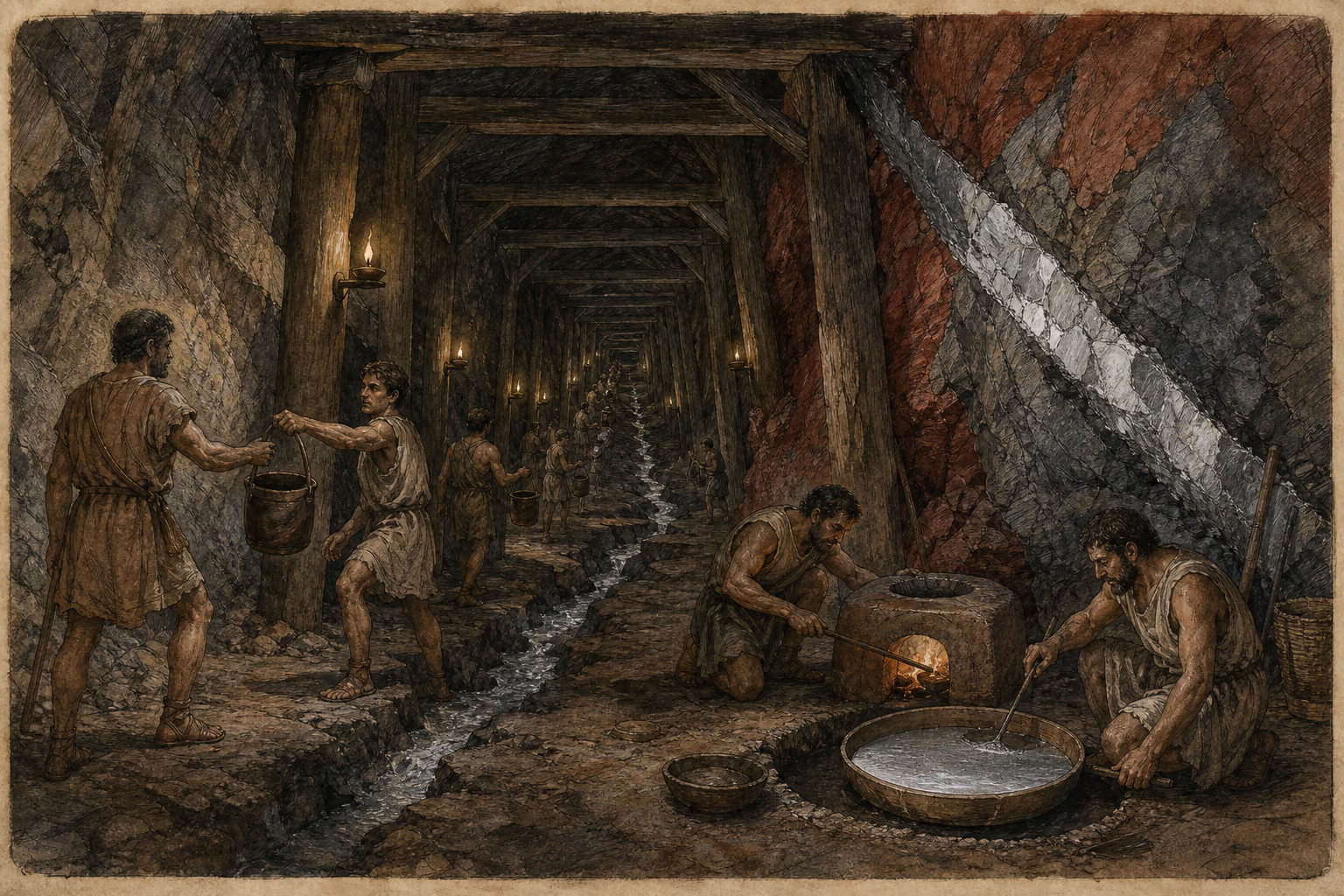
After stating these facts, we come to speak of silver ore, the next folly of mankind. Silver is never found but in shafts sunk deep in the ground, there being no indications to raise hopes of its existence, no shining sparkles, as in the case of gold. The earth in which it is found is sometimes red, sometimes of an ashy hue. It is impossible, too, to melt it, except in combination with lead or with galena, this last being the name given to the vein of lead that is mostly found running near the veins of the silver ore. When submitted, too, to the action of fire, part of the ore precipitates itself in the form of lead, while the silver is left floating on the surface, like oil on water.
Silver is found in nearly all our provinces, but the finest of all is that of Spain; where it is found, like gold, in uncultivated soils, and in the mountains even. Wherever, too, one vein of silver has been met with, another is sure to be found not far off: a thing that has been remarked, in fact, in the case of nearly all the metals, which would appear from this circumstance to have derived their Greek name of “metalla.” It is a remarkable fact, that the shafts opened by Hannibal in the Spanish provinces are still worked, their names being derived from the persons who were the first to discover them. One of these mines, which at the present day is still called Bæbelo, furnished Hannibal with three hundred pounds’ weight of silver per day. The mountain is already excavated for a distance of fifteen hundred paces; and throughout the whole of this distance there are water-bearers standing night and day, baling out the water in turns, regulated by the light of torches, and so forming quite a river.
The vein of silver that is found nearest the surface is known by the name of “crudaria.” In ancient times, the excavations used to be abandoned the moment alum was met with, and no further search was made. Of late, however, the discovery of a vein of copper beneath alum, has withdrawn any such limits to man’s hopes. The exhalations from silver-mines are dangerous to all animals, but to dogs more particularly. The softer they are, the more beautiful gold and silver are considered. It is a matter of surprise with most persons, that lines traced with silver should be black.
There is a mineral also found in these veins of silver, which yields a humour that is always liquid, and is known as “quicksilver.” It acts as a poison upon everything, and pierces vessels even, making its way through them by the agency of its malignant properties. All substances float upon the surface of quicksilver, with the exception of gold, this being the only substance that it attracts to itself. Hence it is, that it is such an excellent refiner of gold; for, on being briskly shaken in an earthen vessel with gold, it rejects all the impurities that are mixed with it. When once it has thus expelled these superfluities, there is nothing to do but to separate it from the gold; to effect which, it is poured out upon skins that have been well tawed, and so, exuding through them like a sort of perspiration, it leaves the gold in a state of purity behind.
Hence it is, too, that when copper has to be gilded, a coat of quicksilver is laid beneath the gold leaf, which it retains in its place with the greatest tenacity: in cases, however, where the leaf is single, or very thin, the presence of the quicksilver is detected by the paleness of the colour. For this reason, persons, when meditating a piece of fraud, have been in the habit of substituting glair of egg for quicksilver, and then laying upon it a coat of hydrargyros, a substance of which we shall make further mention in the appropriate place. Generally speaking, quicksilver has not been found in any large quantities.
In the same mines in which silver is found, there is also found a substance which, properly speaking, may be called a stone made of concrete froth. It is white and shining, without being transparent, and has the several names of stimmi, stibi, alabastrum, and larbasis. There are two kinds of it, the male and the female. The latter kind is the more approved of, the male stimmi being more uneven, rougher to the touch, less ponderous, not so radiant, and more gritty. The female kind, on the other hand, is bright and friable, and separates in laminæ, and not in globules.
Stimmi is possessed of certain astringent and refrigerative properties, its principal use, in medicine, being for the eyes. Hence it is that most persons call it “platyophthalmon,” it being extensively employed in the calliblepharic preparations of females, for the purpose of dilating the eyes. It acts also as a check upon fluxes of the eyes and ulcerations of those organs; being used, as a powder, with pounded frankincense and gum. It has the property, too, of arresting discharges of blood from the brain; and, sprinkled in the form of a powder, it is extremely efficacious for the cure of recent wounds and bites of dogs which have been some time inflicted. For the cure of burns it is remarkably good, mixed with grease, litharge, ceruse, and wax.
The method of preparing it, is to burn it, enclosed in a coat of cow-dung, in a furnace; which done, it is quenched with woman’s milk, and pounded with rain-water in a mortar. While this is doing, the thick and turbid part is poured off from time to time into a copper vessel, and purified with nitre. The lees of it, which are rejected, are recognized by their being full of lead and falling to the bottom. The vessel into which the turbid part has been poured off, is then covered with a linen cloth and left untouched for a night; the portion that lies upon the surface being poured off the following day, or else removed with a sponge. The part that has fallen to the bottom of the vessel is regarded as the choicest part, and is left, covered with a linen cloth, to dry in the sun, but not to become parched. This done, it is again pounded in a mortar, and then divided into tablets. But the main thing of all is, to observe such a degree of nicety in heating it, as not to let it become lead. Some persons, when preparing it on the fire, use grease instead of dung. Others, again, bruise it in water and then pass it through a triple strainer of linen cloth; after which, they reject the lees, and pour off the remainder of the liquid, collecting all that is deposited at the bottom, and using it as an ingredient in plasters and eye-salves.
The scoria of silver is called by the Greeks “helcysma.” It has certain restringent and refrigerative effects upon bodies, and, like molybdæna, of which we shall make further mention when speaking of lead, is used as an ingredient in making plasters, those more particularly which are to promote the cicatrization of wounds. It is employed also for the cure of tenesmus and dysentery, being injected in the form of a clyster with myrtle-oil. It forms an ingredient, too, in the medicaments known as “liparæ,” for the removal of fleshy excrescences in sores, ulcerations arising from chafing, or running ulcers on the head.
The same mines also furnish us with the preparation known as “scum of silver.” There are three varieties of it; the best, known as “chrysitis;” the second best, the name of which is “argyritis;” and a third kind, which is called “molybditis.” In most instances, too, all these tints are to be found in the same cake.
The most approved kind is that of Attica; the next being that which comes from Spain. Chrysitis is the produce of the metallic vein, argyritis is obtained from the silver itself, and molybditis is the result of the smelting of lead, a work that is done at Puteoli; to which last circumstance, in fact, molybditis owes its name. All these substances are prepared in the following manner: the metal is first melted, and then allowed to flow from a more elevated receiver into a lower. From this last it is lifted by the aid of iron spits, and is then twirled round at the end of the spit in the midst of the flames, in order to make it all the lighter. Thus, as may be easily perceived from the name, it is in reality the scum of a substance in a state of fusion—of the future metal, in fact. It differs from scoria in the same way that the scum of a liquid differs from the lees, the one being an excretion thrown out by the metal while purifying itself, the other an excretion of the metal when purified.
Some persons distinguish two kinds of scum of silver, and give them the names of “scirerytis” and “peumene;” a third variety being molybdæna, of which we shall have to make further mention when treating of lead. To make this scum fit for use, the cakes are again broken into pieces the size of a hazel-nut, and then melted, the fire being briskly blown with the bellows. For the purpose of separating the charcoal and ashes from it, it is then rinsed with vinegar or with wine, and is so quenched. In the case of argyritis, it is recommended, in order to blanch it, to break it into pieces the size of a bean, and then to boil it with water in an earthen vessel, first putting with it, wrapped in linen cloths, some new wheat and barley, which are left there till they have lost the outer coat. This done, they bruise the whole in mortars for six consecutive days, taking care to rinse the mixture in cold water three times a day, and after that, in an infusion of hot water and fossil salt, one obolus of the latter to every pound of scum: at the end of the six days it is put away for keeping in a vessel of lead.
Some persons boil it with white beans and a ptisan of barley, and then dry it in the sun; others, again, with white wool and beans, till such time as it imparts no darkness to the wool; after which, first adding fossil salt, they change the water from time to time, and then dry it during the forty hottest days of summer. In some instances the practice is, to boil it in water in a swine’s paunch, and then to take it out and rub it with nitre; after which, following the preceding method, they pound it in a mortar with salt. Some again never boil it, but pound it only with salt, and then rinse it with water.
Scum of silver is used as an ingredient in eye-salves, and, in the form of a liniment, by females, for the purpose of removing spots and blemishes caused by scars, as also in washes for the hair. Its properties are desiccative, emollient, refrigerative, temperative, and detergent. It fills up cavities in the flesh produced by ulceration, and reduces tumours. For all these purposes it is employed as an ingredient in plaster, and in the liparæ previously mentioned. In combination with rue, myrtle, and vinegar, it removes erysipelas: and, with myrtle and wax, it is a cure for chilblains.