LIBER XXXIII · CAPUT 8
HYDRARGYROS. REMEDIES DERIVED FROM MINIUM
Latine · Mayhoff 1906
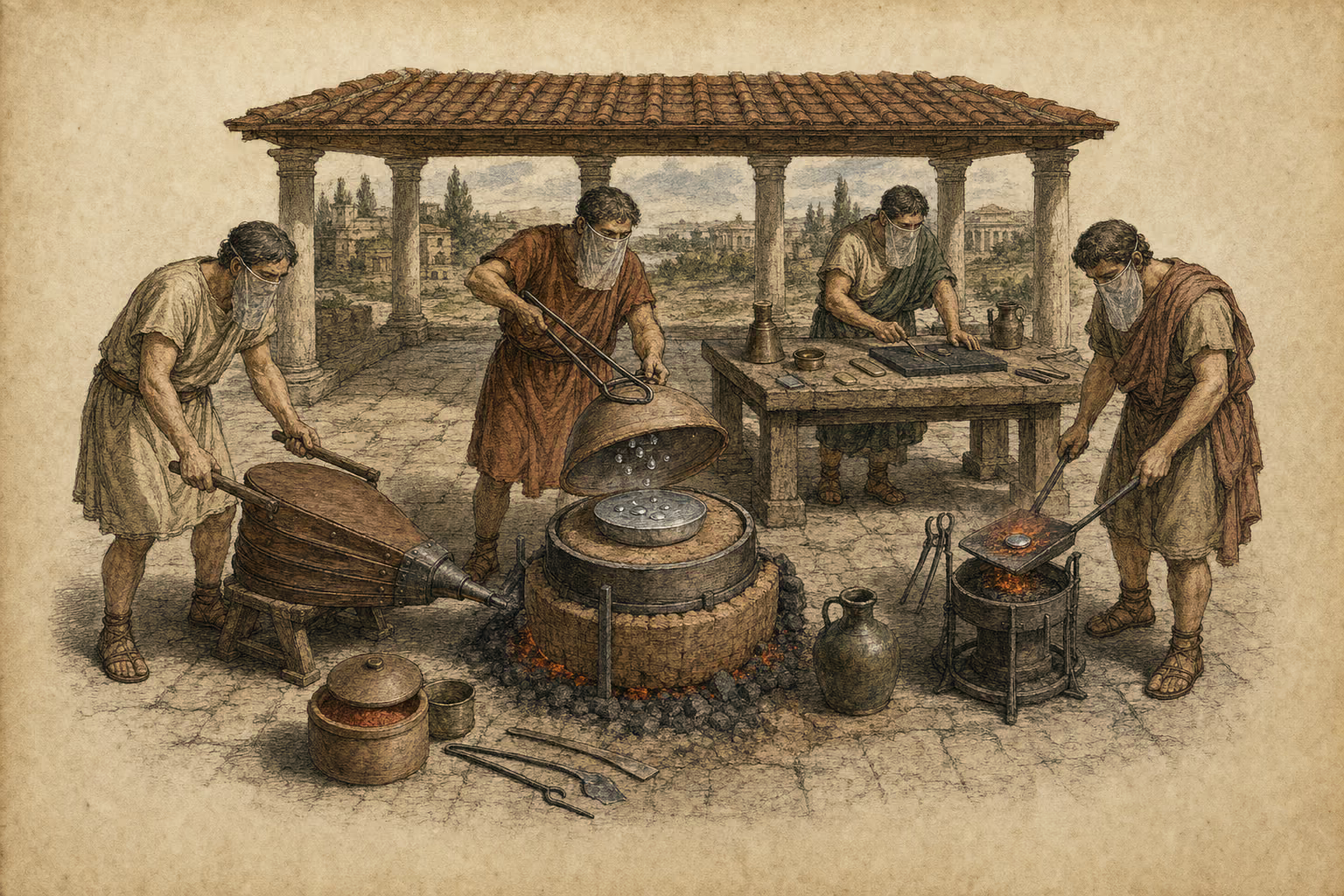
Ex secundario invenit vita et hydrargyrum in vicem argenti vivi, paulo ante dilatum. fit autem duobus modis: aereis mortariis pistillisque trito minio ex aceto aut patinis fictilibus inpositum ferrea concha, calice coopertum, argilla superinlita, dein sub patinis accenso follibus continuis igni atque ita calici sudore deterso, qui fit argenti colore et aquae liquore. idem guttis dividi facilis et lubrico umore confluere. quod cum venenum esse conveniat, omnia, quae de minio in medicinae usu traduntur, temeraria arbitror, praeterquam fortassis inlito capiti ventrive sanguinem sisti, dum ne qua penetret in viscera ac volnus attingat. aliter utendum non equidem censeam.
Hydrargyro argentum inauratur solum nunc prope, cum et in aerea simili modo duci debeat. sed eadem fraus, quae in omni parte vitae ingeniosissima est, viliorem excogitavit materiam, ut docuimus.
Auri argentique mentionem comitatur lapis, quem coticulam appellant, quondam non solitus inveniri nisi in flumine Tmolo, ut auctor est Theophrastus, nunc vero passim. alii Heraclium, alii Lydium vocant. sunt autem modici, quaternas uncias longitudinis binasque latitudinis non excedentes. quod a sole fuit in iis, melius quam quod a terra. his coticulis periti cum e vena ut lima rapuerunt experimentum, protinus dicunt, quantum auri sit in ea, quantum argenti vel aeris, scripulari differentia, mirabili ratione non fallente.
Argenti duae differentiae. vatillis ferreis candentibus ramento inposito, quod candidum permaneat, probatur. proxima bonitas rufo, nulla nigro. sed experimento quoque fraus intervenit. servatis in urina virorum vatillis inficitur ita ramentum obiter, dum uritur candoremque mentitur. est aliquod experimentum politi et in halitu hominis, si sudet protinus nubemque discutiat.
English · Bostock & Riley 1855–57
Human industry has also discovered a method of extracting hydrargyros from the inferior minium, a substitute for quicksilver, the further mention of which was deferred, a few pages before, to the present occasion. There are two methods of preparing this substance; either by pounding minium and vinegar with a brazen pestle and mortar, or else by putting minium into flat earthen pans, covered with a lid, and then enclosed in an iron seething-pot well luted with potter’s clay. A fire is then lighted under the pans, and the flame kept continually burning by the aid of the bellows; which done, the steam is carefully removed, that is found adhering to the lid, being like silver in colour, and similar to water in its fluidity. This liquid, too, is easily made to separate in globules, which, from their fluid nature, readily unite.
As it is a fact generally admitted, that minium is a poison, I look upon all the recipes given as highly dangerous which recommend its employment for medicinal purposes; with the exception, perhaps, of those cases in which it is applied to the head or abdomen, for the purpose of arresting hæmorrhage, due care being taken that it is not allowed to penetrate to the viscera, or to touch any sore. Beyond such cases as these, for my own part, I should never recommend it to be used in medicine.
At the present day silver is gilded almost exclusively by the agency of hydrargyros; and a similar method should always be employed in laying gold leaf upon copper. But the same fraud which ever shows itself so extremely ingenious in all departments of human industry, has devised a plan of substituting an inferior material, as already mentioned.
A description of gold and silver is necessarily accompanied by that of the stone known as “coticula.” In former times, according to Theophrastus, this stone was nowhere to be found, except in the river Tmolus, but at the present day it is found in numerous places. By some persons it is known as the “Heraclian,” and by others as the “Lydian” stone. It is found in pieces of moderate size, and never exceeding four inches in length by two in breadth. The side that has lain facing the sun is superior to that which has lain next to the ground. Persons of experience in these matters, when they have scraped a particle off the ore with this stone, as with a file, can tell in a moment the proportion of gold there is in it, how much silver, or how much copper; and this to a scruple, their accuracy being so marvellous that they are never mistaken.
There are two kinds of silver. On placing a piece of it upon an iron fire-shovel at a white heat, if the metal remains perfectly white, it is of the best quality: if again it turns of a reddish colour, it is inferior; but if it becomes black, it is worthless. Fraud, however, has devised means of stultifying this test even; for by keeping the shovel immersed in men’s urine, the piece of silver absorbs it as it burns, and so displays a fictitious whiteness. There is also a kind of test with reference to polished silver: when the human breath comes in contact with it, it should immediately be covered with steam, the cloudiness disappearing at once.