LIBER XXXIV · CAPUT 1
THE ORES OF BRASS
Latine · Mayhoff 1906
Proxime dicantur aeris metalla, cui et in usu proximum est pretium, immo vero ante argentum ac paene etiam ante aurum Corinthio, stipis quoque auctoritas, ut diximus. hinc aera militum, tribuni aerarii et aerarium, obaerati, aere diruti. docuimus quamdiu populus Romanus aere tantum signato usus esset: et aliare vetustas aequalem urbi auctoritatem eius declarat, a rege Numa collegio tertio aerarium fabrum instituto.
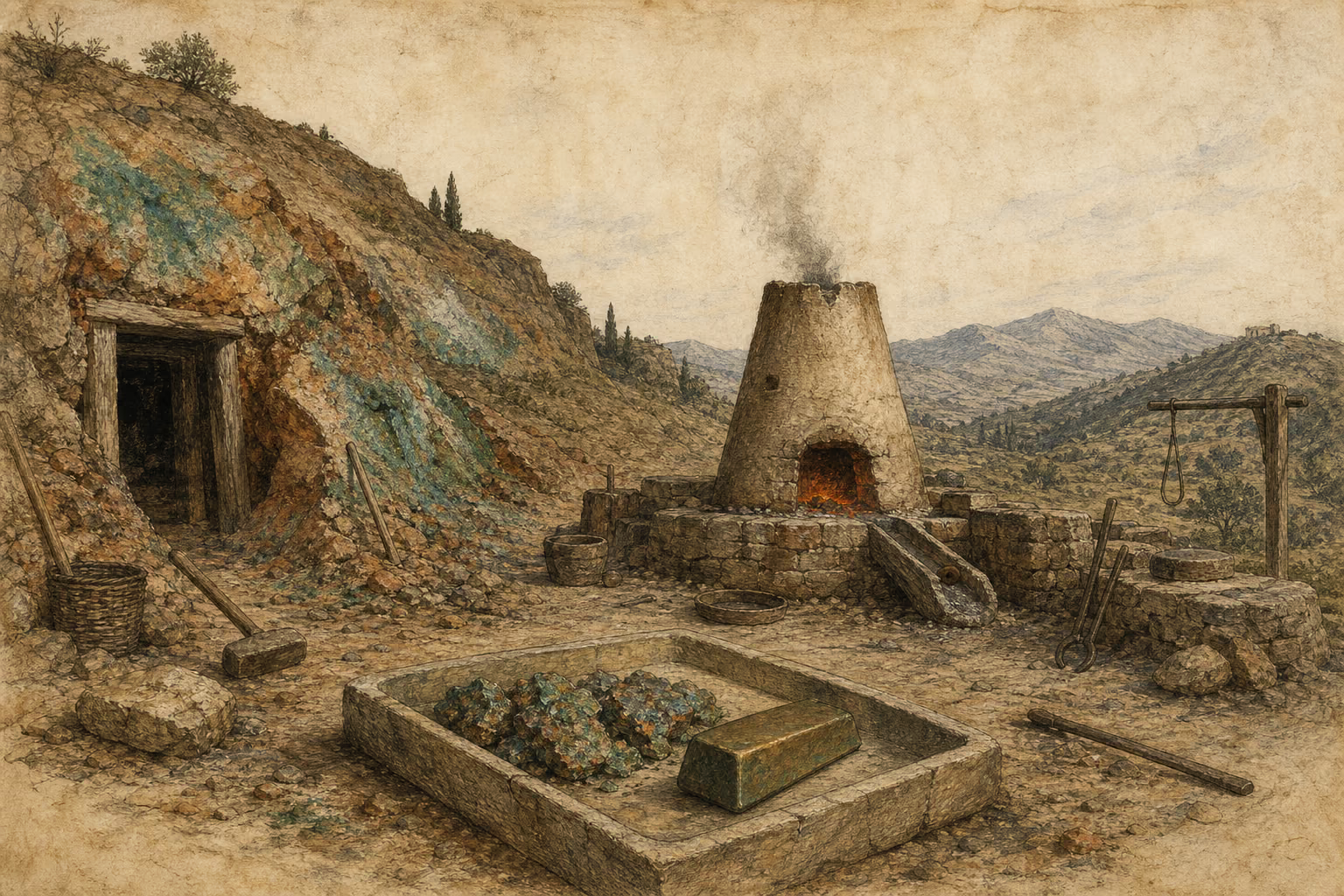
Vena quo dictum est modo foditur ignique perficitur. fit et e lapide aeroso, quem vocant cadmean, celebri trans maria et quondam in Campania, nunc et in Bergomatium agro extrema parte Italiae; ferunt nuper etiam in Germania provincia repertum.
English · Bostock & Riley 1855–57
We must, in the next place, give an account of the ores of brass, a metal which, in respect of utility, is next in value; indeed the Corinthian brass comes before silver, not to say almost before gold itself. It is also, as I have stated above, the standard of monetary value; hence the terms “æra militum,” “tribuni ærarii,” “ærarium,” “obærati,” and “ære diruti.” I have already mentioned for what length of time the Roman people employed no coin except brass; and there is another ancient fact which proves that the esteem in which it was held was of equal antiquity with that of the City itself, the circumstance that the third associated body which Numa established, was that of the braziers.
The ore is extracted in the mode that has been described above, and is then purified by fusion. The metal is also obtained from a coppery stone called “cadmia.” The most highly esteemed copper is procured from beyond seas: it was formerly obtained in Campania also, and at present is found in the country of the Bergomates, at the extremity of Italy. It is said to have been lately discovered also in the province of Germany.