LIBER XXXIV · CAPUT 10
CADMIA
Latine · Mayhoff 1906
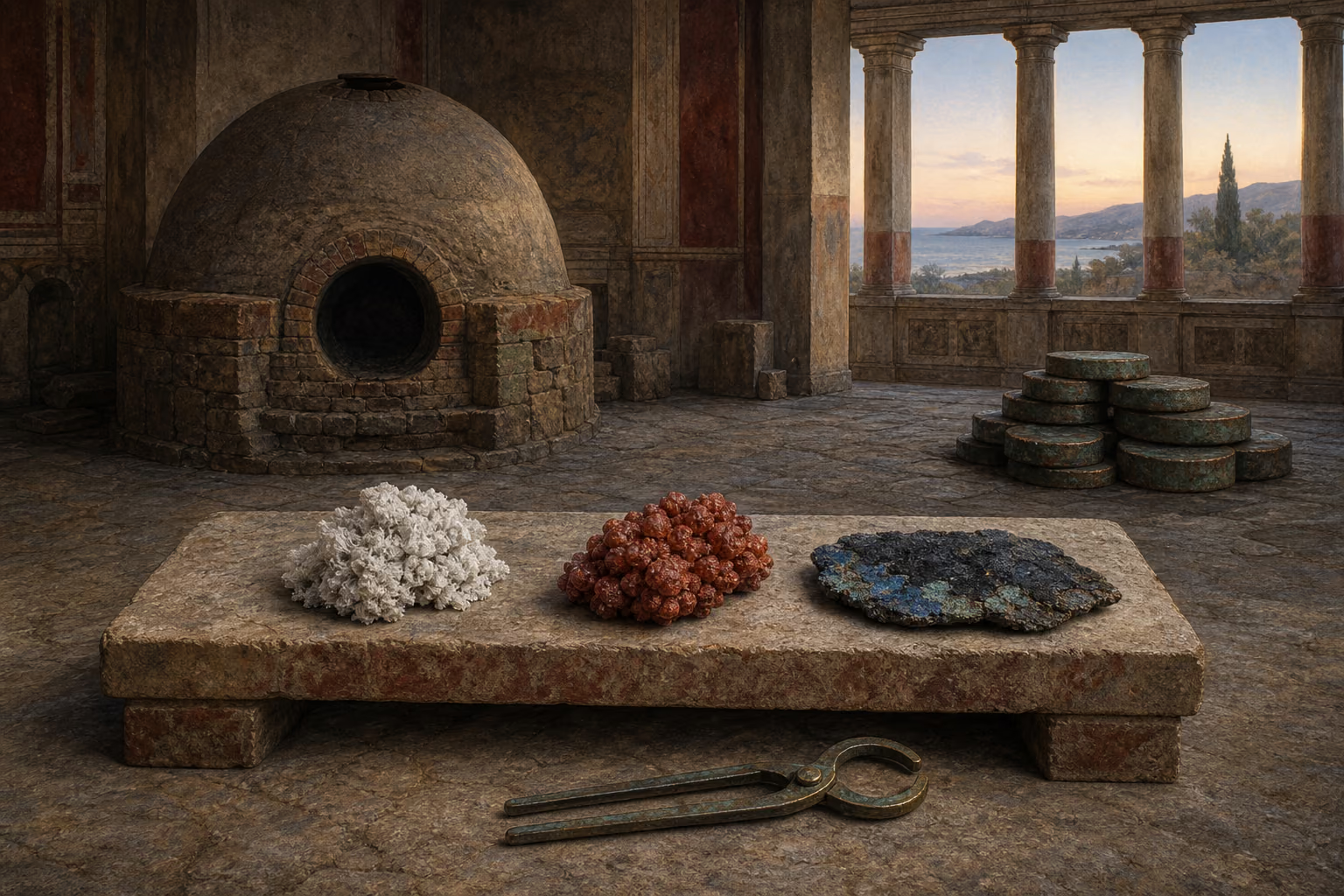
Metalla aeris multis modis instruunt medicinam, utpote cum ulcera omnia ibi ocissime sanentur, maxime tamen prosunt cadmea. fit sine dubio haec et in argenti fornacibus, candidior ac minus ponderosa, sed nequaquam comparanda aerariae. plura autem genera sunt. namque ut ipse lapis, ex quo fit aes, cadmea vocatur, fusuris necessarius, medicinae inutilis, sic rursus in fornacibus existit alia, quae originis suae nomen recipit. fit autem egesta flammis atque flatu tenuissima parte materiae et camaris lateribusque fornacium pro quantitate levitatis adplicata. tenuissima est in ipso fornacium ore quam flammae eructarunt, appellata capnitis, exusta et nimia levitate similis favillae. interior optuma, camaris dependens et ab eo argumento botryitis nominata, ponderosior haec priore, levior secuturis—duo eius colores, deterior cinereus, pumicis melior—, friabilis oculorumque medicamentis utilissima. tertia est in lateribus fornacium, quae propter gravitatem ad camaras pervenire non potuit. haec dicitur placitis, et ipsa ab argumento, planitie crusta verius quam pumex, intus varia, ad psoras utilior et cicatrices trahendas. fiunt ex ea duo alia genera: onychitis extra paene caerulea, intus onychis maculis similis, ostracitis tota nigra et e ceteris sordidissima, volneribus maxime utilis. omnis autem cadmea, in Cypri fornacibus optima, iterum a medicis coquitur carbone puro atque, ubi in cinerem rediit, extinguitur vino Ammineo quae ad emplastra praeparatur, quae vero ad psoras, aceto. quidam in ollis fictilibus tusam urunt et lavant in mortariis, postea siccant. Nymphodorus lapidem ipsum quam gravissimum spississimumque urit pruna et exustum Chio vino restinguit tunditque, mox linteo cribrat atque in mortario terit, mox aqua pluvia macerat iterumque terit quod subsedit, donee cerussae simile fiat, nulla dentium offensa. eadem Iollae ratio, sed quam purissimum eligit lapidem. cadmeae effectus siccare, persanare, sistere fluctiones, pterygia et sordes oculorum purgare, scabritiam extenuare et quidquid in plumbi effectu dicemus.
Et aes ipsum uritur ad omnia eadem, praeterque albugines oculorum et cicatrices, ulcera quoque oculorum cum lacte sanat; itaque Aegyptii collyrii id modo terunt in coticulis. facit et vomitiones e melle sumptum. uritur autem Cyprium in fictilibus crudis cum sulpuris pari pondere, vasorum circumlito spiramento, in caminis, donec vasa ipsa percoquantur. quidam et salem addunt, aliqui alumen pro sulpure, alii nihil, sed aceto tantum aspergunt. ustum teritur in mortario Thebaico, aqua pluvia lavatur iterumque adiecta largiore teritur et, dum considat, relinquitur, hoc saepius, donee ad species minii redeat. tum siccatum in sole in aerea pyxide servatur.
English · Bostock & Riley 1855–57
The ores of copper furnish a number of resources that are employed in medicine; indeed, all kinds of ulcers are healed thereby with great rapidity. Of these, however, the most useful is cadmia. This substance is formed artificially, beyond a doubt, in the furnaces, also, where they smelt silver, but it is whiter and not so heavy, and by no means to be compared with that from copper. There are several kinds of it. For, as the mineral itself, from which it is prepared artificially, so necessary in fusing copper ore, and so useful in medicine, has the name of “cadmia,” so also is it found in the smelting-furnaces, where it receives other names, according to the way in which it is formed. By the action of the flame and the blast, the more attenuated parts of the metal are separated, and become attached, in proportion to their lightness, to the arched top and sides of the furnace. These flakes are the thinnest near the exterior opening of the furnace, where the flame finds a vent, the substance being called “capnitis;” from its burnt appearance and its extreme lightness it resembles white ashes. The best is that which is found in the interior, hanging from the arches of the chimney, and from its form and position named “botryitis.” It is heavier than the first-mentioned kind, but lighter than those which follow. It is of two different colours: the least valuable is ash-coloured, the better kind being red, friable, and extremely useful as a remedy for affections of the eyes.
A third kind of cadmia is that found on the sides of the furnace, and which, in consequence of its weight, could not reach the arched vaults of the chimney. This species is called “placitis,” in reference to its solid appearance, it presenting a plane surface more like a solid crust than pumice, and mottled within. Its great use is, for the cure of itch-scab, and for making wounds cicatrize. Of this last there are two varieties, the “onychitis,” which is almost entirely blue on the exterior, and spotted like an onyx within; and the “ostracitis,” which is quite black and more dirty than the others, but particularly useful for healing wounds. All the species of cadmia are of the best quality from the furnaces of Cyprus. When used in medicine it is heated a second time upon a fire of pure charcoal, and when duly incinerated, is quenched in Aminean wine, if required for making plasters, but in vinegar, if wanted for the cure of itch-scab. Some persons first pound it, and then burn it in earthen pots; which done, they wash it in mortars and then dry it.
Nymphodorus recommends that the most heavy and dense pieces of mineral cadmia that can be procured, should be burnt upon hot coals and quenched in Chian wine; after which, it must be pounded and then sifted through a linen cloth. It is then pulverized in a mortar and macerated in rain water, the sediment being again pounded until it is reduced to the consistency of ceruse, and presents no grittiness to the teeth. Iollas recommends the same process; except that he selects the purest specimens of native cadmia.
Cadmia acts as a desiccative, heals wounds, arrests discharges, acts detergently upon webs and foul incrustations of the eyes, removes eruptions, and produces, in fact, all the good effects which we shall have occasion to mention when speaking of lead. Copper too, itself, when calcined, is employed for all these purposes; in addition to which it is used for white spots and cicatrizations upon the eyes. Mixed with milk, it is curative also of ulcers upon the eyes; for which purpose, the people in Egypt make a kind of eye-salve by grinding it upon whet stones. Taken with honey, it acts as an emetic. For these purposes, Cyprian copper is calcined in unbaked earthen pots, with an equal quantity of sulphur; the apertures of the vessel being well luted, and it being left in the furnace until the vessel itself has become completely hardened. Some persons add salt, and others substitute alum for sulphur; others, again, add nothing, but merely sprinkle the copper with vinegar. When calcined, it is pounded in a mortar of Thebaic stone, after which it is washed with rain water, and then pounded with a large quantity of water, and left to settle. This process is repeated until the deposit has gained the appearance of minium; after which it is dried in the sun, and put by for keeping in a box made of copper.