LIBER XXXIV · CAPUT 9
THE METHOD OF PRESERVING COPPER
Latine · Mayhoff 1906
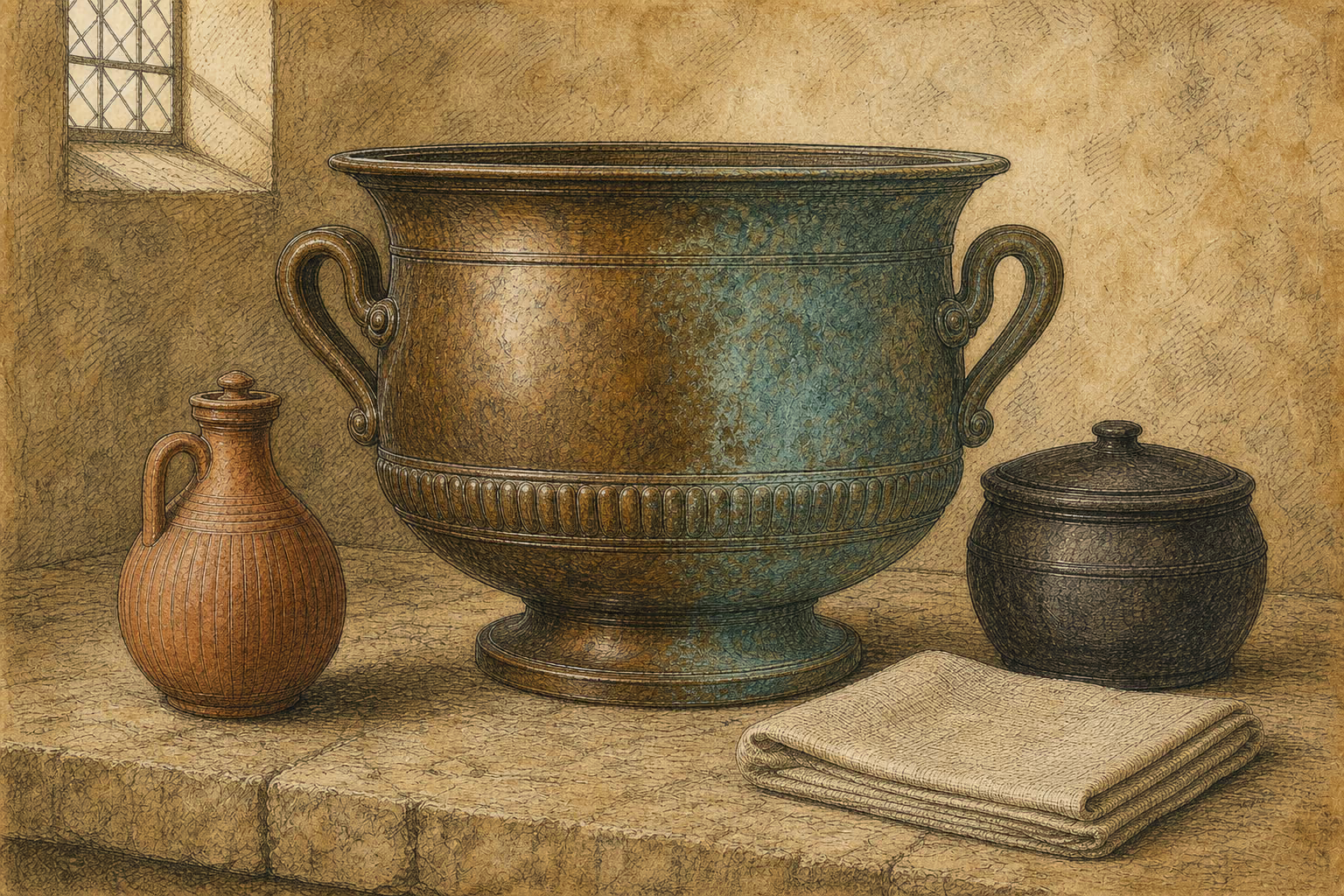
id quoque notasse non ab re est, aes omne frigore magno melius fundi.—Sequens temperatura statuaria est eademque tabularis hoc modo: massa proflatur in primis, mox in proflatum additur tertia portio aeris collectanei, hoc est ex usu coempti. peculiare in eo condimentum attritu domiti et consuetudine nitoris veluti mansuefacti. miscentur et plumbi argentarii pondo duodena ac selibrae centenis proflati.—Appellatur etiamnum et formalis temperatura aeris tenerrimi, quoniam nigri plumbi decima portio additur et argentarii vicesima, maximeque ita colorem bibit, quem Graecanicum vocant.—Novissima est quae vocatur ollaria, vase nomen hoc dante, ternis aut quaternis libris plumbi argentarii in centenas aeris additis.—Cyprio si addatur plumbum, colos purpurae fit in statuarum praetextis.
Aera extersa robiginem celerius trahunt quam neglecta, nisi oleo perunguantur. servari ea optime in liquida pice tradunt. usus aeris ad perpetuitatem monimentorum iam pridem tralatus est tabulis aereis, in quibus publicae constitutiones inciduntur.
English · Bostock & Riley 1855–57
It is also as well to remark that all copper fuses best when the weather is intensely cold. The proper combination for making statues and tablets is as follows: the ore is first melted; after which there is added to the molten metal one third part of second-hand copper, or in other words, copper that has been in use and bought up for the purpose. For it is a peculiarity of this metal that when it has been some time in use, and has been subject to long-continued friction, it becomes seasoned, and subdued, as it were, to a high polish. Twelve pounds and a half of silver-lead are then added to every hundred pounds of the fused metal. There is also a combination of copper, of a most delicate nature, “mould-copper,” as it is called; there being added to the metal one tenth part of lead and one twentieth of silver-lead, this combination being the best adapted for taking the colour known as “Græcænicus.” The last kind is that known as “ollaria,” from the vessels that are made of it: in this combination three or four pounds of silver-lead are added to every hundred pounds of copper. By the addition of lead to Cyprian copper, the purple tint is produced that we see upon the drapery of statues.
Copper becomes covered with verdigris more quickly when cleaned than when neglected, unless it is well rubbed with oil. It is said that the best method of preserving it is with a coating of tar. The custom of making use of copper for monuments, which are intended to be perpetuated, is of very ancient date: it is upon tablets of brass that our public enactments are engraved.