LIBER XXXIV · CAPUT 8
AN ACCOUNT OF THE MOST CELEBRATED WORKS IN BRASS, AND OF THE ARTISTS, 366 IN NUMBER
Latine · Mayhoff 1906
Signis, quae vocant Corinthia, plerique in tantum capiuntur, ut secum circumferant, sicut Hortensius orator sphingem Verri reo ablatam, propter quam Cicero illo iudicio in altercatione neganti ei, aenigmata se intellegere, respondit debere, quoniam sphingem domi haberet. circumtulit et Nero princeps Amazonem, de qua dicemus, et paulo ante C. Cestius consularis signum, quod secum etiam in proelio habuit. Alexandri quoque Magni tabernaculum sustinere traduntur solitae statuae, ex quibus duae ante Martis Ultoris aedem dicatae sunt, totidem ante regiam.
Minoribus simulacris signisque innumera prope artificum multitude nobilitata est, ante omnes tamen Phidias Atheniensis love Olympio facto ex ebore quidem et auro, sed et ex aere signa fecit. floruit autem olympiade LXXXIII, circiter ccc urbis nostrae annum, quo eodem tempore aemuli eius fuere Alcamenes, Critias, Nesiotes, Hegias, et deinde olympiade LXXXVII Hagelades, Callon, Gorgias Lacon; rursus LXXXX Polyclitus, Phradmon, Myron, Pythagoras, Scopas, Perellus. ex iis Polyclitus discipulos habuit Argium, Asopodorum, Alexim, Aristidem, Phrynonem, [Dinonem], Athenodorum, Demean Clitorium, Myron Lycium. LXXXXV olympiade floruere Naucydes, Dinomenes, Canachus, Patroclus; CII Polycles, Cephisodotus, Leuchares, Hypatodorus; CIIII Praxiteles, Euphranor; CVII Aetion, Therimachus. CXIII Lysippus fuit, cum et Alexander Magnus, item Lysistratus frater eius, Sthennis, Euphron, Eucles, Sostratus, Ion, Silanion—in hoc mirabile quod nullo doctore nobilis fuit; ipse discipulum habuit Zeuxiaden—; CXXI Eutychides, Euthycrates, Laippus, Cephisodotus, Timarchus, Pyromachus. cessavit deinde ars ac rursus olympiade CLVI revixit, cum fuere longe quidem infra praedictos, probati tamen, Antaeus, Callistratus, Polycles Athenaeus, Callixenus, Pythocles, Pythias, Timocles.
Ita distinctis celeberrimorum aetatibus insignes raptim transcurram, reliqua multitudine passim dispersa. venere autem et in certamen laudatissimi, quamquam diversis aetatibus geniti, quoniam fecerant Amazonas, quae cum in templo Dianae Ephesiae dicarentur, placuit eligi probatissimam ipsorum artificum, qui praesentes erant, iudicio, cum apparuit eam esse, quam omnes secundam a sua quisque iudicassent. haec est Polycliti, proxima ab ea Phidiae, tertia Cresilae, quarta Cydonis, quinta Phradmonis.
Phidias praeter Iovem Olympium, quem nemo aemulatur, fecit ex ebore aeque Minervam Athenis, quae est in Parthenone stans, ex aere vero praeter Amazonem supra dictam Minervam tam eximiae pulchritudinis, ut formae cognomen acceperit. fecit et cliduchum et aliam Minervam, quam Romae Paulus Aemilius ad aedem Fortunae Huiusce Diei dicavit, item duo signa, quae Catulus in eadem aede, palliata et alterum colossicon nudum, primusque artem toreuticen aperuisse atque demonstrasse merito iudicatur.
Polyclitus Sicyonius, Hageladae discipulus, diadumenum fecit molliter iuvenem, centum talentis nobilitatum, idem et doryphorum viriliter puerum. fecit et quem canona artifices vocant liniamenta artis ex eo petentes veluti a lege quadam, solusque hominum artem ipsam fecisse artis opere iudicatur. fecit et destringentem se et nudum telo incessentem duosque pueros item nudos, talis ludentes, qui vocantur astragalizontes et sunt in Titi imperatoris atrio—hoc opere nullum absolutius plerique iudicant—; item Mercurium, qui fuit Lysimacheae, Herculem, qui Romae, hagetera arma sumentem, Artemona, qui periphoretos appellatus est. hic consummasse hanc scientiam iudicatur et toreuticen sic erudisse, ut Phidias aperuisse. proprium eius est, uno crure ut insisterent signa, excogitasse, quadrata tamen esse ea ait Varro et paene ad exemplum.
Myronem Eleutheris natum, Hageladae et ipsum discipulum, bucula maxime nobilitavit celebratis versibus laudata, quando alieno plerique ingenio magis quam suo commendantur. fecit et canem et discobolon et Perseum et pristas et Satyrum admirantem tibias et Minervam, Delphicos pentathlos, pancratiastas, Herculem, qui est apud circum maximum in aede Pompei Magni. fecisse et cicadae monumentum ac locustae carminibus suis Erinna significat. fecit et Apollinem, quem ab triumviro Antonio sublatum restituit Ephesiis divus Augustus admonitus in quiete. primus hic multiplicasse veritatem videtur, numerosior in arte quam Polyclitus et in symmetria diligentior, et ipse tamen corporum tenus curiosus animi sensus non expressisse, capillum quoque et pubem non emendatius fecisse, quam rudis antiquitas instituisset.
Vicit eum Pythagoras Reginus ex Italia pancratiaste Delphis posito; eodem vicit et Leontiscum. fecit et stadiodromon Astylon, qui Olympiae ostenditur, et Libyn, puerum tenentem tabellam eodem loco et mala ferentem nudum, Syracusis autem claudicantem, cuius ulceris dolorem sentire etiam spectantes videntur, item Apollinem serpentemque eius sagittis configi, citharoedum, qui Dicaeus appellatus est, quod, cum Thebae ab Alexandro caperentur, aurum a fugiente conditum sinu eius celatum esset. hic primus nervos et venas expressit capillumque diligentius. —Fuit et alius Pythagoras Samius, initio pictor, cuius signa ad aedem Fortunae Huiusce Diei septem nuda et senis unum laudata sunt. hic supra dicto facie quoque indiscreta similis fuisse traditur, Regini autem discipulus et filius sororis fuisse Sostratus.
Lysippum Sicyonium Duris negat ullius fuisse discipulum, sed primo aerarium fabrum audendi rationem cepisse pictoris Eupompi responso. eum enim interrogatum, quem sequeretur antecedentium, dixisse monstrata hominum multitudine, naturam ipsam imitandam esse, non artificem. plurima ex omnibus signa fecit, ut diximus, fecundissimae artis, inter quae destringentem se, queen M. Agrippa ante Thermas suas dicavit, mire gratum Tiberio principi. non quivit temperare sibi in eo, quamquam imperiosus sui inter initia principatus, transtulitque in cubiculum alio signo substituto, cum quidem tanta pop. R. contumacia fuit, ut theatri clamoribus reponi apoxyomenon flagitaverit princepsque, quamquam adamatum, reposuerit. nobilitatur Lysippus et temulenta tibicina et canibus ac venatione, in primis vero quadriga cum Sole Rhodiorum. fecit et Alexandrum Magnum multis operibus, a pueritia eius orsus, quam statuam inaurari iussit Nero princeps delectatus admodum illa; dein, cum pretio perisset gratia artis, detractum est aurum, pretiosiorque talis existimabatur etiam cicatricibus operis atque concisuris, in quibus aurum haeserat, remanentibus. idem fecit Hephaestionem, Alexandri Magni amicum, quem quidam Polyclito adscribunt, cum is centum prope annis ante fuerit; item Alexandri venationem, quae Delphis sacrata est, Athenis Satyrum, turmam Alexandri, in qua amicorum eius images summa omnium similitudine expressit; hanc Metellus Macedonia subacta transtulit Romam. fecit et quadrigas multorum generum. statuariae arti plurimum traditur contulisse capillum exprimendo, capita minora faciendo quam antiqui, corpora graciliora siccioraque, per quae proceritas signorum maior videretur. non habet Latinum nomen symmetria, quam diligentissime custodiit nova intactaque ratione quadratas veterum staturas permutando, vulgoque dicebat ab illis factos quales essent homines, a se quales viderentur esse. propriae huius videntur esse argutiae operum custoditae in minimis quoque rebus.
Filios et discipulos reliquit laudatos artifices Laippum, Boëdan, sed ante omnes Euthycraten. quamquam is constantiam potius imitatus patris quam elegantiam austero maluit genere quam iucundo placere. itaque optume expressit Herculem Delphis et Alexandrum Thespiis venatorem et proelium equestre, simulacrum ipsum Trophoni ad oraculum, quadrigas complures, equum cum fiscinis, canes venantium.—Huius porro discipulus fuit Tisicrates, et ipse Sicyonius, sed Lysippi sectae propior, ut vix discernantur complura signa, ceu senex Thebanus et Demetrius rex, Peucestes, Alexandri Magni servator, dignus tanta gloria.
Artifices, qui compositis voluminibus condidere haec, miris laudibus celebrant Telephanen Phocaeum, ignotum alias, quoniam.... Thessaliae habitaverit et ibi opera eius latuerint; alioqui suffragiis ipsorum aequatur Poly-o clito, Myroni, Pythagorae. laudant eius Larisam et Spintharum pentathlum et Apollinem. alii non hanc ignobilitatis fuisse causam, sed quod se regum Xerxis atque Darei officinis dediderit, existimant.
Praxiteles quoque, qui marmore felicior, ideo et clarior fuit, fecit tamen et ex aere pulcherrima opera: Proserpinae raptu, item catagusam et Liberum patrem, Ebrietatem nobilemque una Satyrum, queer Graeci periboëton cognominant, et signa, quae ante Felicitatis aedem fuere, Veneremque, quae ipsa aedis incendio cremata est Claudii principatu, marmoreae illi suae per terras inclutae parem, item stephanusam, pseliumenen,. Oporan, Harmodium et Aristogitonem tyrannicidas quos a Xerxe Persarum rege captos victa Perside Atheniensibus remisit Magnus Alexander. fecit et puberem Apollinem subrepenti lacertae comminus sagitta insidiantem, quem sauroctonon vocant. spectantur et duo signa eius diversos adfectus exprimentia, flentismatronae et meretricis gaudentis. hanc putant Phrynen fuisse deprehenduntque in ea amorem artificis et mercedem in vultu meretricis. habet simulacrum et benignitas eius; Calamidis enim quadrigae aurigam suum inposuit, ne melior in equorum effigie defecisse in homine crederetur. ipse Calamis et alias quadrigas bigasque fecit equis semper sine aemulo expressis; sed, ne videatur in hominum effigie inferior, Alcumena nullius est nobilior.
Alcamenes, Phidiae discipulus, et marmorea fecit, sed aereum pentathlum, qui vocatur encrinomenos; at Polycliti discipulus Aristides quadrigas bigasque. Amphicrates Leaena laudatur. scortum haec, lyrae cantu familiaris Harmodio et Aristogitoni. consilia eorum de tyrannicidio usque in mortem excruciata a tyrannis non prodidit; quam ob rem Athenienses, et honorem habere ei volentes nec tamen scortum celebrasse, animal nominis eius fecere atque, ut intellegeretur causa honoris, in opere linguam addi ab artifice vetuerunt.—Bryaxis Aesculapium et Seleucum fecit, Boëdas adorantem, Baton Apollinem et lunonem, qui sunt Romae in Concordiae temple, Cresilas volneratum deficientem, in quo possit intellegi quantum restet animae, et Olympium Periclen dignum cognomine, mirumque in hac arte est quod nobiles viros nobiliores fecit. Cephisodorus Minervam mirabilem in portu Atheniensium et aram ad templum Iovis, Servatoris in eodem portu, cui paucacomparantur, Canachus Apollinem nudum, qui Philesius cognominatur, in Didymaeo Aeginetica aeris temperatura, cervumque una ita vestigiis suspendit, ut linum subter pedes trahatur alterno morsu calce digitisque retinentibus solum, ita vertebrate dente utrisque in partibus, ut a repulsu per vices resiliat. idem et celetizontas pueros, Chaereas Alexandrum Magnum et Philippum patrem eiusfecit, Ctesilaus doryphoron et Amazonem volneratam, Demetrius Lysimachen, quae sacerdos Minervae fruit LXIIII annis, idem et Minervam, quae myctica appellatur —dracones in Gorgone eius ad ictus citharae tinnitu resonant—; idem equitem Simonem, qui primus de equitatu scripsit. Daedalus et ipse inter fictores laudatus, pueros duos destringentes se fecit, Dinomenes Protesilaum et Pythodemum luctatorem.—Euphranoris Alexander Paris est, in quo laudatur quod omnia simul intellegantur, iudex dearum, amator Helenae et tamen Achillis interfector. huius est Minerya, Romae quae dicitur Catuliana, infra Capitolium a Q. Lutatio dicata, et simulacrum Boni Eventus, dextra pateram, sinistra spicam ac papavera teens, item Latona puerpera Apollinem et Dianam infantes sustinens in aede Concordiae. fecit et quadrigas bigasque et cliticon eximia forma et Virtutem et Graeciam, utrasque colossaeas, mulierem admirantem et adorantem, item Alexandrum et Philippum in quadrigis; Eutychides Eurotam, in quo artem ipso amne liquidiorem plurimi dixere.—Hegiae Minerva Pyrrhusque rex laudatur et celetizontes pueri et Castor ac Pollux ante aedem Iovis Tonantis, Hagesiae in Pario colonia Hercules, Isidoti buthytes.—Lycius Myronis discipulus fuit, qui fecit dignum praeceptore puerum sufflantem languidos ignes et Argonautas; Leochares aquilam sentientem, quid rapiat in Ganymede et cui ferat, parcentemque unguibus etiam per vestem puero, Autolycum pancratii victorem, propter quem Xenophon symposium scripsit, Iovemque ilium Tonantem in Capitolio ante cuncta laudabilem, item Apollinem dia-o dematum, Lyciscum mangonem, puerum subdolae ac fucatae vernilitatis, Lycius et ipsepuerum suffitorem.—Menaechmi vitulus genu premitur replicata cervice. ipse Menaechmus scripsit de sua arte.—Naucydes Mercurio et discobolo et immolante arietem censetur, Naucerus luctatore anhelante, Niceratus Aesculapio et Hygia, qui sunt in Concordiae templo Romae.—Pyromachi quadriga ab Alcihiade regitur. Polycles Hermaphroditum nobilem fecit, Pyrrhus Hygiam et Minervam, Phanis, Lysippi discipulus, epithyusan.—Styppax Cyprius uno celebratur signo, splanchnopte; Periclis Olympii vernula hic fuit exta torrens ignemque oris pleni spirit accendens. Silanion Apollodorum fudit, fictorem et ipsum, sed inter cuuctos diligentissimnum artis et iniquunm sui itdiciim, crebro prefecta signa frangentem, dum satiari cupiditate artis non quit, ideoque insanum cognominatum—hoc in co expressit, nee hominem ex aere fecit, sed iractiltliail—et Achillem nollilem, item epistaten exercellteni atlilelas; Stlougylion Amazoinem, quam ab excellentia crurum eucnemon appellant, ob id i comitatu Neronis principis circumlatam. idem fecit puerum, quem amando Brttius Pitilippieiisis cogiiomine suo inlustravit.—Theodorus, -qui labyrinthum fecit Sami, ipse se ex aere fudit. praeter Simiiltudinis mirabilem famam magna suptilitate celelbratir: dextra limam tenet, laeva tribus digitis quadrigulam tenuit, tralatam Praeneste parvitatis ut miraculum: pictam eam currumque et aurigam integeret alis simul facta musca.—Xenocrates, Tisicratis discipulus, ut alii, Euthycratis, vicit utrosque copia signorum. et de sua arte composuit volumina.
Plures artifices fecere Attali et Eumenis adversus Gallos proelia, Isigonus, Pyromachus, Stratonicus, Antigonus, qui volumina condidit de sua arte. Boëthi, quamquam argento melioris, infans eximium anserem strangulat. atque ex omnibus, quae rettuli, clarissima quaeque in urbe iam sunt dicata a Vespasiano principe in templo Pacis aliisque eius operibus, violentia Neronis in urbem convecta et in sellariis domus aureae disposita.
Praeterea sunt aequalitate celebrati artifices, sed nullis operum suorum praecipui: Ariston, qui et argentum caelare solitus est, Callides, Ctesias, Cantharus Sicyonius, Diodorus, Critiae discipulus, Deliades, Euphorion, Eunicus et Hecataeus, argenti caelatores, Lesbocles, Prodorus, Pythodicus, Polygnotus, idem pictor e nobilissimis, item e caelatoribus Stratonicus, Scymnus Critiae discipulus.
Nunc percensebo eos, qui eiusdem generis opera fecerunt, ut Apollodorus, Androbulus, Asclepiodorus, Aleuas philosophos, Apellas et adornantes se feminas, Antignotus et perixyomenum tyrannicidasque supra dictos, Antimachus, Athenodorus feminas nobiles, Aristodemus et luctatores bigasque cum auriga, philosophos, anus, Seleucum regem. habet gratiam suam huius quoque doryphorus.—Cephisodoti duo fuere: prioris est Mercurius Liberum patrem in infantia nutriens; fecit et contionantem manu elata —persona in incerto est—; sequens philosophos fecit. Colotes, qui cum Phidia Iovem Olympium fecerat, philosophos, item Cleon et Cenchramis et Callicles et Cepis, Chalcosthenes et comoedos et athletas, Daippus perixyo- menon, Daiphron et Damocritus et Daemon philosophos. —Epigonus omnia fere praedicta imitatus praecessit in tubicine et matri interfectae infante miserabiliter blandiente. Eubuli mulier admirans laudatur, Eubulidis digitis computans.—Micon athletis spectatur, Menogenes quadrigis.—Nec minus Niceratus omnia, quae ceteri, adgressus repraesentavit Alcibiaden lampadumque accensu matrem eius Demaraten sacrificantem.—Tisicratis bigae Piston mulierem inposuit, idem fecit Martem et Mercurium, qui sunt in Concordiae templo Romae. Perillum nemo laudet saeviorem Phalaride tyranno, cui taurum fecit mugitus inclusi hominis pollicitus igni subdito et primus expertus cruciatum eum iustiore saevitia. hue a simulacris deorum hominumque devocaverat humanissimam artem. ideo tot conditores eius laboraverant, ut ex ea tormenta fierent! itaque una de causa servantur opera eius, ut quisquis illa videat, oderit manus.—Sthennis Cererem, Iovem, Minervam fecit, qui sunt Romae in Concordiae templo, idem flentes matronas et adorantes sacrificantesque. Simon canem et sagittarium fecit, Stratonicus caelator ille philosophos, copas uterque; athletas autem et armatos et venatores sacrificantesque Baton, Euchir, Glaucides, Heliodorus, Hicanus, Iophon, Lyson, Leon, Menodorus, Myagrus, Polycrates, Polyidus, Pythocritus, Protogenes, idem pictor e clarissimis, ut dicemus, Patrocles, Pollis, Posidonius, qui et argentum caelavit nobiliter, natione Ephesius, Periclymenus, Philon, Symenus, Timotheus, Theomnestus, Timarchides, Timon, Tisias, Thrason.
Ex omnibus autem maxime cognomine insignis est Callimachus, semper calumniator, sui nec fine habentis diligentiae, ob id catatexitechnus appellatus, memorabili exemplo adhibendi et curae modum. huius sunt saltantes Lacaenae, emendatum opus, sed in quo gratiam omanem diligentia abstulerit. hunc quidem et pictorem fuisse tradunt. non aere captus nec arte, unam tantum Zenonis statuam Cypria expeditione non vendidit Cato, sed quia philosophi erat, ut obiter hoc quoque noscatur tam insigne exemplum.
In mentione statuarum est et una non praetereunda, quamquam auctoris incerti, iuxta rostra, Herculis tunicati, sola eo habitu Romae, torva face sentiensque suprema tunicae. in hac tres sunt tituli: L. Luculli imperatoris de manubiis, alter: pupillum Luculli filium ex S. C. dedicasse, tertius: T. Septimium Sabinum aed. cur. ex privato in publicum restituisse. tot certaminum tantaeque dignationis simulacrum id fruit.
Nunc praevertemur ad differentias aeris et mixturas. in Cyprio [coronarium et regulare est utrumque ductile] coronarium tenuatur in lamnas, taurorumque felle tinctum speciem auri in coronis histrionum praebet, idemque in uncias additis auri scripulis senis praetenui pyropi brattea ignescit. regulare et in allis fit metallis, itemque caldarium. differentia quod caldarium funditur tantum, malleis fragile, quibus regulare obsequitur ab aliis ductile appellatum, quale omne Cyprium est. sed et in ceteris metallis cura distat a caldario; omne enim diligentius purgatis igni vitiis excoctisque regulare est.—In reliquis generibus palma Campano perhibetur, utensilibus vasis probatissimo. pluribus fit hoc modis. namque Capuae liquatur non carbonis ignibus, sed ligni, purgaturque roboreo cribro perfusum aqua frigida ac saepius simili modo coquitur, novissime additis plumbi argentarii Hispaniensis denis libris in centenas aeris. ita lentescit coloremque iucundum trahit, qualem in aliis generibus aeris adfectant oleo ac sale. fit Campano simile in multis partibus Italiae provinciisque, sed octonas plumbi libras addunt et carbone recocunt propter inopiam ligni. quantum ea res differentiae adferat, in Gallia maxime sentitur, ubi inter lapides candefactos funditur; exurente enim coctura nigrum atque fragile conficitur. praeterea semel recoquunt, quod saepius fecisse bonitati plurimum confert.
English · Bostock & Riley 1855–57
Persons who possess what are called Corinthian bronzes, are generally so much enamoured of them, as to carry them about with them from place to place; Hortensius, the orator, for instance, who possessed a Sphinx, which he had made Verres give him, when accused. It was to this figure that Cicero alluded, in an altercation which took place at the trial: when, upon Hortensius saying that he could not understand enigmas, Cicero made answer that he ought to understand them, as he had got a Sphinx at home. The Emperor Nero, also, used to carry about with him the figure of an Amazon, of which I shall speak further hereafter; and, shortly before this, C. Cestius, a person of consular rank, had possessed a figure, which he carried with him even in battle. The tent, too, of Alexander the Great was usually supported, it is said, by statues, two of which are consecrated before the Temple of Mars Ultor, and a similar number before the Palace.
An almost innumerable multitude of artists have been rendered famous by their statues and figures of smaller size. Before all others is Phidias, the Athenian, who executed the Jupiter at Olympia, in ivory and gold, but who also made figures in brass as well. He flourished in the eighty-third Olympiad, about the year of our City, 300. To the same age belong also his rivals Alcamenes, Critias, Nesiotes, and Hegias. Afterwards, in the eighty-seventh Olympiad, there were Agelades, Callon, and Gorgias the Laconian. In the ninetieth Olympiad there were Polycletus, Phradmon, Myron, Pythagoras, Scopas, and Perellus. Of these, Polycletus had for pupils, Argius, Asopodorus, Alexis, Aristides, Phrynon, Dinon, Athenodorus, and Demeas the Clitorian: Lycius, too, was the pupil of Myron. In the ninety-fifth Olympiad flourished Naucsydes, Dinomenes, Canachus, and Patroclus. In the hundred and second Olympiad there were Polycles, Cephisodotus, Leochares, and Hypatodorus. In the hundred and fourth Olympiad, flourished Praxiteles and Euphranor; in the hundred and seventh, Aëtion and Therimachus; in the hundred and thirteenth, Lysippus, who was the contemporary of Alexander the Great, his brother Lysistratus, Sthennis, Euphron, Eucles, Sostratus, Ion, and Silanion, who was remarkable for having acquired great celebrity without any instructor: Zeuxis was his pupil. In the hundred and twenty-first Olympiad were Eutychides, Euthycrates, Laïppus, Cephisodotus, Timarchus, and Pyromachus.
The practice of this art then ceased for some time, but revived in the hundred and fifty-sixth Olympiad, when there were some artists, who, though far inferior to those already mentioned, were still highly esteemed; Antæus, Callistratus, Polycles, Athenæus, Callixenus, Pythocles, Pythias, and Timocles.
The ages of the most celebrated artists being thus distinguished, I shall cursorily review the more eminent of them, the greater part being mentioned in a desultory manner. The most celebrated of these artists, though born at different epochs, have joined in a trial of skill in the Amazons which they have respectively made. When these statues were dedicated in the Temple of Diana at Ephesus, it was agreed, in order to ascertain which was the best, that it should be left to the judgment of the artists themselves who were then present: upon which, it was evident that that was the best, which all the artists agreed in considering as the next best to his own. Accordingly, the first rank was assigned to Polycletus, the second to Phidias, the third to Cresilas, the fourth to Cydon, and the fifth to Phradmon.
Phidias, besides the Olympian Jupiter, which no one has ever equalled, also executed in ivory the erect statue of Minerva, which is in the Parthenon at Athens. He also made in brass, beside the Amazon above mentioned, a Minerva, of such exquisite beauty, that it received its name from its fine proportions. He also made the Cliduchus, and another Minerva, which Paulus Æmilius dedicated at Rome in the Temple of Fortune of the passing day. Also the two statues, draped with the pallium, which Catulus erected in the same temple; and a nude colossal statue. Phidias is deservedly considered to have discovered and developed the toreutic art.
Polycletus of Sicyon, the pupil of Agelades, executed the Diadumenos, the statue of an effeminate youth, and remarkable for having cost one hundred talents; as also the statue of a youth full of manly vigour, and called the Doryphoros. He also made what the artists have called the Model statue, and from which, as from a sort of standard, they study the lineaments: so that he, of all men, is thought in one work of art to have exhausted all the resources of art. He also made statues of a man using the body-scraper, and of a naked man challenging to play at dice; as also of two naked boys playing at dice, and known as the Astragalizontes; they are now in the atrium of the Emperor Titus, and it is generally considered, that there can be no work more perfect than this. He also executed a Mercury, which was formerly at Lysimachia; a Hercules Ageter, seizing his arms, which is now at Rome; and an Artemon, which has received the name of Periphoretos. Polycletus is generally considered as having attained the highest excellence in statuary, and as having perfected the toreutic art, which Phidias invented. A discovery which was entirely his own, was the art of placing statues on one leg. It is remarked, however, by Varro, that his statues are all square-built, and made very much after the same model.
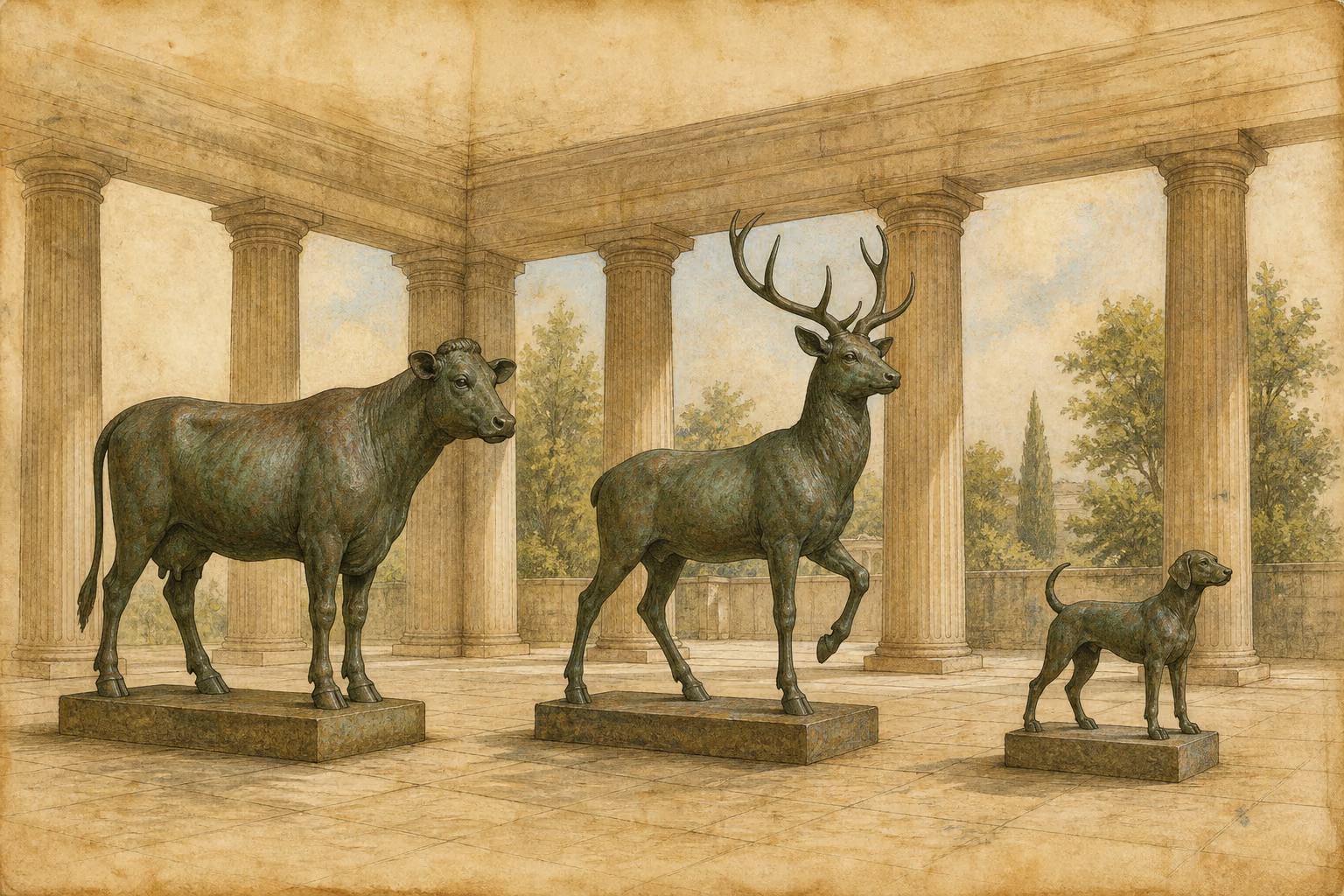
Myron of Eleutheræ, who was also the pupil of Agelades, was rendered more particularly famous by his statue of a heifer, celebrated in many well-known lines: so true is it, that most men owe their renown more to the genius of others, than to their own. He also made the figure of a dog, a Discobolus, a Perseus, the Pristæ, a Satyr admiring a flute, and a Minerva, the Delphic Pentathletes, the Pancratiastæ, and a Hercules, which is at the Circus Maximus, in the house of Pompeius Magnus. Erinna, in her poems, makes allusion to a monument which he erected to a cricket and a locust. He also executed the Apollo, which, after being taken from the Ephesians by the Triumvir Antonius, was restored by the Emperor Augustus, he having been admonished to do so in a dream. Myron appears to have been the first to give a varied development to the art, having made a greater number of designs than Polycletus, and shewn more attention to symmetry. And yet, though he was very accurate in the proportions of his figures, he has neglected to give expression; besides which, he has not treated the hair and the pubes with any greater attention than is observed in the rude figures of more ancient times.
Pythagoras of Rhegium, in Italy, excelled him in the figure of the Pancratiast which is now at Delphi, and in which he also surpassed Leontiscus. Pythagoras also executed the statue of Astylos, the runner, which is exhibited at Olympia; that of a Libyan boy holding a tablet, also in the same place; and a nude male figure holding fruit. There is at Syracuse a figure of a lame man by him: persons, when looking at it, seem to feel the very pain of his wound. He also made an Apollo, with the serpent pierced by his arrows; and a Player on the Lyre, known as the Dicæus, from the fact that, when Thebes was taken by Alexander the Great, a fugitive successfully concealed in its bosom a sum of gold. He was the first artist who gave expression to the sinews and the veins, and paid more attention to the hair.
There was also another Pythagoras, a Samian, who was originally a painter, seven of whose nude figures, in the Temple of Fortune of the passing day, and one of an aged man, are very much admired. He is said to have resembled the last-mentioned artist so much in his features, that they could not be distinguished. Sostratus, it is said, was the pupil of Pythagoras of Rhegium, and his sister’s son.
According to Duris, Lysippus the Sicyonian was not the pupil of any one, but was originally a worker in brass, and was first prompted to venture upon statuary by an answer that was given by Eupompus the painter; who, upon being asked which of his predecessors he proposed to take for his model, pointed to a crowd of men, and replied that it was Nature herself, and no artist, that he proposed to imitate. As already mentioned, Lysippus was most prolific in his works, and made more statues than any other artist. Among these, is the Man using the Body-scraper, which Marcus Agrippa had erected in front of his Warm Baths, and which wonderfully pleased the Emperor Tiberius. This prince, although in the beginning of his reign he imposed some restraint upon himself, could not resist the temptation, and had this statue removed to his bed-chamber, having substituted another for it at the baths: the people, however, were so resolutely opposed to this, that at the theatre they clamourously demanded the Apoxyomenos to be replaced; and the prince, notwithstanding his attachment to it, was obliged to restore it.
Lysippus is also celebrated for his statue of the intoxicated Female Flute-player, his dogs and huntsmen, and, more particularly, for his Chariot with the Sun, as represented by the Rhodians. He also executed a numerous series of statues of Alexander the Great, commencing from his childhood. The Emperor Nero was so delighted with his statue of the infant Alexander, that he had it gilt: this addition, however, to its value, so detracted from its artistic beauty that the gold was removed, and in this state it was looked upon as still more precious, though disfigured by the scratches and seams which remained upon it, and in which the gold was still to be seen. He also made the statue of Hephæstion, the friend of Alexander the Great, which some persons attribute to Polycletus, whereas that artist lived nearly a century before his time. Also, the statue of Alexander at the chase, now consecrated at Delphi, the figure of a Satyr, now at Athens, and the Squadron of Alexander, all of whom he represented with the greatest accuracy. This last work of art, after his conquest of Macedonia, Metellus conveyed to Rome. Lysippus also executed chariots of various kinds. He is considered to have contributed very greatly to the art of statuary by expressing the details of the hair, and by making the head smaller than had been done by the ancients, and the body more graceful and less bulky, a method by which his statues were made to appear taller. The Latin language has no appropriate name for that “symmetry,” which he so attentively observed in his new and hitherto untried method of modifying the squareness observable in the ancient statues. Indeed, it was a common saying of his, that other artists made men as they actually were, while he made them as they appeared to be. One peculiar characteristic of his work, is the finish and minuteness which are observed in even the smallest details. Lysippus left three sons, who were also his pupils, and became celebrated as artists, Laippus, Bœdas, and, more particularly, Euthycrates; though this last-named artist rivalled his father in precision rather than in elegance, and preferred scrupulous correctness to gracefulness. Nothing can be more expressive than his Hercules at Delphi, his Alexander, his Hunter at Thespiæ, and his Equestrian Combat. Equally good, too, are his statue of Trophonius, erected in the oracular cave of that divinity, his numerous chariots, his Horse with the Panniers, and his hounds.
Tisicrates, also a native of Sicyon, was a pupil of Euthycrates, but more nearly approaching the style of Lysippus; so much so, that several of his statues can scarcely be distinguished from those of Lysippus; his aged Theban, for example, his King Demetrius, and his Peucestes, who saved the life of Alexander the Great, and so rendered himself deserving of this honour.
Artists, who have transmitted these details in their works, bestow wonderful encomiums upon Telephanes, the Phocæan, a statuary but little known, they say, because he lived in Thessaly, where his works remained concealed; according to their account, however, he is quite equal to Polycletus, Myron, and Pythagoras. They more particularly commend his Larissa, his Spintharus, the pentathlete, and his Apollo. Others, however, assign another reason for his being so little known; it being owing, they think, to his having devoted himself to the studios established by Kings Xerxes and Darius.
Praxiteles, who excelled more particularly in marble, and thence acquired his chief celebrity, also executed some very beautiful works in brass, the Rape of Proserpine, the Catagusa, a Father Liber, a figure of Drunkenness, and the celebrated Satyr, to the Greeks known as “Periboetos.” He also executed the statues, which were formerly before the Temple of Good Fortune, and the Venus, which was destroyed by fire, with the Temple of that goddess, in the reign of Claudius, and was considered equal to his marble statue of Venus, so celebrated throughout the world. He also executed a Stephanusa, a Spilumene, an Œnophorus, and two figures of Harmodius and Aristogiton, who slew the tyrants; which last, having been taken away from Greece by Xerxes, were restored to the Athenians on the conquest of Persia by Alexander the Great. He also made the youthful Apollo, known as the “Sauroctonos,” because he is aiming an arrow at a lizard which is stealing towards him. There are greatly admired, also, two statues of his, expressive of contrary emotions—a Matron in tears, and a Courtesan full of gaiety: this last is supposed to be a likeness of Phryne, and it is said that we can detect in her figure the love of the artist, and in the countenance of the courtesan the promised reward.
His kindness of heart, too, is witnessed by another figure; for in a chariot and horses which had been executed by Calamis, he himself made the charioteer, in order that the artist, who excelled in the representation of horses, might not be considered deficient in the human figure. This last-mentioned artist has executed other chariots also, some with four horses, and some with two; and in his horses he is always unrivalled. But that it may not be supposed that he was so greatly inferior in his human figures, it is as well to remark that his Alcmena is equal to any that was ever produced.
Alcamenes, who was a pupil of Phidias, worked in marble and executed a Pentathlete in brass, known as the “Encrinomenos.” Aristides, too, who was the scholar of Polycletus, executed chariots in metal with four and two horses. The Leæna of Amphicrates is highly commended. The courtesan Leæna, who was a skilful performer on the lyre, and had so become acquainted with Harmodius and Aristogiton, submitted to be tortured till she expired, rather than betray their plot for the extermination of the tyrants. The Athenians, being desirous of honouring her memory, without at the same time rendering homage to a courtesan, had her represented under the figure of the animal whose name she bore; and, in order to indicate the cause of the honour thus paid her, ordered the artist to represent the animal without a tongue.
Bryaxis executed in brass statues of Æsculapius and Seleucus; Bœdas a figure in adoration; Baton, an Apollo and a Juno, which are in the Temple of Concord at Rome.
Ctesilaüs executed a statue of a man fainting from his wounds, in the expression of which may be seen how little life remains; as also the Olympian Pericles, well worthy of its title: indeed, it is one of the marvellous adjuncts of this art, that it renders men who are already celebrated even more so.
Cephisodotus is the artist of an admirable Minerva, now erected in the port of Athens; as also of the altar before the Temple of Jupiter Servator, at the same place, to which, indeed, few works are comparable.
Canachus executed a nude Apollo, which is known as the “Philesian:” it is at Didymi, and is composed of bronze that was fused at Ægina. He also made a stag with it, so nicely poised on its hoofs, as to admit of a thread being passed beneath. One fore-foot, too, and the alternate hind-foot are so made as firmly to grip the base, the socket being so indented on either side, as to admit of the figure being thrown at pleasure upon alternate feet. Another work of his was the boys known as the “Celetizontes.”
Chæreas made statues of Alexander the Great and of his father Philip. Desilaüs made a Doryphoros and a wounded Amazon; and Demetrius a statue of Lysimache, who was priestess of Minerva sixty-four years. This statuary also made the Minerva, which has the name of Musica, and so called because the dragons on its Gorgon’s head vibrate at the sound of the lyre; also an equestrian statue of Simon, the first writer on the art of equitation. Dædalus, who is highly esteemed as a modeller in clay, made two brazen figures of youths using the body-scraper; and Dinomenes executed figures of Protesilaüs and Pythodemus the wrestler.
The statue of Alexander Paris is the work of Euphranor: it is much admired, because we recognize in it, at the same moment, all these characteristics; we see him as the umpire between the goddesses, the paramour of Helen, and yet the slayer of Achilles. We have a Minerva, too, by Euphranor, at Rome, known as the “Catulina,” and dedicated below the Capitol, by Q. Lutatius; also a figure of Good Success, holding in the right hand a patera, and in the left an ear of corn and a poppy. There is also a Latona by him, in the Temple of Concord, with the new-born infants Apollo and Diana in her arms. He also executed some brazen chariots with four and two horses, and a Cliduchus of beautiful proportions; as also two colossal statues, one representing Virtue, the other Greece; and a figure of a female lost in wonder and adoration: with statues of Alexander and Philip in chariots with four horses. Eutychides executed an emblematic figure of the Eurotas, of which it has been frequently remarked, that the work of the artist appears more flowing than the waters even of the river.
Hegias is celebrated for his Minerva and his King Pyrrhus, his youthful Celetizontes, and his statues of Castor and Pollux, before the Temple of Jupiter Tonans: Hegesias, for his Hercules, which is at our colony of Parium. Of Isidotus we have the Buthytes.
Lycius was the pupil of Myron: he made a figure representing a boy blowing a nearly extinguished fire, well worthy of his master, as also figures of the Argonauts. Leochares made a bronze representing the eagle carrying off Ganymede: the eagle has all the appearance of being sensible of the importance of his burden, and for whom he is carrying it, being careful not to injure the youth with his talons, even through the garments. He executed a figure, also, of Autolycus, who had been victorious in the contests of the Pancratium, and for whom Xenophon wrote his Symposium; the figure, also, of Jupiter Tonans in the Capitol, the most admired of all his works; and a statue of Apollo crowned with a diadem. He executed, also, a figure of Lyciscus, and one of the boy Lagon, full of the archness and low-bred cunning of the slave. Lycius also made a figure of a boy burning perfumes.
We have a young bull by Menæchmus, pressed down beneath a man’s knee, with its neck bent back: this Menæchmus has also written a treatise on his art. Naucydes is admired for a Mercury, a Discobolus, and a Man sacrificing a Ram. Naucerus made a figure of a wrestler panting for breath; Niceratus, an Æsculapius and Hygeia, which are in the Temple of Concord at Rome. Pyromachus represented Alcibiades, managing a chariot with four horses: Polycles made a splendid statue of Hermaphroditus; Pyrrhus, statues of Hygeia and Minerva; and Phanis, who was a pupil of Lysippus, an Epithyusa.
Stypax of Cyprus acquired his celebrity by a single work, the statue of the Splanchnoptes; which represents a slave of the Olympian Pericles, roasting entrails and kindling the fire with his breath. Silanion made a statue in metal of Apollodorus, who was himself a modeller, and not only the most diligent of all in the study of this art, but a most severe criticizer of his own works, frequently breaking his statues to pieces when he had finished them, and never able to satisfy his intense passion for the art—a circumstance which procured him the surname of “the Madman.” Indeed, it is this expression which he has given to his works, which represent in metal embodied anger rather than the lineaments of a human being. The Achilles, also, of Silanion is very excellent, and his Epistates exercising the Athletes. Strongylion made a figure of an Amazon, which, from the beauty of the legs, was known as the “Eucnemos,” and which Nero used to have carried about with him in his travels. Strongylion was the artist, also, of a youthful figure, which was so much admired by Brutus of Philippi, that it received from him its surname.
Theodorus of Samos, who constructed the Labyrinth, cast his own statue in brass; which was greatly admired, not only for its resemblance, but for the extreme delicacy of the work. In the right hand he holds a file, and with three fingers of the left, a little model of a four-horse chariot, which has since been transferred to Præneste: it is so extremely minute, that the whole piece, both chariot and charioteer, may be covered by the wings of a fly, which he also made with it.
Xenocrates was the pupil of Ticrates, or, as some say, of Euthycrates: he surpassed them both, however, in the number of his statues, and was the author of some treatises on his art.
Several artists have represented the battles fought by Attalus and Eumenes with the Galli; Isigonus, for instance, Pyromachus, Stratonicus, and Antigonus, who also wrote some works in reference to his art. Boëthus, although more celebrated for his works in silver, has executed a beautiful figure of a child strangling a goose. The most celebrated of all the works, of which I have here spoken, have been dedicated, for some time past, by the Emperor Vespasianus in the Temple of Peace, and other public buildings of his. They had before been forcibly carried off by Nero, and brought to Rome, and arranged by him in the reception-rooms of his Golden Palace.
In addition to these, there are several other artists, of about equal celebrity, but none of whom have produced any first-rate works; Ariston, who was principally employed in chasing silver, Callides, Ctesias, Cantharus of Sicyon, Diodorus, a pupil of Critias, Deliades, Euphorion, Eunicus, and Hecatæus, all of them chasers in silver; Lesbocles, also, Prodorus, Pythodicus, and Polygnotus, one of the most celebrated painters; also two other chasers in silver, Stratonicus, and Scymnus, a pupil of Critias.
I shall now enumerate those artists who have executed works of the same class:— Apollodorus, for example, Antrobulus, Asclepiodorus, and Aleuas, who have executed statues of philosophers. Apellas has left us some figures of females in the act of adoration; Antignotus, a Perixyomenos, and figures of the Tyrannicides, already mentioned. Antimachus and Athenodorus made some statues of females of noble birth; Aristodemus executed figures of wrestlers, two-horse chariots with the charioteers, philosophers, aged women, and a statue of King Seleucus: his Doryphoros, too, possesses his characteristic gracefulness.
There were two artists of the name of Cephisodotus: the earlier of them made a figure of Mercury nursing Father Liber when an infant; also of a man haranguing, with the hand elevated, the original of which is now unknown. The younger Cephisodotus executed statues of philosophers. Colotes, who assisted Phidias in the Olympian Jupiter, also executed statues of philosophers; the same, too, with Cleon, Cenchramis, Callicles, and Cepis. Chalcosthenes made statues of comedians and athletes. Daïppus executed a Perixyomenos. Daïphron, Democritus, and Dæmon made statues of philosophers.
Epigonus, who has attempted nearly all the above-named classes of works, has distinguished himself more particularly by his Trumpeter, and his Child in Tears, caressing its murdered mother. The Woman in Admiration, of Eubulus, is highly praised; and so is the Man, by Eubulides, reckoning on his Fingers. Micon is admired for his athletes; Menogenes, for his four-horse chariots. Niceratus, too, who attempted every kind of work that had been executed by any other artist, made statues of Alcibiades and of his mother Demarate, who is represented sacrificing by the light of torches.
Tisicrates executed a two-horse chariot in brass, in which Piston afterwards placed the figure of a female. Piston also made the statues of Mars and Mercury, which are in the Temple of Concord at Rome. No one can commend Perillus; more cruel even than the tyrant Phalaris himself, he made for him a brazen bull, asserting that when a man was enclosed in it, and fire applied beneath, the cries of the man would resemble the roaring of a bull: however, with a cruelty in this instance marked by justice, the experiment of this torture was first tried upon himself. To such a degree did this man degrade the art of representing gods and men, an art more adapted than any other to refine the feelings! Surely so many persons had not toiled to perfect it in order to make it an instrument of torture! Hence it is that the works of Perillus are only preserved, in order that whoever sees them, may detest the hands that made them.
Sthennis made the statues of Ceres, Jupiter, and Minerva, which are now in the Temple of Concord; also figures of matrons weeping, adoring, and offering sacrifice; Simon executed figures of a dog and an archer. Stratonicus, the chaser in silver, made some figures of philosophers; and so did both of the artists named Scopas.
The following artists have made statues of athletes, armed men, hunters, and sacrifices—Baton, Euchir, Glaucides, Heliodorus, Hicanus, Leophon, Lyson, Leon, Menodorus, Myagrus, Polycrates, Polyidus, Pythocritus, Protogenes, a famous painter, whom we shall have occasion to mention hereafter; Patrocles, Pollis, Posidonius the Ephesian, who was also a celebrated chaser in silver; Periclymenus, Philon, Symenus, Timotheus, Theomnestus, Timarchides, Timon, Tisias, and Thrason.
But of all these, Callimachus is the most remarkable, on account of his surname. Being always dissatisfied with himself, and continually correcting his works, he obtained the name of “Catatexitechnos;” thus affording a memorable example of the necessity of observing moderation even in carefulness. His Laconian Female Dancers, for instance, is a most correct performance, but one in which, by extreme correctness, he has effaced all gracefulness. It has been said, too, that Callimachus was a painter also. Cato, in his expedition against Cyprus, sold all the statues that he found there, with the exception of one of Zeno; in which case he was influenced, neither by the value of the metal nor by its excellence as a work of art, but by the fact that it was the statue of a philosopher. I only mention this circumstance casually, that an example so little followed, may be known.
While speaking of statues, there is one other that should not be omitted, although its author is unknown, that of Hercules clothed in a tunic, the only one represented in that costume in Rome: it stands near the Rostra, and the countenance is stern and expressive of his last agonies, caused by that dress. There are three inscriptions on it; the first of which states that it had formed part of the spoil obtained by L. Lucullus the general; the second, that his son, while still a minor, dedicated in accordance with a decree of the Senate; the third, that T. Septimius Sabinus, the curule ædile, had it restored to the public from the hands of a private individual. So vast has been the rivalry caused by this statue, and so high the value set upon it.
We will now return to the different kinds of copper, and its several combinations. In Cyprian copper we have the kind known as “coronarium,” and that called “regulare,” both of them ductile. The former is made into thin leaves, and, after being coloured with ox-gall, is used for what has all the appearance of gilding on the coronets worn upon the stage. The same substance, if mixed with gold, in the proportion of six scruples of gold to the ounce, and reduced into thin plates, acquires a fiery red colour, and is termed “pyropus.” In other mines again, they prepare the kind known as “regulare,” as also that which is called “caldarium.” These differ from each other in this respect, that, in the latter, the metal is only fused, and breaks when struck with the hammer, whereas the “regulare” is malleable, or ductile, as some call it, a property which belongs naturally to all the copper of Cyprus. In the case, however, of all the other mines, this difference between bar copper and cast brass is produced by artificial means. All the ores, in fact, will produce bar or malleable copper when sufficiently melted and purified by heat. Among the other kinds of copper, the palm of excellence is awarded to that of Campania, which is the most esteemed for vessels and utensils. This last is prepared several ways. At Capua it is melted upon fires made with wood, and not coals, after which it is sprinkled with cold water and cleansed through a sieve made of oak. After being thus smelted a number of times, Spanish silver-lead is added to it, in the proportion of ten pounds of lead to one hundred pounds of copper; a method by which it is rendered pliable, and made to assume that agreeable colour which is imparted to other kinds of copper by the application of oil and the action of the sun. Many parts, however, of Italy, and the provinces, produce a similar kind of metal; but there they add only eight pounds of lead, and, in consequence of the scarcity of wood, melt it several times over upon coals. It is in Gaul more particularly, where the ore is melted between red-hot stones, that the difference is to be seen that is produced by these variations in the method of smelting. Indeed, this last method scorches the metal, and renders it black and friable. Besides, they only melt it twice; whereas, the oftener this operation is repeated, the better in quality it becomes.