LIBER XXXIV · CAPUT 13
POMPHOLYX
Latine · Mayhoff 1906
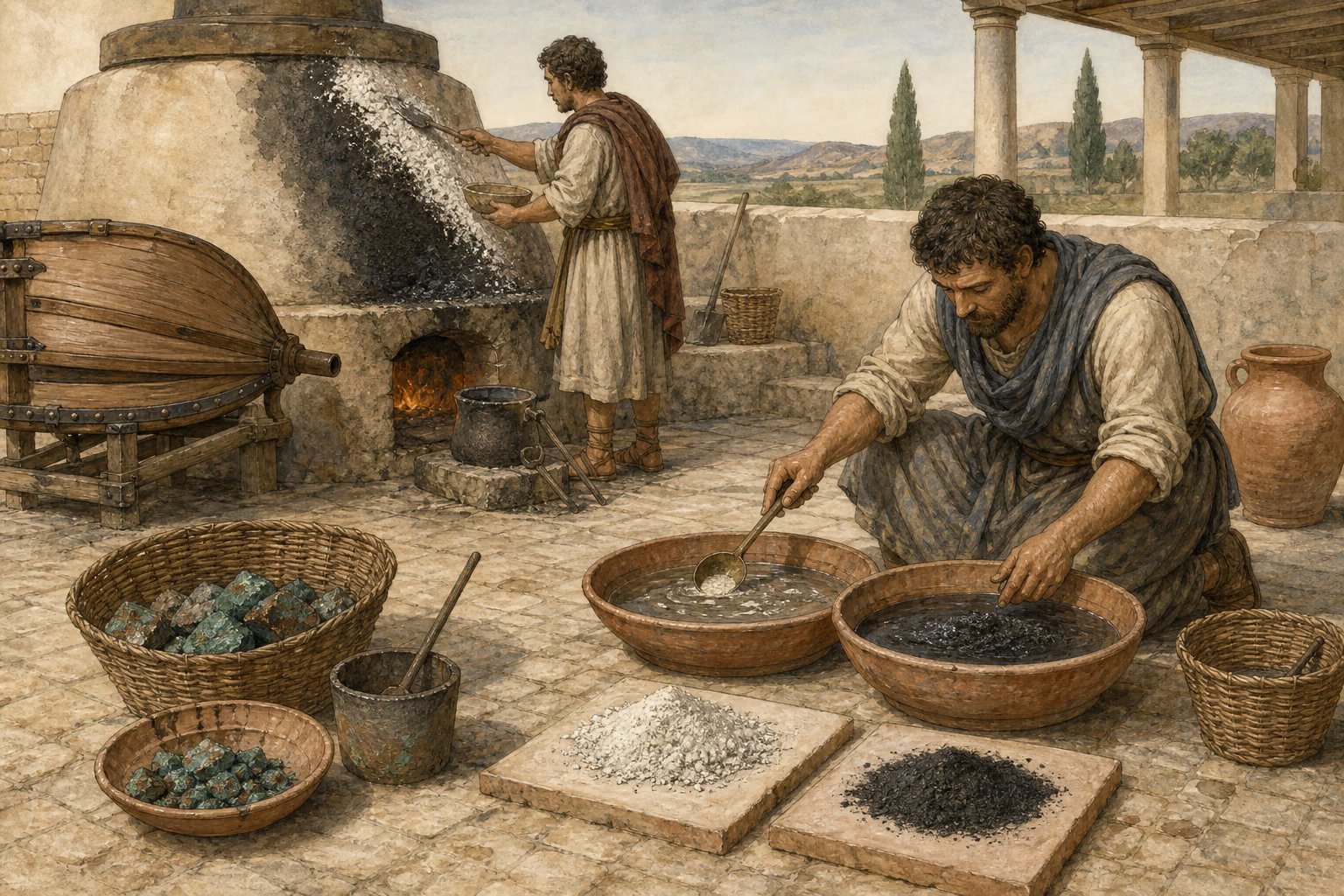
Etiamnum in aerariis reperiuntur quae vocant pompholygem et spodon. differentia, quod pompholyx lotura separator, spodos inlota est. aliqui quod sit candidum levissimumque pompholygem dixere et esse aeris ac cadmeae favillam, spodon nigriorem esse ponderosioremque, derasam parietibus fornacium, mixtis scintillis, aliquando et carbonibus. haec aceto accepto odorem aeris praestat et, si tangatur lingua, saporem horridum. convenit oculorum medicamentis, quibuscumque vitiis occurrens, et ad omnia quae spodos. hoc solum distat, quod huius elutior vis est. additur et in emplastra, quibus lenis refrigeratio quaeritur et siccatio. utilior ad omnia quae vino lota est.
Spodos Cypria optima. fit autem liquescentibus cadmea et aerario lapide. levissimum hoc est flaturae totius evolatque e fornacibus et tectis adhaerescit, a fuligine distans candore. quod minus candidum ex ea, inmaturae fornacis argumentum est; hoc quidam pompholygem. vocant. quod vero rubicundius ex iis invenitur, acriorem vim habet et exulcerat adeo, ut, cum lavatur, si attigit oculos, excaecet. est et mellei coloris spodos, in qua plurimum aeris intellegitur. sed quodcumque genus lavando fit utilius; purgatur ante pinna, dein crassiore lotura digitis scabritiae excernuntur. eximia vis est eius, quae vino lavatur. est aliqua et in genere vini differentia. leni enim lota collyriis oculorum minus utilis putatur, eademque efficacior ulceribus, quae manent, vel oris, quae madeant, et omnibus medicamentis, quae parentur contra gangraenas. fit et in argenti fornacibus spodos, quam vocant Lauriotim. utilissima autem oculis adfirmatur quae fiat in aurariis, nec in alia parte magis est vitae ingenia mirari. quippe ne quaerenda essent metalla, vilissimis rebus utilitates easdem excogitavit.
Antispodon vocant cinerem fici arboris vel caprifici vel myrti foliorum cum tenerrimis ramorum partibus vel oleastri vel oleae vel cotonei mali vel lentisci, item ex moris inmaturis, id est candidis, in sole arefactis vel e buxi coma aut pseudocypiri aut rubi aut terebinthi vel oenanthes. taurini quoque glutinis aut linteorum cinerem similiter pollere inventum est. uruntur omnia ea crudo fictili in fornacibus, donec figlina percoquantur.
In aerariis officinis et smegma fit iam liquato aere ac percocto additis etiamnum carbonibus paulatimque accensis, ac repente vehementiore flatu exspuitur aeris palea quaedam. solum, quo excipiatur, stratum esse debet marilla.
Ab ea discernitur quam in isdem officinis diphrygem vocant Graeci ab eo, quod bis torreatur. cuius origo triplex. fieri enim traditur ex lapide pyrite cremato in caminis, donec excoquatur in rubricam. fit et in Cypro ex luto cuiusdam specus arefacto prius, mox paulatim circumdatis sarmentis. tertio fit modo in fornacibus aeris faece subsidente. differentia est, quod aes ipsum in catinos defluit, scoria extra fornaces, flos supernatat, diphryges remanent. quidam tradunt in fornacibus globos lapidis, qui coquatur, feruminari, circa hunc aes fervere, ipsum vero non percoqui nisi tralatum in alias fornaces, et esse nodum quendam materiae; id, quod ex cocto supersit, diphryga vocari. ratio eius in medicina similis praedictis: siccare et excrescentia consumere ac repurgare. probatur lingua, ut eam siccet tactu statim saporemque aeris reddat.
Unum etiamnum aeris miraculum non omittemus. Servilia familia inlustris in fastis trientem aereum pascit auro, argento, consumentem utrumque. origo atque natura eius incomperta mihi est. verba ipsa de ea re Messallae senis ponam: Serviliorum familia habet trientem sacrum, cui summa cum cura magnificentiaque sacra quotannis faciunt. quem ferunt alias crevisse, alias decrevisse videri et ex eo aut honorem aut deminutionem familiae significare.
English · Bostock & Riley 1855–57
The substances called pompholyx and spodos are also found in the furnaces of copper-smelting works; the difference between them being, that pompholyx is disengaged by washing, while spodos is not washed. Some persons have called the part which is white and very light “pompholyx,” and say that it is the ashes of copper and cadmia; whereas spodos is darker and heavier, being a substance scraped from the walls of the furnace, mixed with extinguished sparks from the metal, and sometimes with the residue of coals. When vinegar is combined with it, pompholyx emits a coppery smell, and if it is touched with the tongue, the taste is most abominable. It is useful as an ingredient in ophthalmic preparations for all diseases of the eyes, as also for all the purposes for which spodos is used; this last only differing from it in its action being less powerful. It is also used for plasters, when required to be gently cooling and desiccative. For all these purposes it is more efficacious when it has been moistened with wine.
The Cyprian spodos is the best. It is formed by fusing cadmia with copper ore. This substance, which is the lightest part of the metal disengaged by fusion, escapes from the furnace, and adheres to the roof, being distinguished from the soot by the whiteness of its colour. Such parts of it as are less white are indicative of incomplete combustion, and it is this which some persons call “pompholyx.” Such portions of it as are of a more reddish colour are possessed of a more energetic power, and are found to be so corrosive, that if it touches the eyes, while being washed, it will cause blindness. There is also a spodos of a honey colour, an indication that it contains a large proportion of copper. All the different kinds, however, are improved by washing; it being first skimmed with a feather, and afterwards submitted to a more substantial washing, the harder grains being removed with the finger. That, too, which has been washed with wine is more modified in its effects; there being also some difference according to the kind of wine that is used. When it has been washed with weak wine the spodos is considered not so beneficial as an ingredient in medicaments for the eyes; but the same kind of preparation is more efficacious for running sores, and for ulcers of the mouth attended with a discharge of matter, as well as in all those remedies which are used for gangrene.
There is also a kind of spodos, called “lauriotis,” which is made in the furnaces where silver is smelted. The kind, however, that is best for the eyes, it is said, is that produced in the furnaces for smelting gold. Indeed there is no department of art in which the ingenuity of man is more to be admired; for it has discovered among the very commonest objects, a substance that is in every way possessed of similar properties.
The substance called “antispodos” is produced from the ashes of the fig-tree or wild fig, or of leaves of myrtle, together with the more tender shoots of the branches. The leaves, too, of the wild olive furnish it, the cultivated olive, the quince-tree, and the lentisk; unripe mulberries also, before they have changed their colour, dried in the sun; and the foliage of the box, pseudo-cypirus, bramble, terebinth and œnanthe. The same virtues have also been found in the ashes of bull-glue and of linen cloth. All these substances are burnt in a pot of raw earth, which is heated in a furnace, until the earthenware is thoroughly baked.
In the copper forges also smegma is prepared. When the metal is liquefied and thoroughly smelted, charcoal is added to it and gradually kindled; after which, upon it being suddenly acted upon by a powerful pair of bellows, a substance is disengaged like a sort of copper chaff. The floor on which it is received ought to be prepared with a stratum of coal-dust.
There is another product of these furnaces, which is easily distinguished from smegma, and which the Greeks call “diphryx,” from its being twice calcined. This substance is prepared from three different sources. It is prepared, they say, from a mineral pyrites, which is heated in the furnace until it is converted by calcination into a red earth. It is also made in Cyprus, from a slimy substance extracted from a certain cavern there, which is first dried and then gradually heated, by a fire made of twigs. A third way of making it, is from the residue in the copper-furnaces that falls to the bottom. The difference between the component parts of the ore is this: the copper itself runs into the receivers, the scoriæ make their escape from the furnace, the flower becomes sublimated, and the diphryx remains behind.
Some say that there are certain globules in the ore, while being smelted, which become soldered together; and that the rest of the metal is fused around it, the mass itself not becoming liquefied, unless it is transferred to another furnace, and forming a sort of knot, as it were, in the metal. That which remains after the fusion, they say, is called “diphryx.” Its use in medicine is similar to that of the substances mentioned above; it is desiccative, removes morbid excrescenses, and acts as a detergent. It is tested by placing it on the tongue, which ought to be instantly parched by it, a coppery flavour being perceptible.
We must not neglect to mention one other very remarkable fact relative to copper. The Servilian family, so illustrious in our annals, nourishes with gold and silver a copper triens, which devours them both. The origin and nature of this coin is to me incomprehensible; but I will quote the very words of the story, as given by old Messala himself—“The family of the Servilii is in possession of a sacred triens, to which they offer every year a sacrifice, with the greatest care and magnificence; the triens itself, they say, appears sometimes to increase in size and sometimes to diminish; changes which indicate the coming advancement or decadence of the family.”