LIBER XXXIV · CAPUT 3
STANDS FOR LAMPS
Latine · Mayhoff 1906
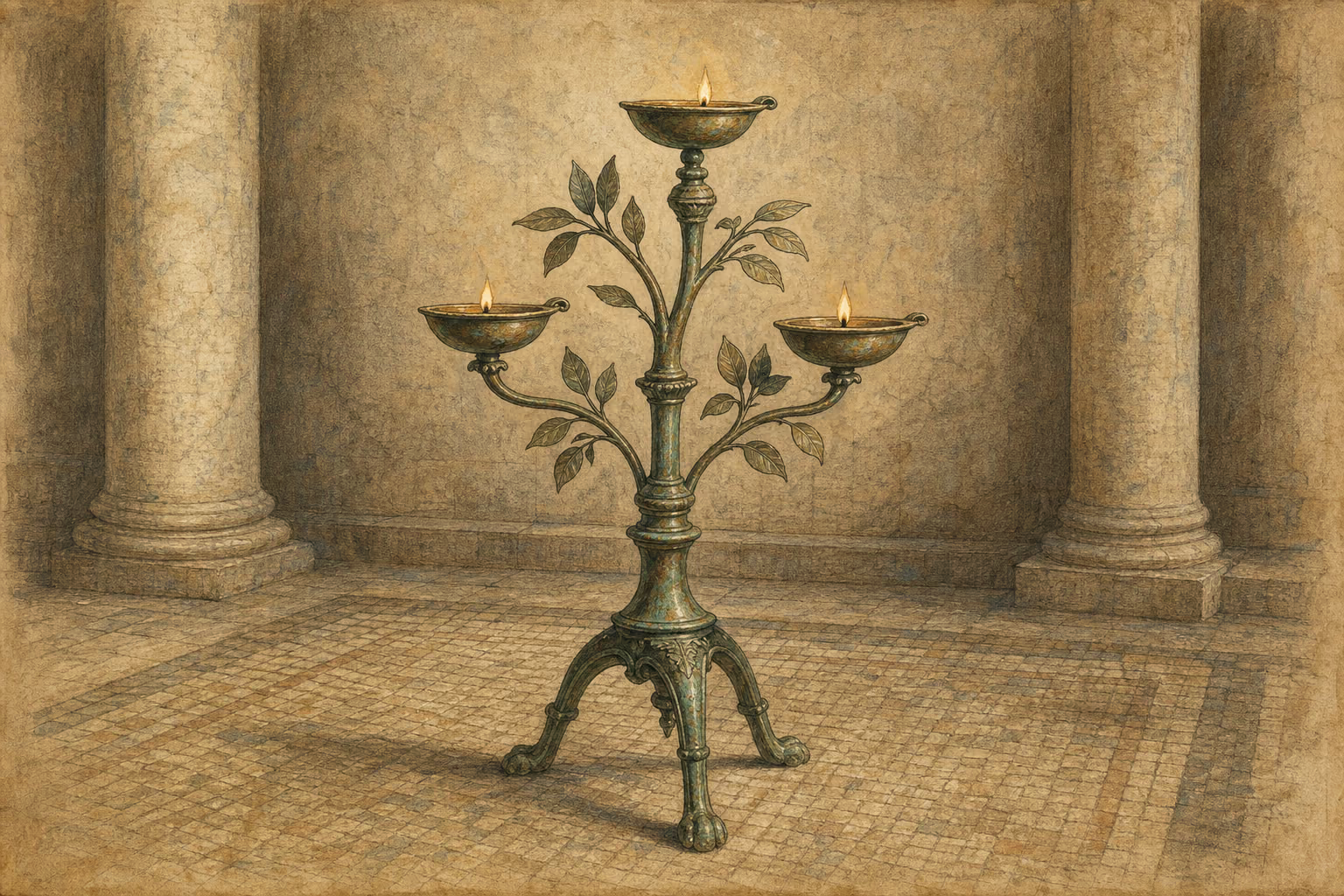
Privatim Aegina candelabrorum superficiem dumtaxat elaboravit, sicut Tarentum scapos. in iis ergo iuncta commendatio officinarum est. nec pudet tribunorum militarium salariis emere, cum ipsum nomen a candelarum lumine inpositum appareat. accessio candelabri talis fuit Theonis iussu praeconis Clesippus fullo gibber et praeterea et alio foedus aspect, emente id Gegania HS L???;. eadem ostentante in convivio empta ludibrii causa nudatus atque inpudentia libidinis receptus in torum, mox in testamentum, praedives numinum vice illud candelabrum coluit et hanc Corinthiis fabulam adiecit, vindicatis tamen moribus nobili sepulchro, per quod aeterna supra terras Geganiae dedecoris memoria duraret. sed cum esse nulla Corinthia candelabra constet, nomen id praecipue in his celebratur, quoniam Mummi victoria Corinthum quidem diruit, sed e compluribus Achaiae oppidis simul aera dispersit.
Prisci limina etiam ac valvas in templis ex aere factitavere. invenio et a Cn. Octavio, qui de Perseo rege navalem triumphum egit, factam porticum duplicem ad circum Flaminium, quae Corinthia sit appellata a capitulis aereis columnarum, Vestae quoque aedem ipsam Syracusana superficie tegi placuisse. Syracusana sunt in Pantheo capita columnarum a M. Agrippa posita. quin etiam privata opulentia eo modo usurpata est. Camillo inter crimina obiecit Spurius Carvilius quaestor, ostia quod aerata haberet in domo. nam triclinia aerata abacosque et monopodia Cn. Manlium Asia devicta primum invexisse triumpho suo, quem duxit anno urbis DLXVII, L. Piso auctor est, Antias quidem heredes L. Crassi oratoris multa etiam triclinia aerata vendidisse. ex aere factitavere et cortinas tripodum, nomine et Delphicas, quoniam donis maxime Apollini Delphico dicabantur. placuere et lychnuchi pensiles in delubris aut arborum mala ferentium modo lucentes, quale est in templo Apollinis Palatini quod Alexander Magnus Thebarum expugnatione captum in Cyme dicaverat eidem deo.
English · Bostock & Riley 1855–57
Ægina was particularly famous for the manufacture of sockets only for lamp-stands, as Tarentum was for that of the branches; the most complete articles were, therefore, produced by the union of the two. There are persons, too, who are not ashamed to give for one a sum equal to the salary of a military tribune, although, as its name indicates, its only use is to hold a lighted candle. On the sale of one of these lamp-stands, Theon the public crier announced, that the purchaser must also take, as part of the lot, one Clesippus, a fuller, who was hump-backed, and in other respects, of a hideous aspect. The purchase was made by a female named Gegania, for fifty thousand sesterces. Upon her exhibiting these purchases at an entertainment which she gave, the slave, for the amusement of her guests, was brought in naked. Conceiving an infamous passion for him, she first admitted him to her bed, and finally left him all her estate. Having thus become excessively rich, he adored the lamp-stand as much as any divinity, and the story became a sort of pendant to the celebrity of the Corinthian lamp-stands. Still, however, good morals were vindicated in the end, for he erected a splendid monument to her memory, and so kept alive the eternal remembrance of the misconduct of Gegania. But although it is well known that there are no lamp-stands in existence made of the Corinthian metal, yet this name is very generally attached to them, because, in consequence of the victory of Mummius, Corinth was destroyed: at the same time, however, it should be remembered that this victory dispersed a number of bronzes which originally came from many other cities of Achaia.
The ancients were in the habit of making the door-sills and even the doors of the temples of brass. I find it stated, also, that Cneius Octavius, who obtained a naval triumph over King Perseus, erected the double portico to the Flaminian Circus, which was called the “Corinthian” from the brazen capitals of the pillars. It is stated also, that an ordinance was made that the Temple of Vesta should be covered with a coating of Syracusan metal. The capitals, too, of the pillars, which were placed by M. Agrippa in the Pantheon, are made of similar metal. Even the opulence, too, of private individuals has been wrested to similar purposes. Spurius Carvilius, the quæstor, among the other charges which he brought against Camillus, accused him of having brazen doors in his house.
We learn from L. Piso, that Cneius Manlius was the first who introduced brazen banquetting-couches, buffets, and tables with single feet, when he entered the City in triumph, in the year of Rome 567, after his conquests in Asia. We also learn from Antias, that the heirs of L. Crassus, the orator, sold a number of banquetting-couches adorned with brass. The tripods, which were called Delphian, because they were devoted more particularly to receiving the offerings that were presented to the Delphian Apollo, were usually made of brass: also the pendant lamps, so much admired, which were placed in the temples, or gave their light in the form of trees loaded with fruit; such as the one, for instance, in the Temple of the Palatine Apollo, which Alexander the Great, at the sacking of Thebes, brought to Cyme, and dedicated to that god.