LIBER XXXIV · CAPUT 4
WHICH WAS THE FIRST STATUE OF A GOD MADE OF BRASS AT ROME. THE ORIGIN OF STATUES, AND THE RESPECT PAID TO THEM
Latine · Mayhoff 1906
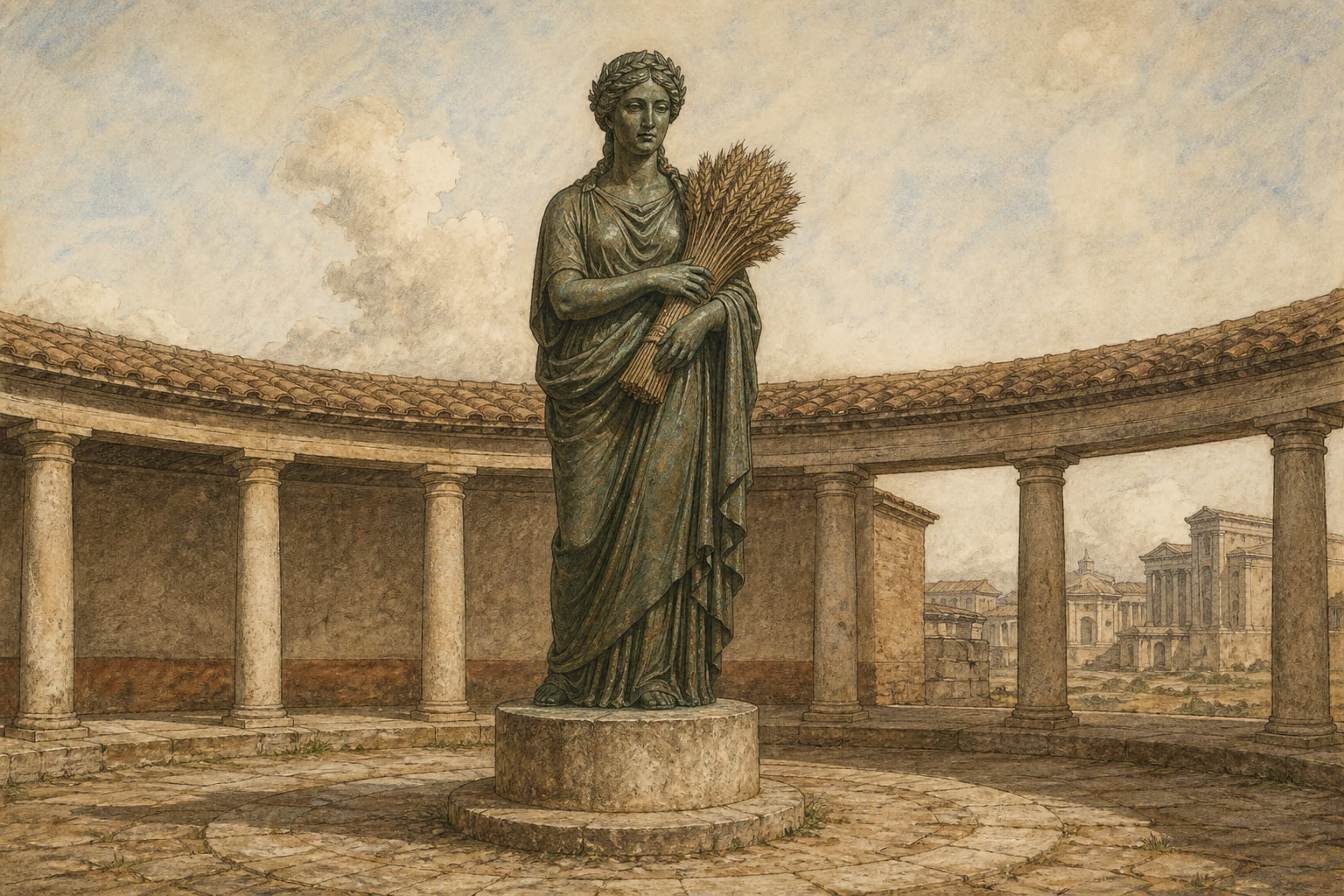
Transiit deinde ars vulgo ubique ad effigies deorum. Romae simulacrum ex aere factum Cereri primum reperio ex peculio Sp. Cassi, quem regnum adfectantem pater ipsius interemerit. transiit et a diis ad hominum statuas atque imagines multis modis. bitumine antiqui tinguebant eas, quo magis mirum est placuisse auro integere. hoc nescio an Romanum fuerit inventum; certe etiam nomen non habet vetustum. effigies hominum non solebant exprimi nisi aliqua inlustri causa perpetuitatem merentium, primo sacrorum certaminum victoria maximeque Olympiae, ubi omnium, qui vicissent, statuas dicari mos erat, eorum vero, qui ter ibi superavissent ex membris ipsorum similitudine expressa, quas iconicas vocant. Athenienses nescio an primis omnium Harmodio et Aristogitoni tyrannicidis publice posuerint statuas. hoc actum est eodem anno, quo et Romae reges pulsi. excepta deinde res est a toto orbe terrarum humanissima ambitione, et in omnium municipiorum foris statuae ornamentum esse coepere propagarique memoria hominum et honores legendi aevo basibus inscribi, ne in sepulcris tantum legerentur. mox forum et in domibus privatis factum atque in atriis: honos clientium instituit sic colere patronos.
English · Bostock & Riley 1855–57
But after some time the artists everywhere applied themselves to representations of the gods. I find that the first brass image, which was made at Rome, was that of Ceres; and that the expenses were defrayed out of the property that belonged to Spurius Cassius, who was put to death by his own father, for aspiring to the regal office. The practice, however, soon passed from the gods to the statues and representations of men, and this in various forms. The ancients stained their statues with bitumen, which makes it the more remarkable that they were afterwards fond of covering them with gold. I do not know whether this was a Roman invention; but it certainly has the repute of being an ancient practice at Rome.
It was not the custom in former times to give the likeness of individuals, except of such as deserved to be held in lasting remembrance on account of some illustrious deed; in the first instance, for a victory at the sacred games, and more particularly the Olympic Games, where it was the usage for the victors always to have their statues consecrated. And if any one was so fortunate as to obtain the prize there three times, his statue was made with the exact resemblance of every individual limb; from which circumstance they were called “iconicæ.” I do not know whether the first public statues were not erected by the Athenians, and in honour of Harmodius and Aristogiton, who slew the tyrant; an event which took place in the same year in which the kings were expelled from Rome. This custom, from a most praiseworthy emulation, was afterwards adopted by all other nations; so that statues were erected as ornaments in the public places of municipal towns, and the memory of individuals was thus preserved, their various honours being inscribed on the pedestals, to be read there by posterity, and not on their tombs alone. After some time, a kind of forum or public place came to be made in private houses and in our halls, the clients adopting this method of doing honour to their patrons.