LIBER XXXIV · CAPUT 5
THE DIFFERENT KINDS AND FORMS OF STATUES. STATUES AT ROME WITH CUIRASSES
Latine · Mayhoff 1906
Togatae effigies antiquitus ita dicabantur. placuere et nudae tenentes hastam ab epheborum e gymnasiis exemplaribus; quas Achilleas vocant. Graeca???res nihil velare, at contra Romana ac militaris thoraces addere. Caesar quidem dictator loricatam sibi dicari in foro suo passus est. nam Lupercorum habitu tam noviciae sunt quam quae nuper prodiere paenulis indutae. Mancinus eo habitu sibi statuit, quo deditus fuerat. notatum ab auctoribus et L. Accium poetam in Camenarum aede maxima forma statuam sibi posuisse, cum brevis admodum fuisset. equestres utique statuae Romanam celebrationem habent, orto sine dubio a Graecis exemplo. sed illi celetas tantum dicabant in sacris victores, postea vero et qui bigis vel quadrigis vicissent; unde et nostri currus nati in iis, qui triumphavissent. serum hoc, et in iis non nisi a divo Augusto seiuges, sicut elephanti.
Non vetus et bigarum celebratio in iis, qui praetura functi curru vecti essent per circum; antiquior columnarum, sicuti C. Maenio, qui devicerat priscos Latinos, quibus ex foedere tertias praedae populus Romanus praestabat, eodemque in consulatu in suggestu rostra devictis Antiatibus fixerat anno urbis CCCCXVI, item C. Duillio, qui primus navalem triumphum egit de Poenis, quae est etiam nunc in foro, item L. Minucio praefecto annonae extra portam Trigeminam unciaria stipe conlata—nescio an primo honore tali a populo, antea enim a senatu erat—, praeclara res, ni frivolis coepisset initiis. namque et Atti Navi statua fuit ante curiam—basis eius conflagravit curia incensa P. Clodii funere—; fuit et Hermodori Ephesii in comitio, legum, quas decemviri scribebant, interpretis, publice dicata. alia causa, alia auctoritas M. Horati Coclitis statuae—quae durat hodieque—, cum hostes a ponte sublicio solus arcuisset. equidem et Sibyllae iuxta rostra esse non miror, tres sint licet: una quam Sextus Pacuius Taurus aed. pl. restituit; duae quas M. Messalla. primas putarem has et Atti Navi, positas aetate Tarquinii Prisci, ni regum antecedentium essent in Capitolio,
English · Bostock & Riley 1855–57
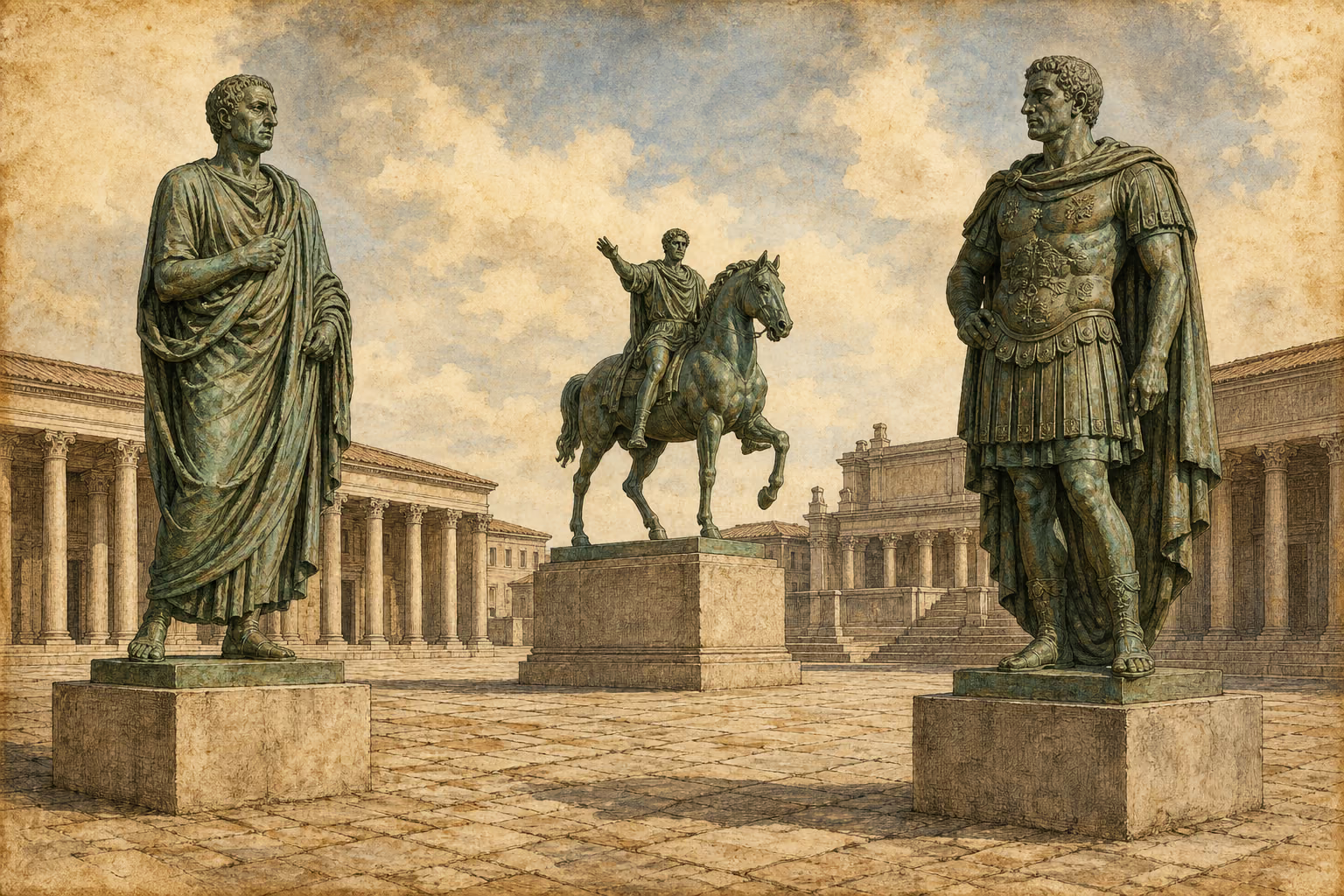
In former times the statues that were thus dedicated were clad in the toga. Naked statues also, brandishing a spear, after the manner of the youths at their gymnastic exercises, were much admired; these were called “Achillean.” The Greek practice is, not to cover any part of the body; while, on the contrary, the Roman and the military statues have the addition of a cuirass. Cæsar, the Dictator, permitted a statue with a cuirass to be erected in honour of him in his Forum. As to the statues which are made in the garb of the Luperci, they are of no older date than those which have been lately erected, covered with a cloak. Mancinus gave directions, that he should be represented in the dress which he wore when he was surrendered to the enemy. It has been remarked by some authors, that L. Attius, the poet, had a statue of himself erected in the Temple of the Muses, which was extremely large, although he himself was very short.
Equestrian statues are also held in esteem in Rome; but they are of Greek origin, no doubt. Among the Greeks, those persons only were honoured with equestrian statues who were victors on horseback in the sacred games; though afterwards the same distinction was bestowed on those who were successful in the races with chariots with two or four horses: hence the use of chariots with us in the statues of those who have triumphed. But this did not take place until a late period; and it was not until the time of the late Emperor Augustus, that we had chariots represented with six horses, as also with elephants.
The custom of erecting chariots with two horses in honour of those who had discharged the office of prætor, and had passed round the Circus in a chariot, is not of ancient date. That of placing statues on pillars is older, as it was done in honour of C. Mænius, who conquered the ancient Latins, to whom the Romans by treaty gave one third of the spoil which they had obtained. It was in the same consulship also, that the “rostra” or beaks of the ships, which had been taken from the Antiates when vanquished, were fixed to the tribunal; it being the year of the City, 416. The same thing was done also by Caius Duillius, who was the first to obtain a naval triumph over the Carthaginians: his column still remains in the Forum. I am not certain whether this honour was not first conferred by the people on L. Minutius, the præfect of the markets; whose statue was erected without the Trigeminian Gate, by means of a tax of the twelfth of an as per head: the same thing, however, had been previously done by the senate, and it would have been a more distinguished honour had it not had its origin on such frivolous occasions. The statue of Attus Navius, for example, was erected before the senate-house, the pedestal of which was consumed when the senate-house itself was burnt at the funeral of Publius Clodius. The statue of Hermodorus also, the Ephesian, the interpreter of the laws which were transcribed by the Decemvirs, was erected by the public in the Comitium.
It was for a very different, and more important reason, that the statue of Horatius Cocles was erected, he having singly prevented the enemy from passing the Sublician bridge: a statue which remains to this day. I am not at all surprized, too, that statues of the Sibyl should have been erected near the Rostra, even though three in number; one of which was repaired by Sextus Pacuvius Taurus, ædile of the people, and the other two by M. Messala. I should have considered these and that of Attus Navius to have been the oldest, as having been placed there in the time of Tarquinius Priscus, had there not been in the Capitol the statues of the preceding kings.