LIBER XXXIV · CAPUT 6
IN HONOUR OF WHAT FOREIGNERS PUBLIC STATUES WERE ERECTED AT ROME
Latine · Mayhoff 1906
ex iis Romuli et Tatii sine tunica, sicut et Camilli in rostris. et ante aedem Castorum fuit Q. Marci Tremuli equestris togata qui Samnites bis devicerat captaque Anagnia populum stipendio liberaverat. inter antiquissimas sunt et Tulli Cloeli, L. Rosci, Sp. Nauti, C. Fulcini in rostris, a Fidenatibus in legatione interfectorum. hoc a re p. tribui solebat iniuria caesis, sicut aliis et P. Iunio, Ti. Coruncanio, qui ab Teuta Illyriorum regina interfecti erant. non oimittendum videtur, quod annales adnotavere, tripedaneas iis statuas in foro statutas; haec videlicet mensura honorata tune erat. non praeteribo et Cn. Octavium ob unum SC. verbum. hic regem Antiochum daturum se responsum dicentem virga, quam tenebat forte, circumscripsit priusque, quam egrederetur circulo illo, responsum dare coegit. in qua legatione interfecto senatus statuam poni iussit quam oculatissimo loco, eaque est in rostris. invenitur statua decreta et Taraciae Gaiae sive Fufetiae virgini Vestali, ut poneretur ubi vellet, quod adiectum non minus honoris habet quam feminae esse decretam. meritum eius ipsis ponam annalium verbis: quod campum Tiberinum gratificata esset ea populo.— Invenio et Pythagorae et Alcibiadi in cornibus comitii positas, cum bell Samniti Apollo Pythius iussisset fortissimo Graiae gentis et alteri sapientissimo simulacra celebri loco dicari. eae stetere, donec Sulla dictator ibi curiam faceret. mirumque est, illos patres Socrati cunctis ab eodem deo sapientia praelato Pythagoran praetulisse aut tot aliis virtute Alcibiaden et quemquam utroque Themistocli.
Columnarum ratio erat attolli super ceteros mortales, quod et arcus significant novicio invento. primus tamen honos coepit a Graecis, nullique arbitror plures statuas dicatas quam Phalereo Demetrio Athenis, siquidem CCCLX statuere, nondum anno hunc numerum dierum excedente, quas mox laceravere. statuerunt et Romae in omnibus vicis tribus Mario Gratidiano, ut diximus, easdemque subvertere Sullae introitu.
Pedestres sine dubio Romae fuere in auctoritate longo tempore; et equestrium tamen origo perquam vetus est, cum feminis etiam honore communicato Cloeliae statua equestri, ceu parum esset toga eam cingi, cum Lucretiae ac Bruto, qui expulerant reges, propter quos Cloelia inter obsides fuerat, non decernerentur. hanc primam cum Coclitis publice dicatam crediderim—Atto enim ac Sibyllae Tarquinium, ac reges sibi ipsos posuisse verisimile est—, nisi Cloeliae quoque Piso traderet ab iis positam, qui una opsides fuissent, redditis a Porsina in honorem eius. e diverse Annius Fetialis equestrem, quae fuerit contra Iovis Statoris aedem in vestibule Superbi domus, Valeriae fuisse, Publicolae consulis filiae, eamque solam refugisse Tiberimque transnatavisse ceteris opsidibus, qui Porsinae mittebantur, interemptis Tarquinii insidiis.
L. Piso prodidit M. Aemilio C. Popilio iterum cos. a censoribus P. Cornelio Scipione M. Popilio statuas circa forum eorum, qui magistratum gesserant, sublatas omnes praeter eas, quae populi aut senatus sententia statutae essent, eam vero, quam apud aedem Telluris statuisset sibi Sp. Cassius, qui regnum adfectaverat, etiam conflatam a censoribus. nimirum in ea quoque re ambitionem providebant illi viri. exstant Catonis in censura vociferationes mulieribus statuas Romanis in provinciis poni; nec tamen potuit inhibere, quo minus Romae quoque ponerentur, sicuti Corneliae Gracchorum matri, quae fuit Africani prioris filia. sedens huic posita soleisque sine ammento insignis in Metelli publica porticu, quae statua nunc est in Octaviae operibus.— Publice autem ab exteris posita est Romae C. Aelio tr. Pl. lege perlata in Sthennium Stallium Lucanum, qui Thurinos bis infestaverat. ob id Aelium Thurini statua et corona aurea donarunt. iidem postea Fabricium donavere statua liberati obsidione, passimque gentes in clientelas ita receptae, et adeo discrimen omne sublatum, ut Hannibalis etiam statuae tribus locis visantur in ea urbe, cuius intra muros solus hostium emisit hastam.
English · Bostock & Riley 1855–57
Among these we have the statues of Romulus and Tatius without the tunic; as also that of Camillus, near the Rostra. The equestrian statue of Marcius Tremulus, clad in the toga, stood before the Temple of the Castors; him who twice subdued the Samnites, and by the capture of Anagnia delivered the people from their tribute. Among the most ancient are those of Tullus Clœlius, Lucius Roscius, Spurius Nautius, and C. Fulcinus, near the Rostra, all of whom were assassinated by the Fidenates, when on their mission as ambassadors. It was the custom with the republic to confer this honour on those who had been unjustly put to death; such as P. Junius, also, and Titus Coruncanius, who were slain by Teuta, queen of the Illyrians. It would be wrong not to mention what is stated in the Annals, that their statues, erected in the Forum, were three feet in height; whence it would appear that such were the dimensions of these marks of honour in those times.
Nor must I forget to mention Cneius Octavius, on account of the language used by the Senate. When King Antiochus said, that he would give him an answer at another time, Octavius drew a line round him with a stick, which he happened to have in his hand, and compelled him to give an answer before he allowed him to step beyond the circle. Octavius being slain while on this embassy, the senate ordered his statue to be placed in the most conspicuous spot; and that spot was the Rostra. A statue appears also to have been decreed to Taracia Caia, or Furetia, a Vestal Virgin, the same, too, to be placed wherever she might think fit; an additional honour, no less remarkable, it is thought, than the grant itself of a statue to a female. I will state her merits in the words of the Annals: “Because she had gratuitously presented to the public the field bordering on the Tiber.”
I find also, that statues were erected in honour of Pythagoras and of Alcibiades, in the corners of the Comitium; in obedience to the command of the Pythian Apollo, who, in the Samnite War, had directed that statues of the bravest and the wisest of the Greeks should be erected in some conspicuous spot: and here they remained until Sylla, the Dictator, built the senate-house on the site. It is wonderful that the senate should then have preferred Pythagoras to Socrates, who, in consequence of his wisdom, had been preferred to all other men by the god himself; as, also, that they should have preferred Alcibiades for valour to so many other heroes; or, indeed, any one to Themistocles, who so greatly excelled in both qualities. The reason of the statues being raised on columns, was, that the persons represented might be elevated above other mortals; the same thing being signified by the use of arches, a new invention which had its origin among the Greeks. I am of opinion that there is no one to whom more statues were erected than to Demetrius Phalercus at Athens: for there were three hundred and sixty erected in his honour, there being reckoned at that period no more days in the year: these, however, were soon broken to pieces. The different tribes erected statues, in all the quarters of Rome, in honour of Marius Gratidianus, as already stated; but they were all thrown down by Sylla, when he entered Rome.
Pedestrian statues have been, undoubtedly, for a long time in estimation at Rome: equestrian statues are, however, of considerable antiquity, and females even have participated in this honour; for the statue of Clælia is equestrian, as if it had not been thought sufficient to have her clad in the toga; and this, although statues were not decreed to Lucretia, or to Brutus, who had expelled the kings, and through both of whom Clælia had been given as a hostage. I should have thought that this statue, and that of Cocles, were the first that were erected at the public expense—for it is most likely that the statues of Attus and the Sibyl were erected by Tarquinius, and those of each of the other kings by themselves respectively—had not Piso stated that the statue of Clælia was erected by those who had been hostages with her, when they were given up by Porsena, as a mark of honour.
But Annius Fetialis states, on the other hand, that the equestrian statue, which stood opposite the Temple of Jupiter Stator, in the vestibule of the house of Tarquinius Superbus, was that of Valeria, the daughter of the consul Publicola; and that she was the only person that escaped and swam across the Tiber; the rest of the hostages that had been sent to Porsena having been destroyed by a stratagem of Tarquinius.
We are informed by L. Piso, that when M. Æmilius and C. Popilius were consuls, for the second time, the censors, P. Cornelius Scipio and M. Popilius, caused all the statues erected round the Forum in honour of those who had borne the office of magistrates, to be removed; with the exception of those which had been placed there, either by order of the people or of the senate. The statue also which Spurius Cassius, who had aspired to the supreme authority, had erected in honour of himself, before the Temple of Tellus, was melted down by order of the censors; for even in this respect, the men of those days took precautions against ambition.
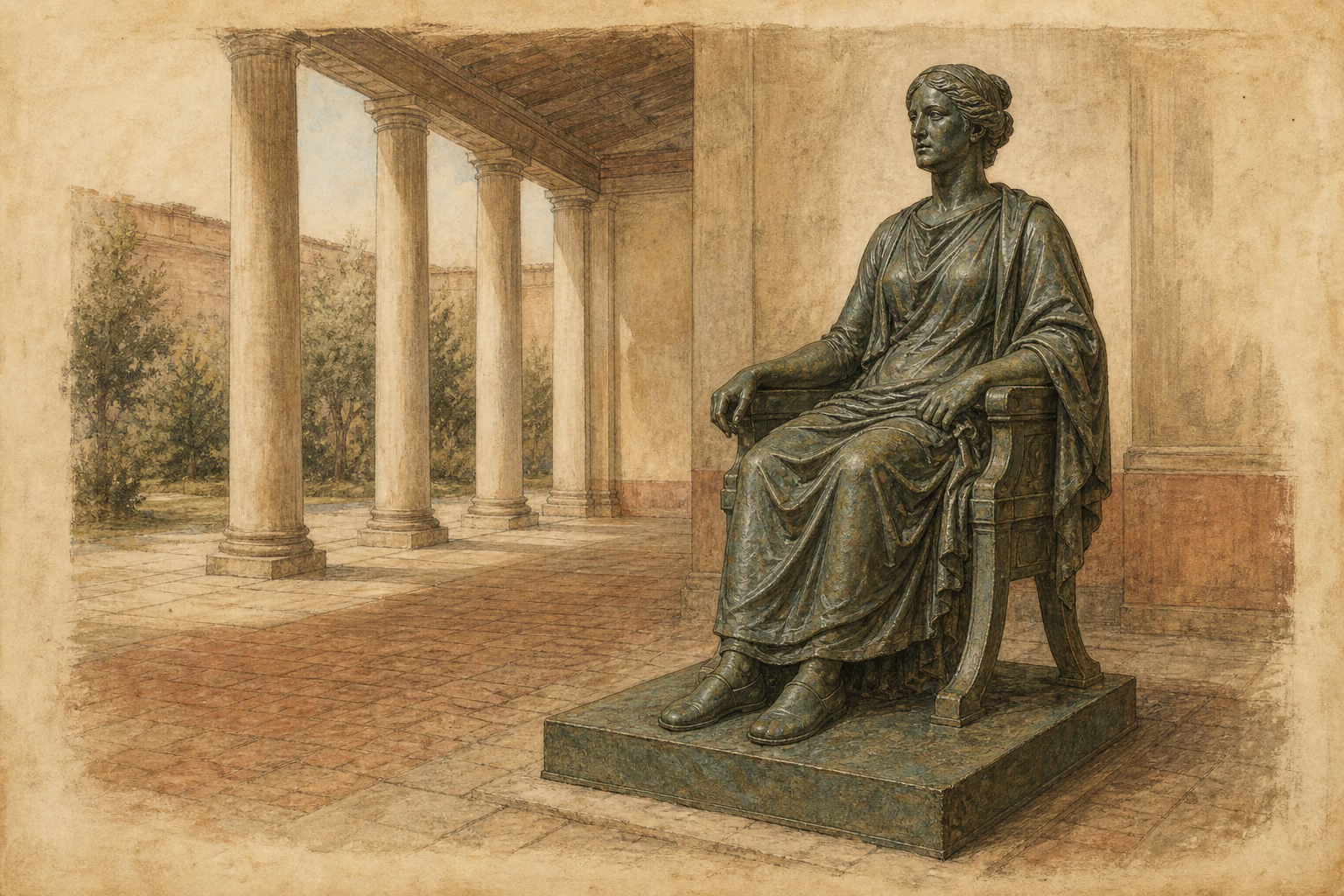
There are still extant some declamations by Cato, during his censorship, against the practice of erecting statues of women in the Roman provinces. However, he could not prevent these statues being erected at Rome even; to Cornelia, for instance, the mother of the Gracchi, and daughter of the elder Scipio Africanus. She is represented in a sitting posture, and the statue is remarkable for having no straps to the shoes. This statue, which was formerly in the public Portico of Metellus, is now in the Buildings of Octavia.
The first statue that was erected at Rome at the expense of a foreigner was that of C. Ælius, the tribune of the people, who had introduced a law against Sthennius Statilius Lucanus, for having twice attacked Thurii: on which account the inhabitants of that place presented Ælius with a statue and a golden crown. At a later period, the same people erected a statue to Fabricius, who had delivered their city from a state of siege. From time to time various nations thus placed themselves under the protection of the Romans; and all distinctions were thereby so effectually removed, that statues of Hannibal even are to be seen in three different places in that city, within the walls of which, he alone of all its enemies, had hurled his spear.