LIBER XXXV · CAPUT 13
VARIOUS KINDS OF EARTH, THE PUTEOLAN DUST, AND OTHER EARTHS OF WHICH CEMENTS LIKE STONE ARE MADE
Latine · Mayhoff 1906
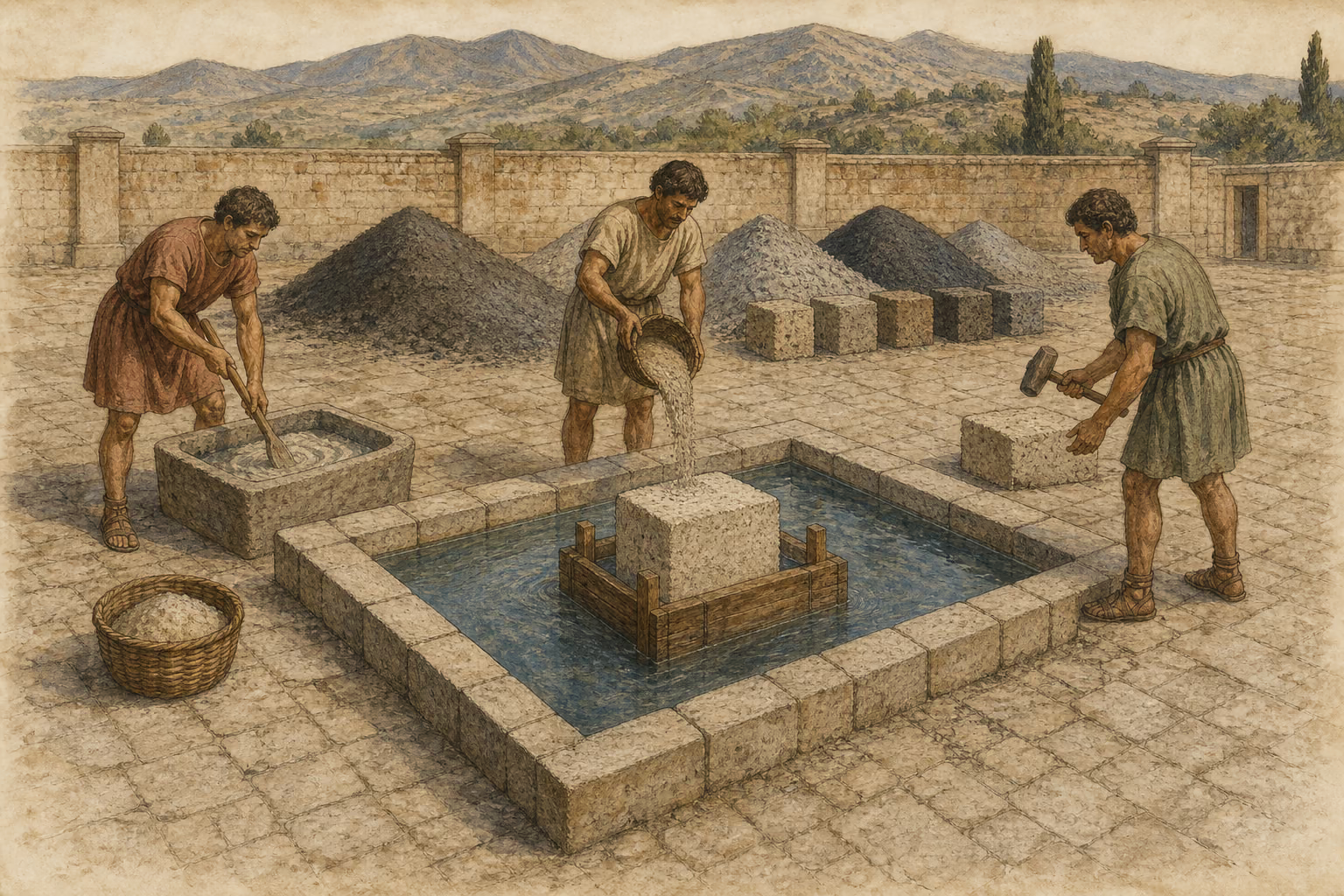
Verum et ipsius terrae sunt alia commenta. quis enim satis miretur pessumam eius partem ideoque pulverem appellatam in Puteolanis collibus opponi maris fluctibus, mersumque protinus fieri lapidem unum inexpugnabilem undis et fortiorem cotidie, utique si Cumano misceatur caemento? eadem est terrae natura et in Cyzicena regione, sed ibi non pulvis, verum ipsa terra qua libeat magnitudine excisa et demersa in mare lapidea extrahitur. hoc idem circa Cassandream produnt fieri, et in fonte Cnidio dulci intra octo menses terram lapidescere. ab Oropo quidem Aulida usque quidquid attingitur mari terrae mutatur in saxa. non multum a pulvere Pateolano distat e Nilo harena tenuissima sui parte, non ad sustinenda maria fluctusque frangendos, sed ad debellanda corpora palaestrae studiis. inde certe Patrobio, Neronis principis liberto, advehebatur. quin et Cratero et Leonnato ac Meleagro, Alexandri Magni ducibus, solitum hoc portari cum reliquis militaribus commerciis reperio, plura de hac parte non dicturus, non, Hercules, magis quam de terrae usu in ceromatis, quibus exercendo iuventus nostra corporis vires perdit animorum.
English · Bostock & Riley 1855–57
But there are other resources also, which are derived immediately from the earth. Who, indeed, cannot but be surprised at finding the most inferior constituent parts of it, known as “dust” only, on the hills about Puteoli, forming a barrier against the waves of the sea, becoming changed into stone the moment of its immersion, and increasing in hardness from day to day—more particularly when mixed with the cement of Cumæ? There is an earth too, of a similar nature found in the districts about Cyzicus; but there, it is not a dust, but a solid earth, which is cut away in blocks of all sizes, and which, after being immersed in the sea, is taken out transformed into stone. The same thing may be seen also, it is said, in the vicinity of Cassandrea; and at Cnidos, there is a spring of fresh water which has the property of causing earth to petrify within the space of eight months. Between Oropus and Aulis, every portion of the land upon which the sea encroaches becomes transformed into solid rock.
The finer portion of the sand of the river Nilus is not very different in its properties from the dust of Puteoli; not, indeed, that it is used for breaking the force of the sea and withstanding the waves, but only for the purpose, forsooth, of subduing the body for the exercises of the palestra! At all events, it was for this purpose that it used to be brought over for Patrobius, a freedman of the Emperor Nero. I find it stated also, that Craterus, Leonnatus, and Meleager, generals of Alexander the Great, had this sand transported along with their munitions of war. But I forbear to enlarge any further upon this subject; or indeed, by Hercules! upon those preparations of earth and wax of which the ceromata are made, so much employed by our youth in their exercises of the body, at the cost of all vigour of the mind.