LIBER XXXV · CAPUT 16
SAMIAN EARTH: THREE REMEDIES
Latine · Mayhoff 1906
Ab his per se ad medicinam pertinentia terrae genera tractabimus. Samiae II sunt, quae collyrium et quae aster appellantur. prioris laus ut recens sit ac levissima linguaeque glutinosa, altera glaebosior; candida utraque. uritur, lavatur. sunt qui praeferant priorem. prosunt sanguinem expuentibus; emplastrisque, quae siccandi causa componuntur, oculorum quoque medicamentis miscentur.
Eretria totidem differentias habet, namque est alba et cinerea, quae praefertur in medicina. probatur mollitia et quod, si aere perducatur, violacium reddit colorem. vis et ratio eius in medendo dicta est inter pigmenta.— Lavatur omnis terra—in hoc enim loco dicemus—perfusa aqua siccataque solibus, iterum ex aqua trita ac reposita, donec considat et digeri possit in pastillos. coquitur in calicibus crebro concussis.
Est in medicaminibus et Chia terra candicans. effectus eius idem qui Samiae; usus ad mulierum maxime cutem. idem et Selinusiae. lactei coloris haec et aqua dilui celerrima; eadem lacte diluta tectoriorum albaria interpolantur. pnigitis Eretriae simillima est, grandioribus tantum glaebis glutinosaque. effectus eius idem qui Cimoliae, infirmior tantum. bitumini simillima est ampelitis. experimentum eius, si cerae modo accepto oleo liquescat et si nigricans colos maneat tostae. usus ad molliendum discutiendumque, et ad haec medicamentis additur, praecipue in calliblepharis et inficiendis capillis.
English · Bostock & Riley 1855–57
In succession to these, we shall now have to speak of various other kinds of earth which are made use of in medicine.
Of Samian earth there are two varieties; one known as “collyrium,” the other by the name of “aster.” To be in perfection, the first kind should be fresh, remarkably smooth, and glutinous to the tongue; the second being of a more solid consistency, and white. They are both prepared for use by being calcined and then rinsed in water, some persons giving the preference to the first. They are both of them useful for discharges of blood from the mouth, and are employed as an ingredient in plasters of a desiccative nature. They are used also in the preparation of ophthalmic compositions.
Of eretria, or Eretrian earth, there are also the same number of varieties; one white, and the other of an ashy colour, this last being preferred in medicine. To be good, this earth should be of a soft consistency, and when rubbed upon copper it should leave a violet tint. The virtues of eretria in a medicinal point of view, and the methods of using it, have been already mentioned in our description of the pigments.
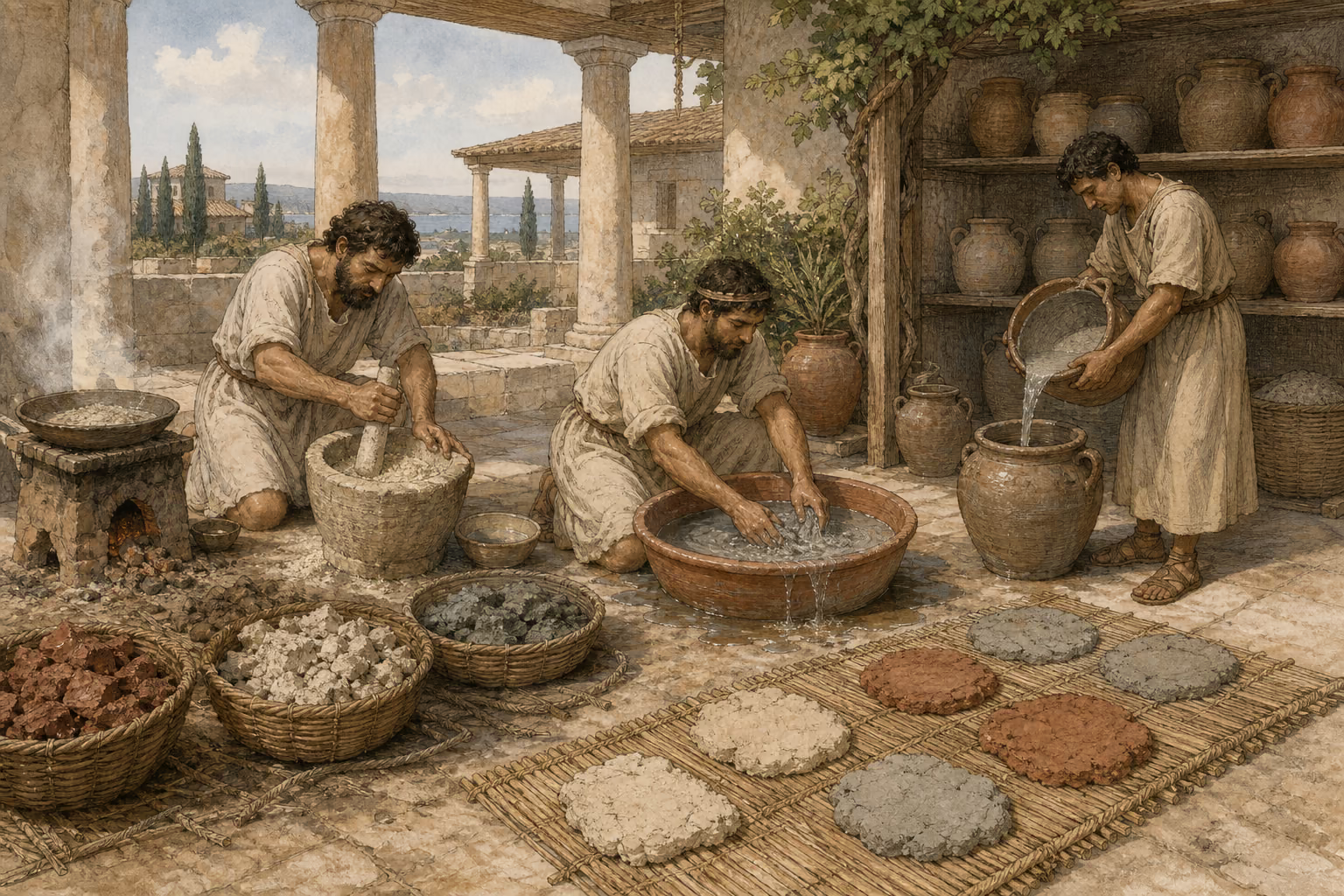
All these earths—for we will take the present opportunity of mentioning it—are well washed in water, and then dried in the sun; after which, they are again triturated in water, and left to settle: this done, they are divided into tablets. They are usually boiled in earthen vessels, which are well shaken every now and then.
Among the medicinal substances, there is the white earth of Chios also, the properties of which are the same as those of Samian earth. It is used more particularly as a cosmetic for the skin of females; the Selinusian earth being also employed for a similar purpose. This last is of a milk-white colour, and melts very rapidly in water: dissolved in milk, it is employed for whitening the plaster coats on walls. Pnigitis is very similar to Eretrian earth, only that it is found in larger masses, and is of a glutinous consistency. Its effects are similar to those produced by Cimolian earth, but are not so energetic.
Ampelitis is an earth which bears a strong resemblance to bitumen. The test of its goodness is its dissolving in oil, like wax, and preserving its black colour when submitted to the action of fire. Its properties are emollient and repercussive; for which reason, it is used in medicinal compositions, those known as “calliblephara,” more particularly, and in preparations for dyeing the hair.