LIBER XXXV · CAPUT 17
CRETACEOUS EARTHS USER FOR SCOURING CLOTH. CIMOLIAN EARTH; NINE REMEDIES. SARDINIAN EARTH. UMBRIAN EARTH. SAXUM
Latine · Mayhoff 1906
Cretae plura genera. ex iis Cimoliae duo ad medicos pertinentia, candidum et ad purpurissum inclinans. vis utrique ad discutiendos tumores, sistendas fluctiones aceto adsumpto. panos quoque et parotidas cohibet et lienem inlita pusulasque, si vero aphronitrum et cyprum adiciatur et acetum, pedum tumores ita, ut in sole curatio haec fiat et post VI horas aqua salsa abluatur. testium tumoribus cypro et cera addita prodest. et refrigerandi quoque natura cretae est, sudoresque inmodicos sistit inlita atque ita papulas cohibet ex vino adsumpta in balineis. laudatur maxime Thessalica. nascitur et in Lycia circa Bubonem.
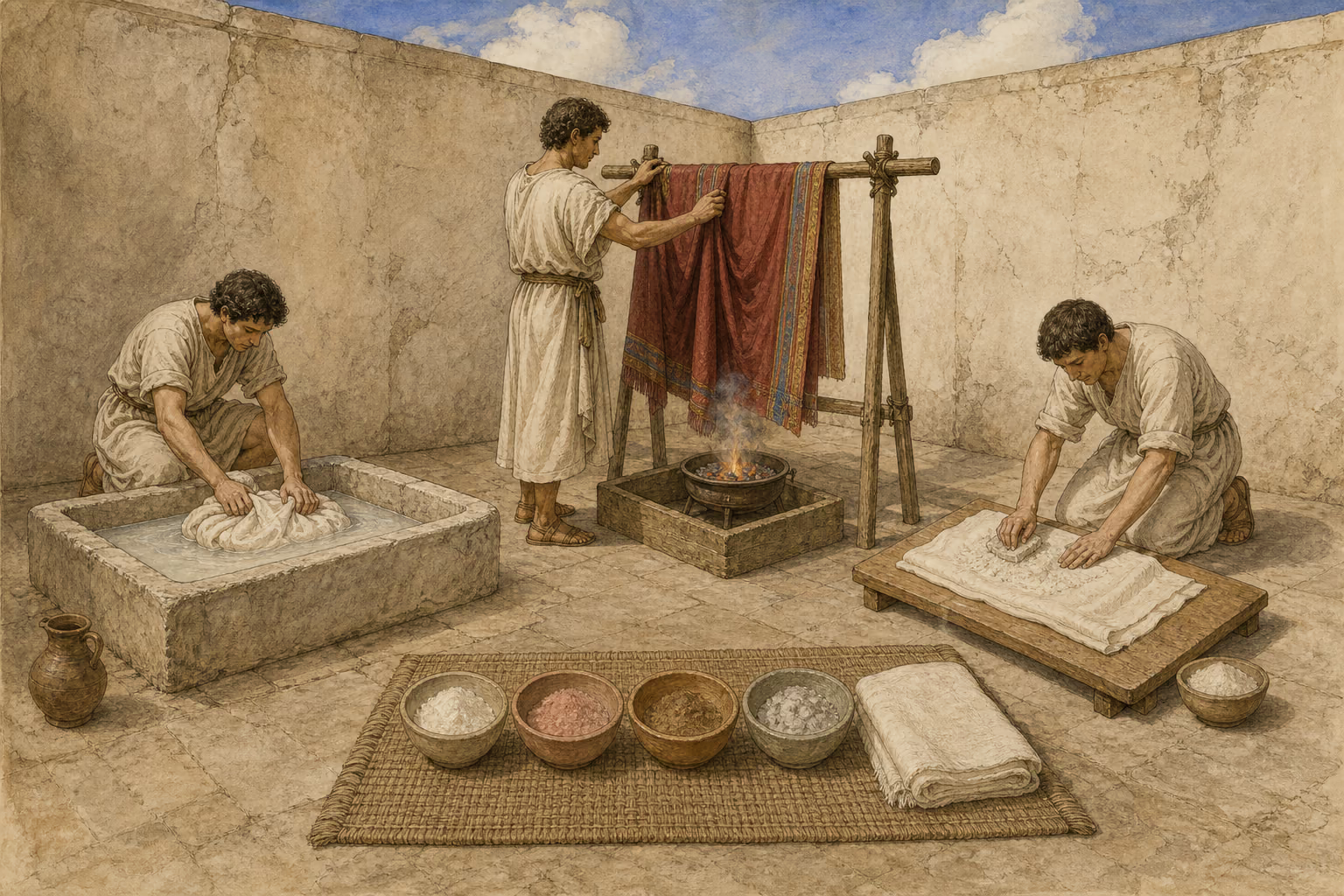
Est et alius Cimoliae usus in vestibus. nam Sarda, quae adfertur e Sardinia, candidis tantum adsumitur, inutilis versicoloribus, et est vilissima omnium Cimoliae generum, pretiosior Umbrica et quam vocant saxum. proprietas saxi quod crescit in macerando; itaque pondere emitur, illa mensura. Umbrica non nisi poliendis vestibus adsumitur. neque enim pigebit hanc quoque partem adtingere, cum lex Metilia extet fullonibus dicta, quam C. Flaminius L. Aemilius censores dedere ad populum ferendam. adeo omnia maioribus curae fuere. ergo ordo hic est: primum abluitur vestis Sarda, dein sulpure suffitur, mox desquamatur Cimolia quae est coloris veri. fucatus enim deprehenditur nigrescitque et funditur sulpure,veros autem et pretiosos colores emollit Cimolia et quodam nitore exhilarat contristatos sulpure. candidis vestibus saxum utilius a sulpure, inimicum coloribus. Graecia pro Cimolia Tymphaico utitur gypso.
Alia creta argentaria appellatur nitorem argento reddens, set vilissima qua circum praeducere ad victoriae notam pedesque venalium trans maria advectorum denotare instituerunt maiores; talemque PubliliumAnti- ochium, mimicae scaenae conditorem, et astrologiae consobrinum eius Manilium Antiochum, item grammaticae Staberium Erotem eadem nave advectos videre proavi.
English · Bostock & Riley 1855–57
Of cretaceous earths there are several varieties; and among them, two kinds of Cimolian earth, employed in medicine, the one white and the other inclining to the tint of purpurissum. Both kinds, moistened with vinegar, have the effect of dispersing tumours and arresting defluxions. They are curative also of inflammatory swellings and imposthumes of the parotid glands; and, applied topically, they are good for affections of the spleen and pustules on the body. With the addition of aphronitrum, oil of cypros, and vinegar, they reduce swellings of the feet, care being taken to apply the lotion in the sun, and at the end of six hours to wash it off with salt and water. In combination with wax and oil of cypros, Cimolian earth is good for swellings of the testes.
Cretaceous earths, too, are of a cooling tendency, and, applied to the body in the form of a liniment, they act as a check upon excessive perspiration: taken with wine, in the bath, they remove pimples on the body. The most esteemed of all these earths is that of Thessaly: it is found also in the vicinity of Bubon in Lycia.
Cimolian earth is used also for another purpose, that of scouring cloth. As to the kind which is brought from Sardinia, and is known as “sarda,” it is used for white tissues only, and is never employed for coloured cloths. Indeed, this last is held in the lowest estimation of all the Cimolian earths; whereas, that of Umbria is more highly esteemed, as also the kind generally known as “saxum.” It is a property of this last to increase in weight by maceration, and it is by weight that it is usually sold, Sardinian earth being sold by measure. Umbrian earth is only used for giving lustre to cloths.
It will not be deemed out of place to give some further account here of this process, there being still in existence the Metilian Law, relative to fullers; an enactment which C. Flaminius and L. Æmilius, in their censorship, had passed by the people, so attentive to everything were our ancestors. The following then is the method employed in preparing cloth: it is first washed in an infusion of Sardinian earth, and is then exposed to a fumigation with sulphur. This done, it is scoured with Cimolian earth, when the cloth has been found to be of a genuine colour; it being very soon detected when it has been coloured with spurious materials, by its turning black and the colours becoming dispersed by the action of the sulphur. Where the colours are genuine and rich, they are softened by the application of Cimolian earth; which brightens and freshens them also when they have been rendered sombre by the action of the sulphur. Saxum is better for white tissues, after the application of sulphur, but to coloured cloths it is highly injurious. In Greece they use Tymphæan gypsum in place of Cimolian earth.
There is another cretaceous earth, known as “argentaria,” from the brightness which it imparts to silver. There is also the most inferior kind of chalk; which was used by the ancients for tracing the line of victory in the Circus, and for marking the feet of slaves on sale, that were brought from beyond sea. Such, for instance, were Publilius Lochius, the founder of our mimic scenes; his cousin, Manilius Antiochus, the first cultivator of astronomy; and Staberius Eros, our first grammarian; all three of whom our ancestors saw brought over in the same ship.