LIBER XXXVI · CAPUT 18
OSSEOUS STONES. PALM STONES. CORANI. BLACK STONES
Latine · Mayhoff 1906
Idem Theophrastus et Mucianus esse aliquos lapides, qui pariant, credunt; Theophrastus et ebur fossile e candido et nigro inveniri et ossa e terra nasci invenirique lapides osseos.
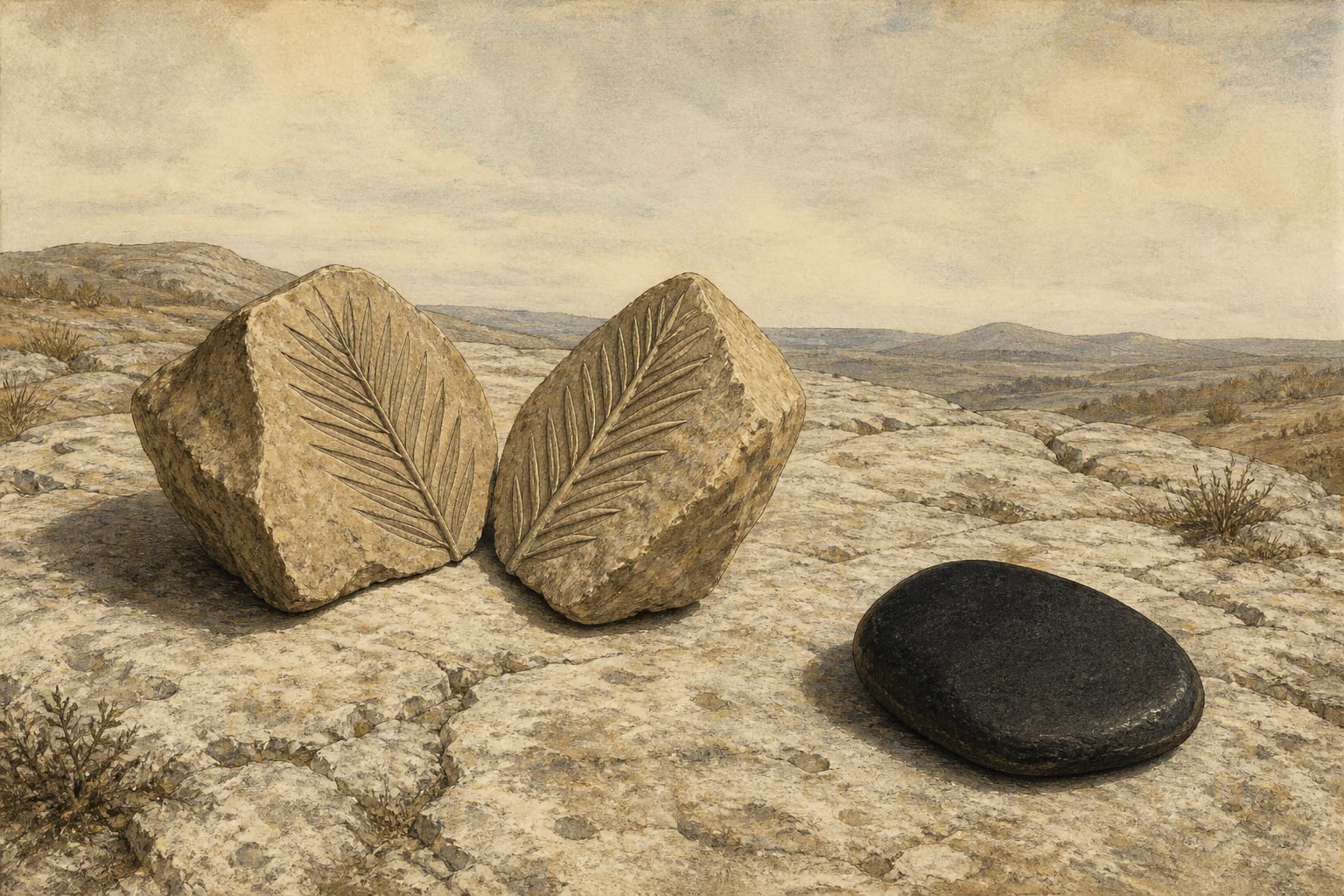
Palmati circa Mundam in Hispania, ubi Caesar dictator Pompeium vicit, reperiuntur idque quotiens fregeris. sunt et nigri, quorum auctoritas venit in marmora, sicut Taenarius. Varro nigros ex Africa firmiores esse tradit quam in Italia, e diverso albos Coranos duriores quam Parios, idem Luniensem silicem serra secari, Tusculanum dissilire igni, Sabinum fuscum addito oleo etiam lucere. idem molas versatiles Volsinis inventas; aliquas et sponte motas invenimus in prodigiis. nusquam hic utilior quam in Italia gignitur lapisque, non saxum, est. in quibusdam vero provinciis omnino non invenitur. sunt quidam in eo genere molliores, qui et cote levantur, ut procul in-o tuentibus ophites videri possit, neque est alius firmior, quando et lapidis natura ligno similiter imbres solesque aut hiemes non patitur in aliis generibus atque aliis. sunt et qui lunam non tolerent et qui vetustate robiginem trahant coloremve candidum oleo mutent.
English · Bostock & Riley 1855–57
Theophrastus and Mucianus are of opinion that there are certain stones which bring forth other stones. Theophrastus states, also, that a fossil ivory is found, both white and black; that the earth, too, produces bones, and that osseous stones are sometimes found. In the vicinity of Munda in Spain, the place where the Dictator Cæsar defeated Pompeius, there are stones found, which, when broken asunder, bear the impression of palm leaves.
There are some black stones, also, which are held in much the same esteem as the marbles; the Tænarian stone, for example. Varro says that the black stone of Africa is more durable than that of Italy; while, on the other hand, the white corani are harder than Parian marble. He states, also, that the silex of Luna admits of being cut with a saw; that that of Tusculum decrepitates in the fire; that the tawny silex of the Sabine districts, with the addition of oil, will yield a flame even; and that, at Volsinii, molar stones for grinding are found. Among the prodigies that have happened, I find mention made of millstones that have moved of themselves,
In no country are the molar stones superior to those of Italy; stones, be it remembered, and not fragments of rock: there are some provinces, too, where they are not to be found at all. Some stones of this class are softer than others, and admit of being smoothed with the whetstone, so as to present all the appearance, at a distance, of ophites. There is no stone of a more durable nature than this; for in general, stone, like wood, suffers from the action, more or less, of rain, heat, and cold. Some kinds, again, become deteriorated by the action of the moon, while others are apt to contract a rust in lapse of time, or to change their white colour when steeped in oil.