LIBER XXXVI · CAPUT 19
OSTRACITES; FOUR REMEDIES. AMIANTHUS; TWO REMEDIES
Latine · Mayhoff 1906
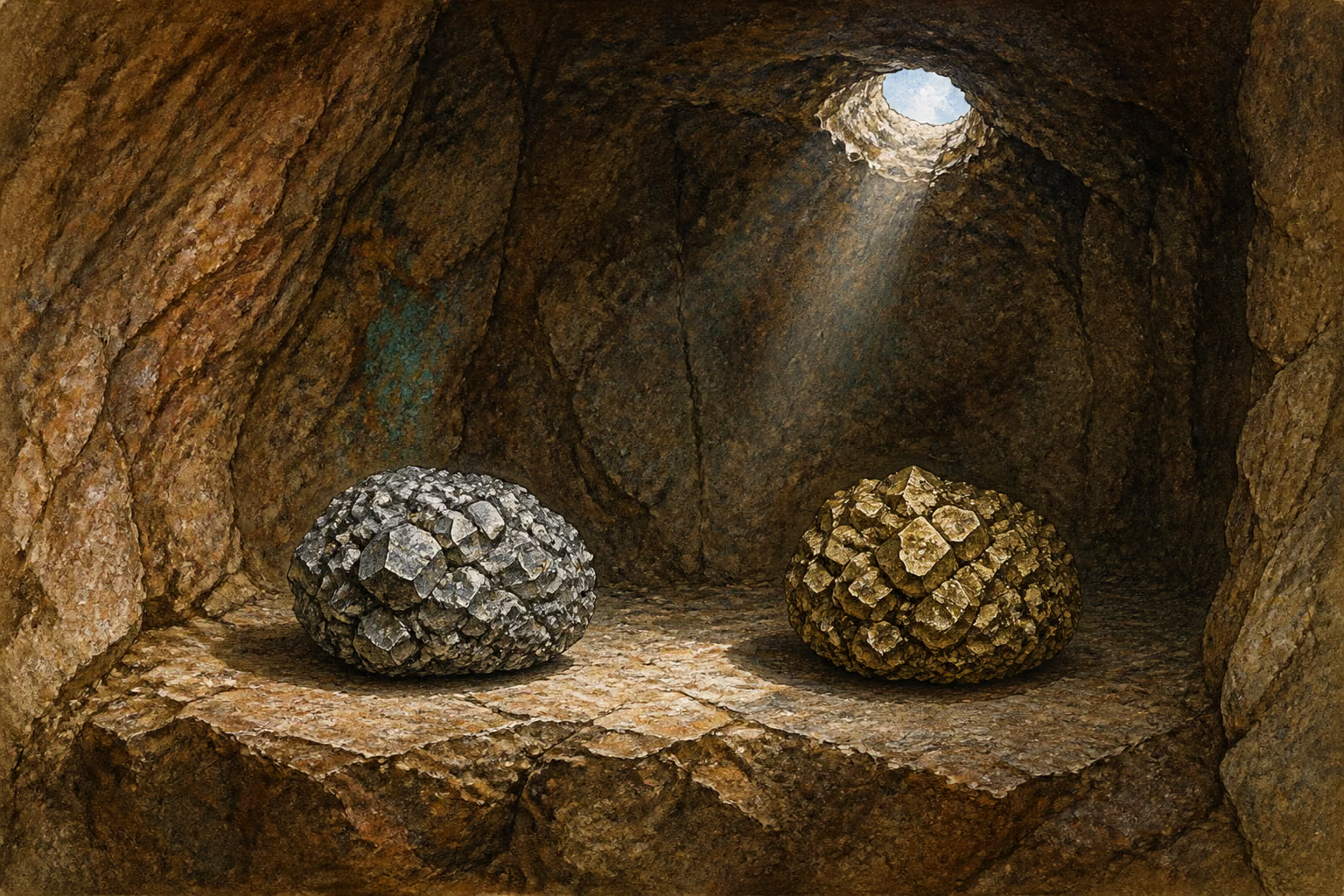
Molarem quidam pyriten vocant, quoniam plurimus sit ignis illi, sed est alius spongiosior tantum et alius etiamnum pyrites similitudine aeris. in Cypro eum reperiri volunt metallis, quae sint circa Acamanta, unum argenteo colore, alterum aureo. cocuntur varie, ab aliis iterum tertiumque in melle, donec consumatur liquor, ab aliis pruna prius, dein in melle, ac postea lavantur ut aes. usus eorum in medicina excalfacere, siccare, discutere, extenuare et duritias in pus vertere. utuntur et crudis tusisque ad strumas atque furunculos. pyritarum etiamnum unum genus aliqui faciunt plurimum ignis habentis. quos vivos appellamus, ponderosissimi sunt, hi exploratoribus castrorum maxime necessarii. qui clavo vel altero lapide percussi scintillam edunt, quae excepta sulpure aut fungis aridis vel foliis dicto celerius praebet ignem.
Ostracitae similitudinem testae habent. usus eorum pro pumice ad levandam cutem. poti sanguinem sistunt et inliti cum melle ulcera doloresque mammarum sanant.—Amiantus alumini similis nihil igni deperdit. hic veneficiis resistit omnibus, privatim Magorum.— Geoden ex argumento appellant, quoniam conplexus est terram, oculorum medicamentis utilissimum, item mammarum ac testium vitiis.— Melitinus lapis sucum remittit dulcem melleumque. tunsus et cerae mixtus eruptionibus pituitae maculisque corporis medetur et faucium exulcerationi, epinyctidas tollit, volvarum dolores inpositus vellere.— Gagates lapis nomen habet loci et amnis Gagis Lyciae. aiunt et in Leucolla expelli mari atque intra XII stadia colligi. niger est, planus, pumicosus, levis, non multum a ligno differens, fragilis, odore, si teratur, gravis. fictilia ex eo inscripta non delentur; cum uritur, odorem sulpureum reddit; mirumque, accenditur aqua, oleo restinguitur. fugat serpentes ita recreatque volvae strangulationes. deprendit sonticum morbum et virginitatem suffitus. idem ex vino decoctus dentibus medetur strumisque cerae permixtus. hoc dicuntur uti Magi in ea, quam vocant axinomantiam, et peruri negant, si eventurum sit quod aliquis optet.— Spongitae lapides inveniuntur in spongeis et sunt marini. quidam eos tecolithos vocant, quoniam vesicis medentur, calculos rumpunt in vino poti.— Phrygius lapis gentis habet nomen; est autem glaeba pumicosa. uritur ante vino perfusus, flatus follibus, donee rufescat, ac rursus dulci vino extinguitur ternis vicibus, tinguendis vestibus tantum utilis.
English · Bostock & Riley 1855–57
Some persons give this molar stone the name of “pyrites,” from the circumstance that it has a great affinity to fire; but there is also another kind of pyrites, of a more porous nature, and another, again, which resembles copper. This last, it is said, is found in the mines, near Acamas, in the Isle of Cyprus; one variety of it being of a silver, another of a golden, colour. There are various methods of melting these stones, some persons fusing them twice, or three times even, in honey, till all the liquid has evaporated; while others, again, calcine them upon hot coals, and, after treating them with honey, wash them like copper.
The medicinal properties which these minerals possess are of a calorific, desiccative, dispersive, and resolvent nature, and, applied topically, they case indurations to suppurate. They are employed also, in a crude state and pulverized, for the cure of scrofulous sores and boils. Some writers mention another kind of pyrites also. Those among them have the greatest affinity to fire which we distinguish as “live” pyrites. They are the most ponderous of all, and are found remarkably useful for advance-guards when laying out encampments; for, on being struck with a nail or any other kind of stone, they emit a spark, which, received upon sulphur, dried fungus, or leaves, produces a fire almost sooner than it could be named.
The several varieties of ostracites bear a resemblance to shells. They are used by way of substitute for pumice-stone, for smoothing the skin. Taken in drink, they arrest discharges of blood; and, applied topically with honey, they are curative of ulcerations and pains in the mamillæ.
Amianthus resembles alumen in appearance, and suffers no diminution from the action of fire. This substance effectually counteracts all noxious spells, those wrought by magicians in particular.
Geodes is so called from its formation, it containing earth within. It is remarkably beneficial for the eyes, and is used for the cure of diseases of the testes and mamillæ.
The stone called “melitinus” yields a liquid that is sweet, like honey. Bruised and incorporated with wax, it is curative of pituitous eruptions, spots upon the skin, and ulcerations of the fauces. It removes epinyctis also, and, applied as a pessary, in wool, it alleviates pains in the uterus.
Gagates is a stone, so called from Gages, the name of a town and river in Lycia. It is asserted, too, that at Leucolla the sea throws it up, and that it is found over a space twelve stadia in extent. It is black, smooth, light, and porous, differs but little from wood in appearance, is of a brittle texture, and emits a disagreeable odour when rubbed. Marks made upon pottery with this stone cannot be effaced. When burnt, it gives out a sulphureous smell; and it is a singular fact, that the application of water ignites it, while that of oil quenches it. The fumes of it, burnt, keep serpents at a distance, and dispel hysterical affections: they detect a tendency also to epilepsy, and act as a test of virginity. A decoction of this stone in wine is curative of tooth-ache; and, in combination with wax, it is good for scrofula. The magicians, it is said, make use of gagates in the practice of what they call axinomancy; and they assure us that it will be sure not to burn, if the thing is about to happen as the party desires.
The stone called “spongites” is found in sponges, and is a marine formation. By some persons it is called “tecolithos,” from the circumstance that it is curative of affections of the bladder. Taken in wine, it breaks and disperses urinary calculi.
Phrygian stone is so called from the country which produces it, and is a porous mass like pumice. It is first saturated with wine, and then calcined, the fire being kept up with the bellows till the stone is brought to a red heat; which done, it is quenched in sweet wine. This operation is repeated three times. The only use made of it is for dyeing cloths.