LIBER XXXVI · CAPUT 20
HÆMATITES: FIVE REMEDIES. SCHISTOS: SEVEN REMEDIES
Latine · Mayhoff 1906
Schistos et haematites cognationem habent. haematites invenitur in metallis, ustus minii colorem imitatur, uritur ut Phrygius, sed non restinguitur vino. adulteratu m haematiten discernunt venae rubentes et friabilis natura. oculis cruore suffusis mire convenit. sistit profluvia mulierum potus. bibunt et qui sanguinem reiecerunt cum suco Punici mali. et in vesicae vitiis efficax bibitur et in vino contra serpentium ictus. infirmiora omnia eadem in eo, quem schiston appellant. oculorum vitiis commodior croco similis, peculiaris explendis ulcerum lacunis in lacte muliebri, procidentesque oculos praeclare cohibet. haec est sententia eorum, qui nuperrime scripsere; Sotacus e vetustissimis auctoribus quinque genera haematitarum tradit praeter magnetem. principatum dat ex iis Aethiopico, oculorum medicamentis utilissimo et iis, quae panchresta appellat, item ambustis. alterum androdamanta dicit vocari, colore nigrum, pondere ac duritia insignem, et inde nomen traxisse praecipueque in Africa repertum; trahere autem in se argentum, aes, ferrum. experimentum eius esse in cote ex lapide basanite— reddere enim sucum sanguineum—, et esse ad iocineris vitia praecipui remedii. tertium genus Arabici facit, simili duritia, vix reddentis sucum ad cotem aquariam, aliquando croco similem. quarti generis hepatiten vocari, quamdiu crudus sit, coctum vero miltiten, utilem ambustis, ad omnia utiliorem rubrica; quinti generis schiston, haemorrodias reprimentem in potu. omnes autem haematitas tritos in oleo II drachmarum pondere a ieiunis bibendos ad vitia sanguinis. idem schiston et alterius generis quam haematiten tradit, quem vocat anthraciten; nasci in Africa nigrum, attritum aquariis cotibus reddere ab ea parte, quae fuerit ab radice, nigrum colorem, ab altera parte croci. ipsum utilem esse oculorum medicamentis.
English · Bostock & Riley 1855–57
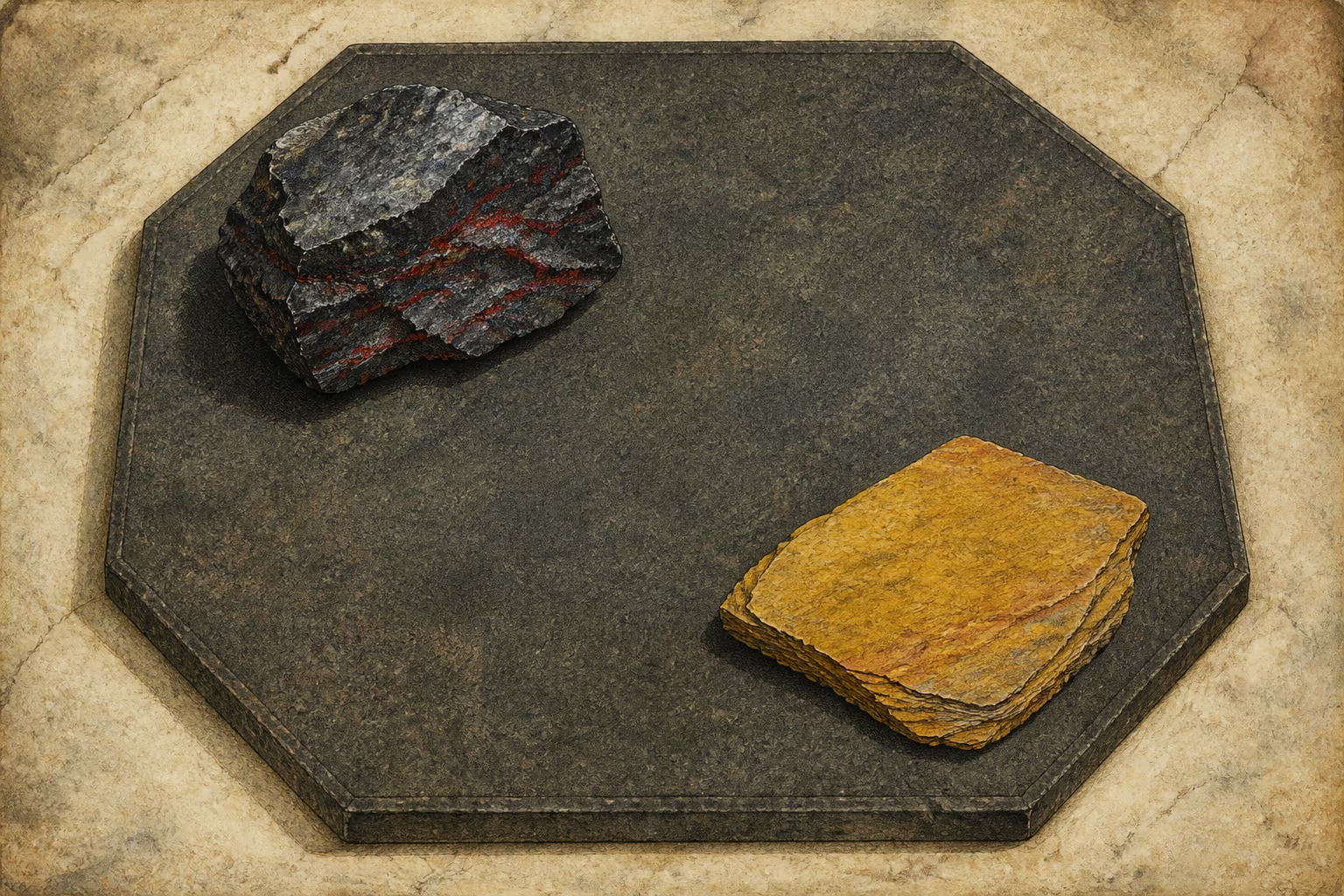
Schistos and hæmatites have a certain affinity between them. The latter is found in mines, and, when burnt, has just the colour of minium. It is calcined in the same manner as Phrygian stone, but is not quenched in wine. Adulterations of it are detected by the appearance of red veins in it, and by its comparative friability. It is marvellously useful as an application for bloodshot eyes, and, taken internally, it acts as a check upon female discharges. To patients vomiting blood, it is administered in combination with pomegranate-juice. It is very efficacious also for affections of the bladder; and it is taken with wine for the cure of wounds inflicted by serpents.
In all those cases the stone called “schistos” is efficacious, though not in so high a degree as the other; the most serviceable being that which resembles saffron in colour. Applied with woman’s milk, it is particularly useful for arresting discharges from the corners of the eyes, and it is also very serviceable for reducing procidence of those organs. Such, at least, is the opinion of the authors who have most recently written on the subject.
Sotacus, one of the most ancient writers, says, that there are five kinds of hæmatites, in addition to the magnet so called. He gives the preference among them to that of Æthiopia, a very useful ingredient in ophthalmic preparations and the compositions which he calls “panchresta,” and good for the cure of burns. The second, he says, is called “androdamas,” of a black colour, remarkable for its weight and hardness, to which it owes its name, in fact, and found in Africa more particularly. It attracts silver, he says, copper, and iron, and is tested with a touchstone made of basanites. It yields a liquid the colour of blood, and is an excellent remedy for diseases of the liver. The third kind that he mentions is the hæmatites of Arabia, a mineral of equal hardness, and which with difficulty yields, upon the water-whetstone, a liquid sometimes approaching the tint of saffron. The fourth kind, he says, is known as “hepatites,” while raw, and as “miltites” when calcined; a substance good for burns, and more efficacious than rubrica for all the purposes for which that mineral is employed. The fifth variety is schistos; a substance which, taken internally, arrests hæmorrhoidal discharges. Upon the same authority, it is recommended to take any kind of hæmatites, fasting, in doses of three drachmæ, triturated in oil, for affections of the blood.
The same author mentions also a kind of schistos which has no affinity to hæmatites, and to which he gives the name of “anthracites.” It is a native of Africa, he says, and is of a black colour. When rubbed upon a water-whetstone, it yields a black colour on the side which has adhered to the earth, and, on the opposite side, a saffron tint. He states also that it is a useful ingredient in ophthalmic preparations.