LIBER XXXVI · CAPUT 21
AËTITES. TAPHIUSIAN STONE. CALLIMUS
Latine · Mayhoff 1906
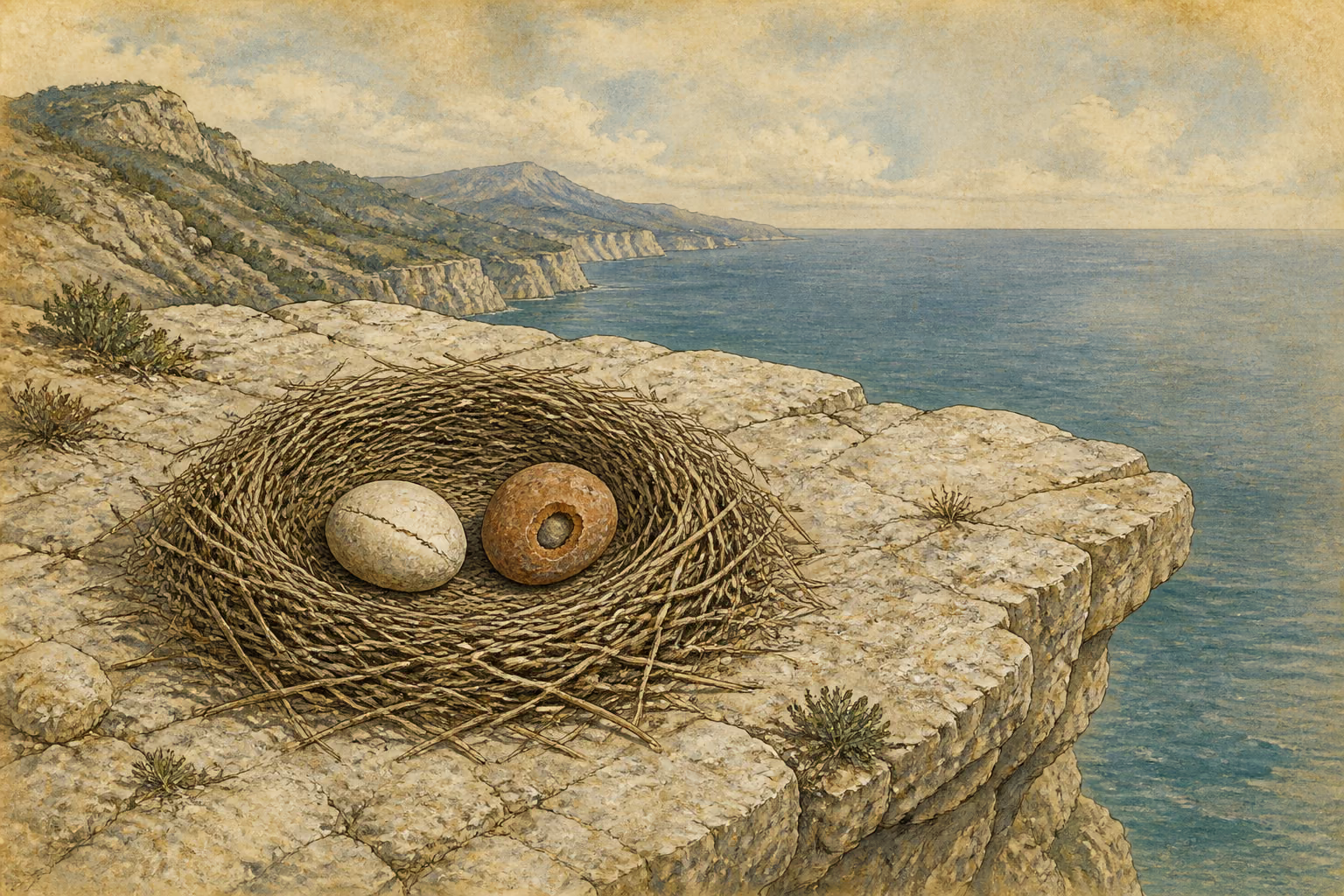
Aëtitae lapides ex argumento nominis magnam famam habent. reperiuntur in nidis aquilarum, sicut in decumo volumine diximus. aiunt binos inveniri, marem ac feminam, nec sine iis parere quas diximus aquilas, et ideo binos tantum; genera eorum quattuor in Africa nascentem pusillum ac mollem, intra se velut in alvo habentem argillam suavem, candidam. ipsum friabilem feminei sexus putant, marem autem, qui in Arabia nascatur, durum, gallae similem aut subrutilum, in alvo habentem durum lapidem. tertius in Cypro invenitur colore illis in Africa nascentibus similis, amplior tamen atque dilatatus; ceteris enim globosa facies. habet in alvo harenam iucundam et lapillos, ipse tam mollis, ut etiam digitis frietur. quarti generis Taphiusius appellatur, nascens iuxta Leucada in Taphiusa, qui locus est dextra navigantibus ex Ithaca Leucadem. invenitur in fluminibus candidus ac rotundus. huic est in alvo lapis, qui vocatur callimus, nec quicquam terreni. aëtitae gravidis adalligati mulieribus vel quadripedibus pelliculis sacrificatorum animalium continent partus, non nisi parturiant removendi; alioqui volvae excidunt. sed nisi parturientibus auferantur, omnino non pariant.
Est et lapis Samius in eadem insula, ubi terram laudavimus, poliendo auro utilis, in medicina oculorum ulceribus cum lacte quo supra dictum est modo et contra veteres lacrimationes. prodest et contra vitia stomachi pots, vertigines sedat mentesque commotas restituit. quidam et morbis comitialibus utiliter dari putant et ad urinae difficultates. et acopis miscetur. probatur gravitate, candore. volunt et partus contineri adalligato eo.- Arabus lapis, ebori similis, dentifriciis adcommodatur crematus. privatim haemorroidas sanat cum lanugine linteorum aut super linteolis inpositis.
Non praetermittenda est et pumicum natura. appellantur quidem ita erosa saxa in aedificiis, quae musaea vocant, dependentia ad imaginem specus arte reddendam, sed ii pumices, qui sunt in usu corporum levandorum feminis, iam quidem et viris, atque, ut ait Catullus, libris, laudatissimi sunt in Melo, Nisyro et Aeoliis insulis. probatio in candore minimoque pondere et ut quam maxime spongiosi aridique sint, teri faciles nec harenosi in fricando. vis eorum in medicina extenuare, siccare, trina ustione ita, uti torreantur carbone puro, totiens vino restinguantur albo. lavantur deinde ut cadmia et siccati conduntur quam minime uliginoso loco. usus farinae ex iis oculorum maxime medicamentis: ulcera purgant eorum leniter explentque, cicatrices emendant.—(Quidam a tertia ustione refrigerates potius quam restinctos terere malunt ex vino).—adduntur et in malagmata capitum verendorumque ulceribus utilissimi. fiunt ex iis et dentifricia. Theophrastus auctor est potores in certamine bibendi praesumere farinam eam, sed, nisi universe potu inpleantur, periclitari, tantamque refrigerandi naturam esse, ut musta fervere desinant pumice addito.
English · Bostock & Riley 1855–57
The stone called aëtites has a great reputation, in consequence of the name which it bears. It is found in the nests of eagles, as already mentioned in our Tenth Book. There are always two of these stones found together, they say, a male stone and a female; and without them, it is said, the various eagles that we have described would be unable to propagate. Hence it is, too, that the young of the eagle are never more than two in number. There are four varieties of the aëtites: that of Africa is soft and diminutive, and contains in the interior—in its bowels as it were—a sweet, white, argillaceous earth. It is friable, and is generally thought to be of the female sex. The male stone, on the other hand, which is found in Arabia, is hard, and similar to a nut-gall in appearance; or else of a reddish hue, with a hard stone in the interior. The third kind is a stone found in the Isle of Cyprus, and resembles those of Africa in appearance, but is larger and flat, while the others are of a globular form: it contains a sand within, of a pleasing colour, and mixed with small stones; being so soft itself as to admit of being crushed between the fingers.
The fourth variety is known as the Taphiusian aëtites, and is found near Leucas, at Taphiusa, a locality which lies to the right as you sail from Ithaca towards Cape Leucas. It is met with in the beds of rivers there, and is white and round; having another stone in the interior, the name given to which is “callimus:” none of the varieties of aëtites have a smoother surface than this. Attached to pregnant women or to cattle, in the skins of animals that have been sacrificed, these stones act as a preventive of abortion, care being taken not to remove them till the moment of parturition; for otherwise procidence of the uterus is the result. If, on the other hand, they are not removed at the moment when parturition is about to ensue, that operation of Nature cannot be effected.
Samian stone comes from the same island which produces the earth in praise of which we have spoken already. It is useful for giving a polish to gold, and it is employed medicinally for the treatment of ulcerations of the eyes, combined with milk in manner already described. It is good, too, for watery discharges of a chronic nature, from the eyes. Taken internally, it is useful for affections of the stomach, and it has the effect of dispelling vertigo and restoring the spirits when depressed. Some writers are of opinion that this stone may be administered with advantage for epilepsy and strangury; and it is employed as an ingredient in the restoratives known as “acopa.” The test of its purity is its weight and its whiteness. Some persons will have it that, worn as an amulet, it acts as a preventive of abortion.
Arabian stone resembles ivory in appearance; and in a calcined state it is employed as a dentifrice. It is particularly useful for the cure of hæmorrhoidal swellings, applied either in lint or by the aid of linen pledgets.
And here, too, I must not omit to give some account of pumice. This name is very generally given, it is true, to those porous pieces of stone, which we see suspended in the erections known as “musæa,” with the view of artificially giving them all the appearance of caverns. But the genuine pumice-stones, that are in use for imparting smoothness to the skin of females, and not females only, but men as well, and, as Catullus says, for polishing books, are found of the finest quality in the islands of Melos and Nisyros and in the Æolian Isles. To be good, they should be white, as light as possible, porous and dry in the extreme, friable, and free from sand when rubbed.
Considered medicinally, pumice is of a resolvent and desiccative nature; for which purpose it is submitted to calcination, no less than three times, on a fire of pure charcoal, it being quenched as often in white wine. It is then washed, like cadmia, and, after being dried, is put by for keeping, in a place as free from damp as possible. In a powdered state, pumice is used in ophthalmic preparations more particularly, and acts as a lenitive detergent upon ulcerations of the eyes. It also makes new flesh upon cicatrizations of those organs, and removes all traces of the marks. Some prefer, after the third calcination, leaving the pumice to cool, and then triturating it in wine. It is employed also as an ingredient in emollient poultices, being extremely useful for ulcerations on the head and generative organs; dentifrices, too, are prepared from it. According to Theophrastus, persons when drinking for a wager are in the habit of taking powdered pumice first; but they run great risk, he says, if they fail to swallow the whole draught of wine at once; it being of so refrigerative a nature that grape-juice will absolutely cease to boil if pumice is put into it.