LIBER XXXVII · CAPUT 3
THE SEVERAL KINDS OF AMBER: THE REMEDIES DERIVED FROM IT
Latine · Mayhoff 1906
Certum est gigni in insulis septentrionalis oceani et ab Germanis appellari glaesum, itaque et ab nostris ob id unam insularum Glaesariam appellatam, Germanico Caesare res ibi gerente classibus, Austeraviam a barbaris dictam. nascitur autem defluente medulla pinei generis arboribus, ut cummis in cerasis, resina in pinis erumpit umoris abundantia. densatur rigore vel tempore ac mari, cum ipsum intumescens aestus rapuit ex insulis, certa in litora expellitur, ita volubile, ut pendere videatur atque non sidere in vado. arboris sucum esse etiam prisci nostri credidere, ob id sucinum appellantes. pinei autem generis arboris esse indicio est pineus in adtritu odor et quod accensum taedae modo ac nidore flagrat. adfertur a Germanis in Pannoniam maxime provinciam, et inde Veneti primum, quos Enetos Graeci vocaverunt, famam rei fecere proximique Pannoniae et agentes circa mare Hadriaticum. Pado vero adnexa fabula est evidente causa, hodieque Transpadanorum agrestibus feminis monilium vice sucina gestantibus, maxime decoris gratia, sed et medicinae; creditur quippe tonsillis resistere et faucium vitiis, varie genere aquarum iuxta Alpis infestante guttura hominum. DC M p. fere a Carnunto Pannoniae abesse litus id Germaniae, ex quo invehitur, percognitum nuper, vivitque eques R. ad id comparandum missus ab Iuliano curante gladiatorium munus Neronis principis. qui et commercia ea et litora peragravit, tanta copia invecta, ut retia coercendis feris podium protegentia sucinis nodarentur, harena vero et libitina totusque unius diei apparatus in variatione pompae singulorum dierum esset e sucino. maximum pondus is glaebae attulit XIII librarum. nasci et in India certum est. Archelaus, qui regnavit in Cappadocia, illinc pineo cortice inhaerente tradit advehi rude polirique adipe suis lactentis incoctum. liquidum id primo destillare argumento sunt quaedam intus tralucentia, ut formicae culicesque et lacertae, quae adhaesisse musteo non est dubium et inclusa durescente eodem remansisse.
Genera eius plura sunt. ex iis candida odoris praestantissimi, sed nec his nec cerinis pretium. fulvis maior auctoritas. ex iis etiamnum amplius tralucentibus, praeterquam si nimio ardore flagrent; imaginem igneam in iis esse, non ignem, placet. summa laus Falernis a vini colore dictis, molli fulgore perspicuis in quibus et decocti mellis lenitas placeat. verum hoc quoque notum fieri oportet, quocumque modo libeat, ea tingui, haedorum sebo et anchusae radice, quippe iam et conchylio inficiuntur. ceterum attritu digitorum accepta caloris anima trahunt in se paleas et folia arida et philyras, ut magnes lapis ferrum. ramenta quoque eius oleo addito flagrant dilucidius diutiusque quam lini medulla. taxatio in deliciis tanta, ut hominis quamvis parva effigies vivorum hominum vigentiumque pretia exsuperet, prorsus ut castigatio una non sit satis. in Corinthiis aes placet argento auroque mixtum, in caelatis ars et ingenia; myrrhinorum et crystallinorum diximus gratiam; uniones capite circumferuntur, gemmae digitis; in omnibus denique aliis vitiis aut ostentatio aut usus placet: in sucinis sola deliciarum conscientia. Domitius Nero in ceteris vitae suae portentis capillos quoque Poppaeae coniugis suae in hoc nomen adoptaverat quodam etiam carmine sucinos appellando, quoniam nullis vitiis desunt pretiosa nomina; ex eo tertius quidam hic colos coepit expeti matronis.
Usus tamen aliquis sucinorum invenitur in medicina, sed non ob hoc feninis placent. infantibus adalligari amuleti ratione prodest. Callistratus prodesse etiam cuicumque aetati contra lymphationes tradit et urinae difficultatibus potum adalligatumque. hic et differentiam novam fecit appellando chryselectrum quod sit coloris aurei et matutino gratissimi aspectus, rapacissimum ignium, si iuxta fuerint, celerrime ardescens. hoc collo adalligatum mederi febribus et morbis, tritum vero cum melle ac rosaceo aurium vitiis et, si cum melle Attico teratur, oculorum quoque obscuritati, stomachi etiam vitiis vel per se farina eius sumpta vel cum mastiche pota ex aqua.—Sucina et gemmis, quae sunt tralucidae, adulterandis magnum habent locum, maxime amethystis, cum tamen omni, ut diximus, colore tinguantur.
De lyncurio proxime dici cogit auctorum pertinacia, quippe, etiamsi non electrum id, tamen gemmam esse contendunt, fieri autem ex urina quidem lyncis, sed et genere terrae, protinus eo animali urinam operiente, quoniam invideat homini, ibique lapidescere. esse autem, qualem in sucinis, colorem igneum, scalpique nec folia tantum aut stramenta ad se rapere, sed aeris etiam ac ferri lamnas, quod Diocli cuidam Theophrastus quoque credit. ego falsum id totum arbitror nec visam in aevo nostro gemmam ullam ea appellatione. falsum et quod de medicina simul proditur, calculos vesicae poto eo elidi et morbo regio succurri, si ex vino bibatur aut spectetur etiam.
Nunc gemmarum confessa genera dicemus ab laudatissimis orsi, nec vero id solum agemus, sed etiam maiore utilitate vitae coarguemus Magorum infandam vanitatem, quando vel plurima illi prodidere de gemmis ab medicinae blandissima specie ad prodigia transgressi.
English · Bostock & Riley 1855–57
There can be no doubt that amber is a product of the islands of the Northern Ocean, and that it is the substance by the Germans called “glæsum;” for which reason the Romans, when Germanicus Cæsar commanded the fleet in those parts, gave to one of these islands the name of Glæsaria, which by the barbarians was known as Austeravia. Amber is produced from a marrow discharged by trees belonging to the pine genus, like gum from the cherry, and resin from the ordinary pine. It is a liquid at first, which issues forth in considerable quantities, and is gradually hardened by heat or cold, or else by the action of the sea, when the rise of the tide carries off the fragments from the shores of these islands. At all events, it is thrown up upon the coasts, in so light and voluble a form that in the shallows it has all the appearance of hanging suspended in the water. Our forefathers, too, were of opinion that it is the juice of a tree, and for this reason gave it the name of “succinum:” and one great proof that it is the produce of a tree of the pine genus, is the fact that it emits a pine-like smell when rubbed, and that it burns, when ignited, with the odour and appearance of torch-pine wood.
Amber is imported by the Germans into Pannonia, more particularly; from whence the Veneti, by the Greeks called Eneti, first brought it into general notice, a people in the vicinity of Pannonia, and dwelling on the shores of the Adriatic Sea. From this it is evident how the story which connects it with the Padus first originated; and at the present day we see the female peasantry in the countries that lie beyond that river wearing necklaces of amber, principally as an ornament, no doubt, but on account of its remedial virtues as well; for amber, it is generally believed, is good for affections of the tonsillary glands and fauces, the various kinds of water in the vicinity of the Alps being apt to produce disease in the human throat.
From Carnuntum in Pannonia, to the coasts of Germany from which the amber is brought, is a distance of about six hundred miles, a fact which has been only very recently ascertained; and there is still living a member of the equestrian order, who was sent thither by Julianus, the manager of the gladiatorial exhibitions for the Emperor Nero, to procure a supply of this article. Traversing the coasts of that country and visiting the various markets there, he brought back amber, in such vast quantities, as to admit of the nets, which are used for protecting the podium against the wild beasts, being studded with amber.
The arms too, the litters, and all the other apparatus, were, on one day, decorated with nothing but amber, a different kind of display being made each day that these spectacles were exhibited. The largest piece of amber that this personage brought to Rome was thirteen pounds in weight.
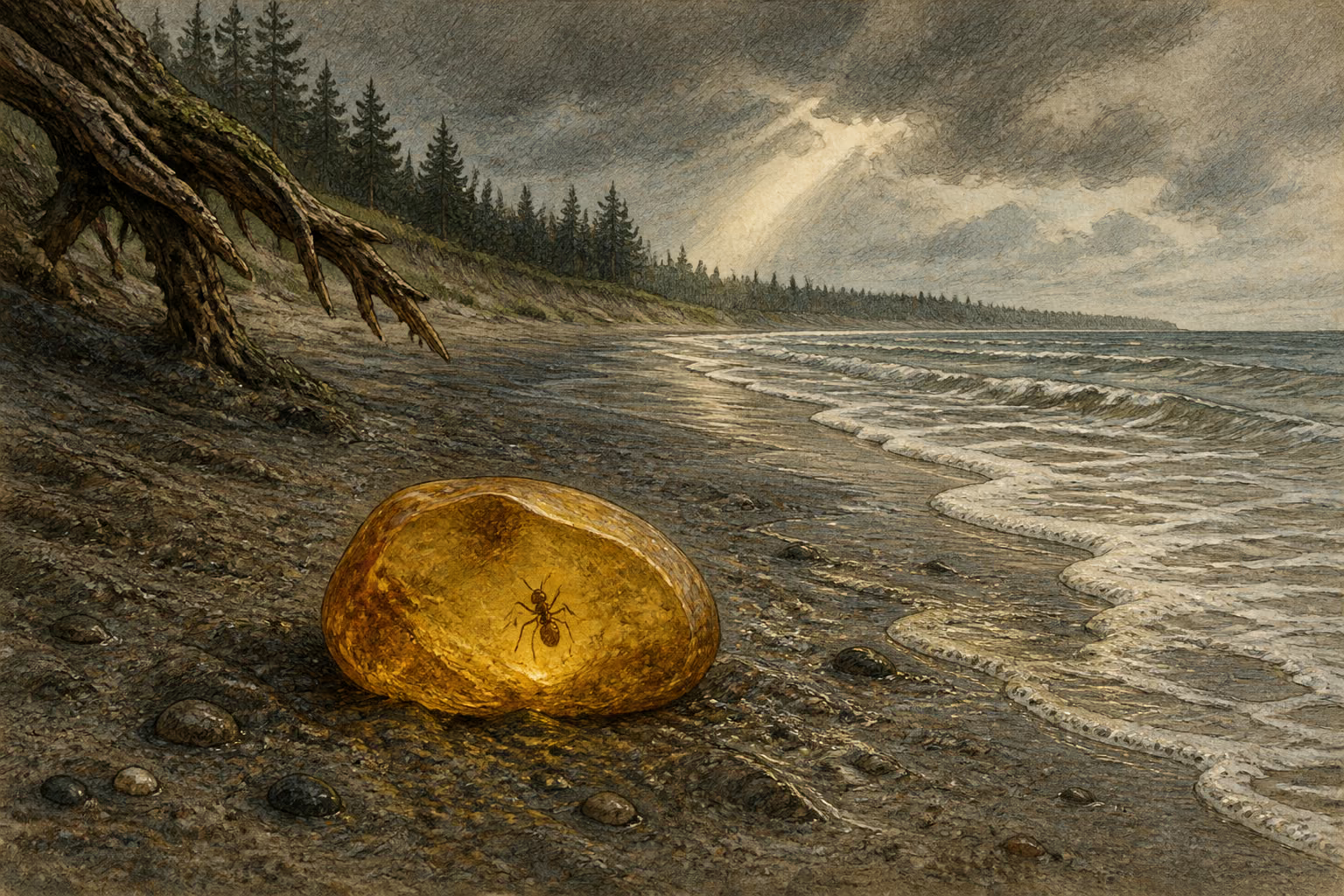
That amber is found in India too, is a fact well ascertained. Archelaüs, who reigned over Cappadocia, says that it is brought from that country in the rough state, and with the fine bark still adhering to it, it being the custom there to polish it by boiling it in the grease of a sucking-pig. One great proof that amber must have been originally in a liquid state, is the fact that, owing to its transparency, certain objects are to be seen within, ants for example, gnats, and lizards. These, no doubt, must have first adhered to it while liquid, and then, upon its hardening, have remained enclosed within.
There are several kinds of amber. The white is the one that has the finest odour; but neither this nor the wax-coloured amber is held in very high esteem. The red amber is more highly valued; and still more so, when it is transparent, without presenting too brilliant and igneous an appearance. For amber, to be of high quality, should present a brightness like that of fire, but not flakes resembling those of flame. The most highly esteemed amber is that known as the “Falernian,” from its resemblance to the colour of Falernian wine; it is perfectly transparent, and has a softened, transparent, brightness. Other kinds, again, are valued for their mellowed tints, like the colour of boiled honey in appearance. It ought to be known, however, that any colour can be imparted to amber that may be desired, it being sometimes stained with kid-suet and root of alkanet; indeed, at the present day, amber is dyed purple even. When a vivifying heat has been imparted to it by rubbing it between the fingers, amber will attract chaff, dried leaves, and thin bark, just in the same way that the magnet attracts iron. Pieces of amber, steeped in oil, burn with a more brilliant and more lasting flame than pith of flax.
So highly valued is this as an object of luxury, that a very diminutive human effigy, made of amber, has been known to sell at a higher price than living men even, in stout and vigorous health. This single ground for censure, however, is far from being sufficient; in Corinthian objects of vertu, it is the copper that recommends them, combined with silver and gold; and in embossed works it is the skill and genius of the artist that is so highly esteemed. We have already said what it is that recommends vessels of murrhine and of crystal; pearls, too, are of use for wearing upon the head, and gems upon the fingers. In the case of all other luxuries, in fact, it is either a spirit of ostentation or some utility that has been discovered in them that pleads so strongly in their behalf; but in that of amber we have solely the consciousness that we are enjoying a luxury, and nothing more. Domitius Nero, among the other portentous extravagances of his life, bestowed this name upon the ringlets of his wife Poppæa, and, in certain verses of his, he has even gone so far as to call them “succini.” As fine names, too, are never wanting for bodily defects, a third tint has been introduced of late for hair among our ladies, under the name of “amber-colour.”
Amber, however, is not without its utility in a medicinal point of view; though it is not for this reason that the women are so pleased with it. It is beneficial for infants also, attached to the body in the form of an amulet; and, according to Callistratus, it is good for any age, as a preventive of delirium and as a cure for strangury, either taken in drink or attached as an amulet to the body. This last author, too, has invented a new variety of amber; giving the name of “chryselectrum” to an amber of a golden colour, and which presents the most beautiful tints in the morning. This last kind attracts flame, too, with the greatest rapidity, and, the moment it approaches the fire, it ignites. “Worn upon the neck, he says, it is a cure for fevers and other diseases, and, triturated with honey and oil of roses, it is good for maladies of the ears. Beaten up with Attic honey, it is good for dimness of sight: and the powder of it, either taken by itself or with gum mastich in water, is remedial for diseases of the stomach. Amber, too, is greatly in request for the imitation of the transparent precious stones, amethystos in particular: for, as already stated, it admits of being dyed of every colour.
The pertinacity that has been displayed by certain authors compels me to speak of lyncurium next; for even those who maintain that it is not a variety of amber, still assure us that it is a precious stone. They assert, too, that it is a product of the urine of the lynx and of a kind of earth, the animal covering up the urine the moment it has voided it, from a jealousy that man should gain possession of it; a combination which hardens into stone. The colour of it, they inform us, like that of some kinds of amber, is of a fiery hue, and it admits, they say, of being engraved. They assert, too, that this substance attracts to itself not only leaves or straws, but thin plates of copper even or of iron; a story which Theophrastus even believes, on the faith of a certain Diocles.
For my own part, I look upon the whole of these statements as untrue, and I do not believe that in our time there has ever been a precious stone seen with such a name as this. I regard, too, the assertions that have been made as to its medicinal properties, as equally false; to the effect that, taken in drink, it disperses urinary calculi, and that, taken in wine, or only looked at, it is curative of jaundice.
We will now proceed to speak of the various kinds of precious stones, the existence of which is generally admitted, beginning with those which are the most highly esteemed. Nor shall we content ourselves with doing this only; but, with the view of consulting the general welfare of mankind, we shall also refute the infamous lies that have been promulgated by the magicians: for it is with reference to precious stones, more particularly, that they have circulated most of their fabulous stories, stepping, under that most alluring guise of ascertaining remedial virtues, beyond all bounds, and entering the region of the marvellous.