LIBER XXXVII · CAPUT 4
ADAMAS: SIX VARIETIES OF IT. TWO REMEDIES
Latine · Mayhoff 1906
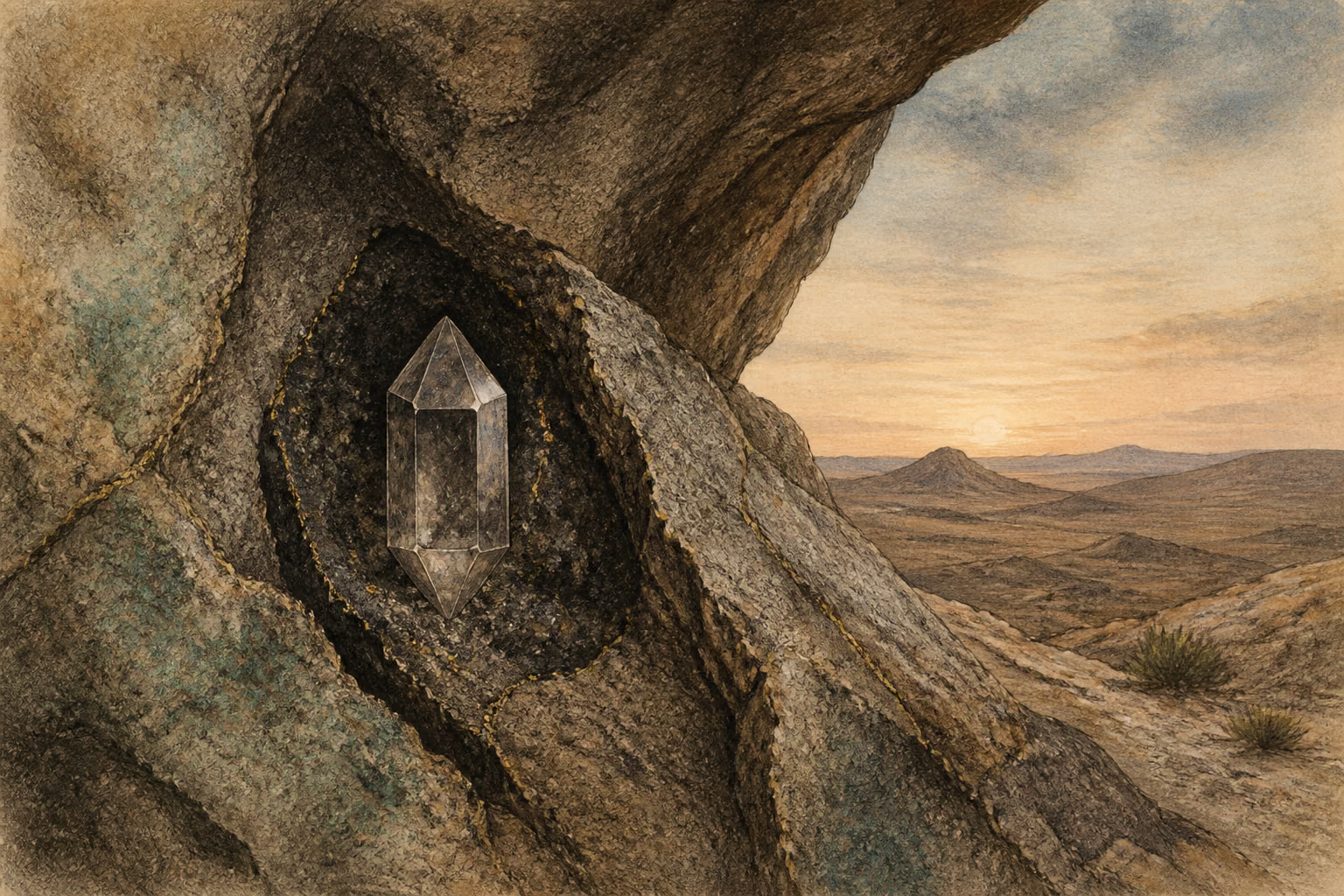
Maximum in rebus humanis, non solum inter gemmas, pretium habet adamas, diu non nisi regibus et iis admodum paucis cognitus. ita appellabatur auri nodus in metallis repertus perquam raro [comes auri] nec nisi in auro nasci videbatur. veteres eum in Aethiopum metallis tantum inveniri existimavere inter delubrum Mercuri et insulam Meroen, dixeruntque non ampliorem cucumis semine aut colore dissimilem inveniri. nunc primum genera eius sex noscuntur: Indici non in auro nascentis et quadam crystalli cognatione, siquidem et colore tralucido non differt et laterum sexangulo levore, turbinati in mucronem e duabus contrariis partibus, quo magis miremur, ut si duo turbines latissimis partibus iungantur, magnitudine vero etiam abellani nuclei. similis est huic Arabius, minor tantum, similiter et nascens. ceteris pallor argenti et in auro non nisi excellentissimo natalis. incudibus hi deprehenduntur ita respuentes ictus, ut ferrum utrimque dissultet, incudes ipsae etiam exiliant. quippe duritia est inenarrabilis, simulque ignium victrix natura et numquam incalescens, unde et nomen [interpretatione Graeca indomita vis] accepit. unum ex iis vocant cenchron, milii magnitudine, alterum Macedonium, in Philippico auro repertum; hic est cucumis semini par. post hos Cyprius vocatur in Cypro repertus, vergens ad aereum colorem, sed medica vi, de qua dicemus, efficacissimus. post hunc siderites ferrei splendoris, pondere ante ceteros, sed natura dissimilis. namque et ictibus frangi et alio adamante perforari potest, quod et Cyprio evenit, breviterque ut degeneres nominis tantum auctoritatem habent.
Nunc quod totis voluminibus his docere conati sumus de discordia rerum concordiaque, quam antipathian Graeci vocavere ac sympathian, non aliter clarius intellegi potest, siquidem illa invicta vis, duarum violentissimarum naturae rerum ferri igniumque contemptrix, hircino rumpitur sanguine, neque aliter quam recenti calidoque macerata et sic quoque multis ictibus, tune etiam praeterquam eximias incudes malleosque ferreos frangens. cuius hoc invento quove casu repertum? aut quae fuit coniectura experiendi rem inmensi pretii in foedissimo animalium? numinum profecto talis inventio est et hoc munus omne, nec quaerenda ratio in ulla parte naturae, sed voluntas! cum feliciter contigit rumpere, in tam parvas friatur crustas, ut cerni vix possint. expetuntur hae scalptoribus ferroque includuntur, nullam non duritiam ex facili cavantes. adamas dissidet cum magnete in tantum, ut iuxta positus ferrum non patiatur abstrahi aut, si admotus magnes adprehenderit, rapiat atque auferat. adamas et venena vincit atque inrita facit et lymphationes abigit metusque vanos expellit a mente. ob id quidam eum ananciten vocavere. —Metrodorus Scepsius in eadem Germania Basilia insula nasci, in qua et sucinum, solus, quod equidem legerim, dicit et praefert Arabicis. quod esse falsum quis dubitet?
Proximum apud nos Indicis Arabicisque margaritis pretium est, de quibus in nono diximus volumine inter res marinas.
English · Bostock & Riley 1855–57
The substance that possesses the greatest value, not only among the precious stones, but of all human possessions, is adamas; mineral which, for a long time, was known to kings only, and to very few of them. Such was the name given to a nodosity of gold, sometimes, though but rarely, found in the mines, in close proximity with gold, and only there to be found, it was thought. The ancients supposed that adamas was only to be discovered in the mines of Æthiopia, between the Temple of Mercury and the island of Meroë; and they have informed us that it was never larger than a cucumber-seed, or differing at all from it in colour.
At the present day, for the first time, there are no less than six different varieties of it recognized. The Indian adamas is found, not in a stratum of gold, but in a substance of a kindred nature to crystal; which it closely resembles in its transparency and its highly polished hexangular and hexahedral form. In shape it is turbinated, running to a point at either extremity, and closely resembling, marvellous to think of, two cones united at the base. In size, too, it is as large even as a hazel-nut. Resembling that of India, is the adamas of Arabia, which is found in a similar bed, but not so large in size. Other varieties have a pallid hue like that of silver, and are only to be found in the midst of gold of the very finest quality. These stones are tested upon the anvil, and will resist the blow to such an extent, as to make the iron rebound and the very anvil split asunder. Indeed its hardness is beyond all expression, while at the same time it quite sets fire at defiance and is incapable of being heated; owing to which indomitable powers it is, that it has received the name which it derives from the Greek.
One kind, about as large as a grain of millet in size, has been called “cenchros,” and another, that is found in the gold mines at Philippi, is known as the “Macedonian” adamas: this last is about as large as a cucumber-seed in size. We next come to the Cyprian adamas, so called from its being found in the Isle of Cyprus: it is of a colour somewhat inclining to that of copper, but, in reference to its medicinal virtues, of which we shall have to make further mention, it is the most efficacious of them all. Next in succession to this we have siderites, a stone which shines like iron, and is more ponderous than any of the others, but differs in its properties from them all. For it breaks when struck by the hammer, and admits of being perforated by other kinds of adamas; a thing which is the case, also, with that of Cyprus: in short, these two are degenerate stones, and only bear the name of “adamas” for the purpose of enhancing their value.
Now with reference to those affinities and repugnances which exist between certain objects, known to the Greeks as “sympathia” and “antipathia,” phænomena to which we have endeavoured to draw attention throughout these books, they nowhere manifest themselves with greater distinctness than here. This indomitable power, in fact, which sets at nought the two most violent agents in Nature, fire, namely, and iron, is made to yield before the blood of a he-goat. The blood, however must be no otherwise than fresh and warm; the stone, too, must be well steeped in it, and then subjected to repeated blows: and even then, it is apt to break both anvils and hammers of iron, if they are not of the very finest temper. To what spirit of research, or to what accident, are we indebted for this discovery? or what conjecture can it have been, that first led man to experiment upon a thing of such extraordinary value as this, and that, too, with the most unclean of all animals? Surely a discovery, such as this, must have been due solely to the munificence of the gods, and we must look for the reason of it in none of the elementary operations of Nature, but wholly in her will.
When, by good fortune, this stone does happen to be broken, it divides into fragments so minute as to be almost imperceptible. These particles are held in great request by engravers, who enclose them in iron, and are enabled thereby, with the greatest facility, to cut the very hardest substances known. So great is the antipathy borne by this stone to the magnet, that when placed near, it will not allow of its attracting iron; or if the magnet has already attracted the iron, it will seize the metal and drag it away from the other. Adamas, too, overcomes and neutralizes poisons, dispels delirium, and banishes groundless perturbations of the mind; hence it is that some have given it the name of “ananchites.” Metrodorus of Scepsis is the only author, that I know of, who says that this stone is found also in Germany, and in the island of Basilia, where amber is found. He says, too, that this is preferable to the stone of Arabia; but can there be any doubt that his statement is incorrect?
Next in esteem with us are the pearls of India and Arabia, of which we have already spoken in the Ninth Book, when treating of the marine productions.