LIBER V · CAPUT 4
AFRICA
Latine · Mayhoff 1906
A Tusca Zeugitana regio et quae proprie vocetur Africa est. tria promunturia, Candidum, mox Apollinis adversum Sardiniae, Mercuri adversum Siciliae, in altum procurrentia duos efficiunt sinus, Hipponiensem proximum ab oppido quod Hipponem Dirutum vocant, Diarrhytum Graecis dictum propter aquarum rigua. cui finitimum Theudalis inmune oppidum, longius a litore. dein promunturium Apollinis et in altero sinu Vtica civium Romanorum, Catonis morte nobilis, flumen Bagrada, locus Castra Cornelia, colonia Carthago Magnae in vestigiis Carthaginis, colonia Maxula, oppida Carpi, Missua et liberum Clypea in promunturio Mercuri, item libera Curubis, Neapolis. mox Africae ipsius alia distinctio. Libyphoenices vocantur qui Byzacium incolunt. ita appellatur regio CCL p. circuitu, fertilitatis eximiae, cum centesima fruge agricolis faenus reddente terra. hic oppida libera Leptis, Hadrumetum, Ruspina, Thapsus. inde Thenae, Aves, Macomades, Tacape, Sabrata, contingens Syrtim Minorem, ad quam Numidiae et Africae ab Ampsaga longitude DLXXX, latitudo, qua cognitum est, CC. ea pars, quam Africam appellavimus, dividitur in duas provincias, veterem et novam, discretas fossa inter Africanum sequentem et reges Thenas usque perducta, quod oppidum a Carthagine abest CCXVI.
Tertius sinus dividitur in geminos, duarum Syrtium vadoso ac reciproco mari diros. ad proximnam, quae minor est, a Carthagine CCC Polybius tradit, ipsam centum milium passuum aditu, trecentorum ambitu.et terra autem siderum observatione ad eam per deserta.... harenis perque serpentes iter est. excipiunt saltus repleti ferarum multitudine et introrsus elephantorum solitudines, mox deserta vasta ultraque Garamantes, ab Augilis dierum XII itinere distantes. super illos fuere gens Psylli, super quos lacus Lycomedis, desertis circumdatus. Augilae ipsi medio fere spatio locantur, ab Aethiopia, quae ad occidentem vergit, et a regione, quae inter duas Syrtis interiacet, pari utrimque intervallo, sed litore inter duas Syrtis CCL. ibi civitas Oeensis, Cinyps fluvius ac regio, oppida Neapolis, Taphra, Habrotonum, Leptis altera, quae cognominatur Magna. inde Syrtis Maior, circuitu DCXXV, aditu autem CCCXII, [inde] accolit gens Cisippadum. in intimo sinu fuit ora Lotophagon, quos quidam Machroas dixere, ad Philaenorum aras; ex harena sunt hae. ab iis non procul a continente palus vasta amnem Tritonem nomenque ab eo accipit, Pallantias appellata Callimacho et citra Minorem Syrtim esse dicta, multis vero inter duas Syrtis. promunturium, quod Maiorem cludit, Borion appellatur. ultra Cyrenaica provincia.
Ad hunc finem Africa a fluvio Ampsaga populos DXVI habet, qui Romano pareant imperio, in his colonias sex, praeter iam dictas Vthinam, Thuburbi. oppida civium Romanorum XV, ex quibus in mediterraneo dicenda Absuritanum, Abutucense, Aboriense, Canopicum, Chiniavense, Simithuense, Thunusidense, Thuburnicense, Thinidrumense, Tibigense, Vcitana duo, Maius et Minus, Vagense. oppidum Latinum unum Vzalitanum. oppidum stipendiarium unum Castris Corneliis. oppida libera XXX, ex quibus dicenda intus Achollitanum, Accaritanum, Avittense, Abziritanum, Canopitanum, Melizitanum, Materense, Salaphitanum, Tusdritanum, Thisicense, Tunisense, Theudense, Tagesense, Tigiense, Vlusubburitanum, Vagense aliud,... ense, Zamense. ex reliquo numero non civitates tantum, sed plerique etiam nationes iure dici possunt, ut Nattabutes, Capsitani, Musulami, Sabarbares, Massyli, Nicives, Vamacures, Cinithi, Musuni, Marchubi et tota Gaetulia ad flumen Nigrim, qui Africam ab Aethiopia dirimit.
English · Bostock & Riley 1855–57
Beyond the river Tusca begins the region of Zeugitana, and that part which properly bears the name of Africa. We here find three promontories; the White Promontory, the Promontory of Apollo, facing Sardinia, and that of Mercury, opposite to Sicily. Projecting into the sea these headlands form two gulfs, the first of which bears the name of “Hipponensis” from its proximity to the city called Hippo Dirutus, a corruption of the Greek name Diarrhytus, which it has received from the channels made for irrigation. Adjacent to this place, but at a greater distance from the sea-shore, is Theudalis, a town exempt from tribute. We then come to the Promontory of Apollo, and upon the second gulf, we find Utica, a place enjoying the rights of Roman citizens, and famous for the death of Cato; the river Bagrada, the place called Castra Cornelia, the colony of Carthage, founded upon the remains of Great Carthage, the colony of Maxula, the towns of Carpi, Misua, and Clypea, the last a free town, on the Promontory of Mercury; also Curubis, a free town, and Neapolis.
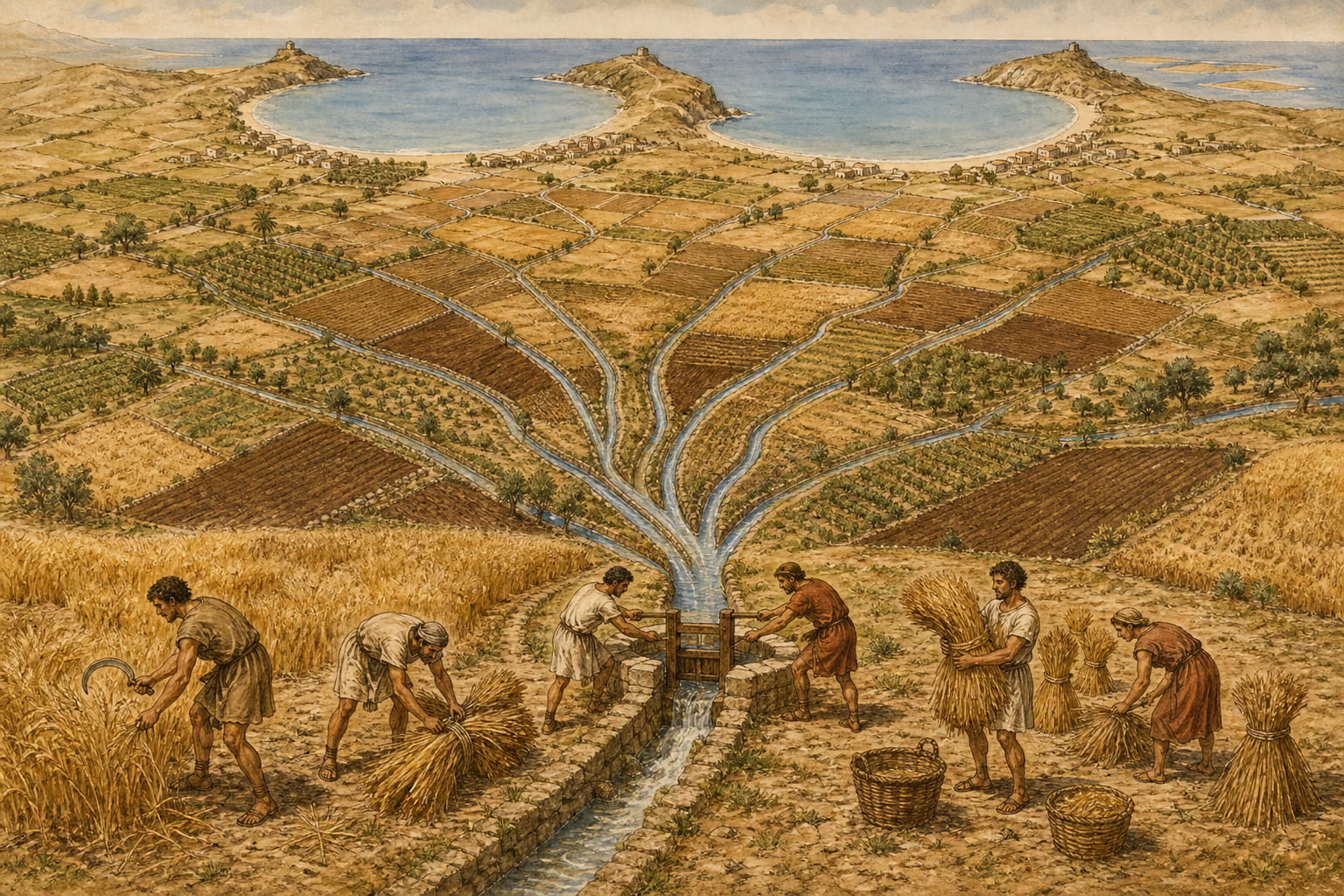
Here commences the second division of Africa properly so called. Those who inhabit Byzacium have the name of Libyphœnices. Byzacium is the name of a district which is 250 miles in circumference, and is remarkable for its extreme fertility, as the ground returns the seed sown by the husbandman with interest a hundred-fold. Here are the free towns of Leptis, Adrumetum, Ruspina, and Thapsus; and then Thenæ, Macomades, Tacape, and Sabrata which touches on the Lesser Syrtis; to which spot, from the Ampsaga, the length of Numidia and Africa is 580 miles, and the breadth, so far as it has been ascertained, 200. That portion which we have called Africa is divided into two provinces, the Old and the New; these are separated by a dyke which was made by order of the second Scipio Africanus and the kings, and extended to Thenæ, which town is distant from Carthage 216 miles.
A third Gulf is divided into two smaller ones, those of the two Syrtes, which are rendered perilous by the shallows of their quicksands and the ebb and flow of the sea. Polybius states the distance from Carthage to the Lesser Syrtis, the one which is nearest to it, to be 300 miles. The inlet to it he also states to be 100 miles across, and its circumference 300. There is also a way to it by land, to find which we must employ the guidance of the stars and cross deserts which present nothing but sand and serpents. After passing these we come to forests filled with vast multitudes of wild beasts and elephants, then desert wastes, and beyond them the Garamantes, distant twelve days’ journey from the Augylæ. Above the Garamantes was formerly the nation of the Psylli, and above them again the Lake of Lycomedes, surrounded with deserts. The Augylæ themselves are situate almost midway between Æthiopia which faces the west, and the region which lies between the two Syrtes, at an equal distance from both. The distance along the coast that lies between the two Syrtes is 250 miles. On it are found the city of Œa, the river Cinyps, and the country of that name, the towns of Neapolis, Graphara, and Abrotonum, and the second, surnamed the Greater, Leptis.
We next come to the Greater Syrtis, 625 miles in circumference, and at the entrance 312 miles in width; next after which dwells the nation of the Cisippades. At the bottom of this gulf was the coast of the Lotophagi, whom some writers have called the Alachroæ, extending as far as the Altars of the Philæni; these Altars are formed of heaps of sand. On passing these, not far from the shore there is a vast swamp which receives the river Triton and from it takes its name: by Callimachus it is called Pallantias, and is said by him to be on the nearer side of the Lesser Syrtis; many other writers however place it between the two Syrtes. The promontory which bounds the Greater Syrtis has the name of Borion; beyond it is the province of Cyrene.
Africa, from the river Ampsaga to this limit, includes 516 peoples, who are subject to the Roman sway, of which six are colonies; among them Uthina and Tuburbi, besides those already mentioned. The towns enjoying the rights of Roman citizens are fifteen in number, of which I shall mention, as lying in the interior, those of Assuræ, Abutucum, Aborium, Canopicum, Cilma, Simithium, Thunusidium, Tuburnicum, Tynidrumum, Tibiga, the two towns called Ucita, the Greater and the Lesser, and Vaga. There is also one town with Latin rights, Uzalita by name, and one town of tributaries, Castra Cornelia. The free towns are thirty in number, among which we may mention, in the interior, those of Acholla, Aggarita, Avina, Abzirita, Canopita, Melizita, Matera, Salaphita, Tusdrita, Tiphica, Tunica, Theuda, Tagasta, Tiga, Ulusubrita, a second Vaga, Visa, and Zama. Of the remaining number, most of them should be called, in strictness, not only cities, but nations even; such for instance as the Natabudes, the Capsitani, the Musulami, the Sabarbares, the Massyli, the Nisives, the Vamacures, the Cinithi, the Musuni, the Marchubii, and the whole of Gætulia, as far as the river Nigris, which separates Africa proper from Æthiopia.