LIBER VI · CAPUT 19
THE GANGES
Latine · Mayhoff 1906
regi LX peditum, equites M, elephanti DCC in procinctu bellorum excubant. namque vita mitioribus populis Indorum multipertita degitur: tellurem exercent, militiam alii capessunt, merces alii suas evehunt, externas invehunt, res publicas optumi ditissimique temperant, iudicia reddunt, regibus adsident. quintum genus, celebratae ibi et prope in religionem versae sapientiae deditum, voluntaria semper morte vitam accenso prius rogo finit. unum super haec est semiferum ac plenum laboris inmensi — a quo supra dicta continentur — venandi elephantos domandique: his arant, his vehuntur, haec maxime novere pecuaria, his militant dimicantque pro finibus; dilectum in bella vires et aetas atque magnitudo faciunt. insula in Gauge est magnae amplitudinis, gentem continens unam, nomine Modogalingam. ultra siti sunt Modubae, Molindae, Vberae cum oppido eiusdem nominis magnifico, Modressae, Praeti, Calissae, Sasuri, Passalae, Colebae, Orumcolae, Abali, Thalutae. rex horum peditum L???, equitum IIII, elephantorumIIII in armis habet. validior deinde gens Andarae, plurimis vicis, XXX oppidis quae muris turribusque muniuntur, regi praebet peditum C???, equitumn II, elephantos M. fertilissimi sunt auri Dardae, Setae vero et argenti. sed omnium in India prope, non modo in hoc tractu, potentiam claritatemque antecedunt Prasi amplissima urbe ditissimaque Palibothra, unde quidam ipsam gentem Palibothros vocant, immo vero tractum universum a Gange. regi eorum peditum DC, equitum XXX, elephantorum VIIII per ones dies stipendiantur, unde coniectatio ingens opum est. ab his in interiore situ Monaedes et Suari, quorum mons Maleus, in quo umbrae ad septentrionem cadunt hieme, aestate in austrum, per senos menses. septentriones eo tractu semel anno adparere, nec nisi quindecim diebus, Baeton auctor est; hoc idem pluribus locis Indiae fieri Megasthenes. austrinum polum Indi Diamasa vocant. amnis lomanes in Gangen per Palibothros decurrit inter oppida Methora et Chrysobora. a Gange versa ad meridiem plaga tinguntur sole populi, iam quidem infecti, nondum tamen Aethiopum modo exusti; quantum ad Indum accedunt, tantum colore praeferunt. Indus statim a Prasiorum gente, quorum in montanis Pygmaei traduntur. Artemidorus inter duos amnes |XXI| interesse tradit.
English · Bostock & Riley 1855–57
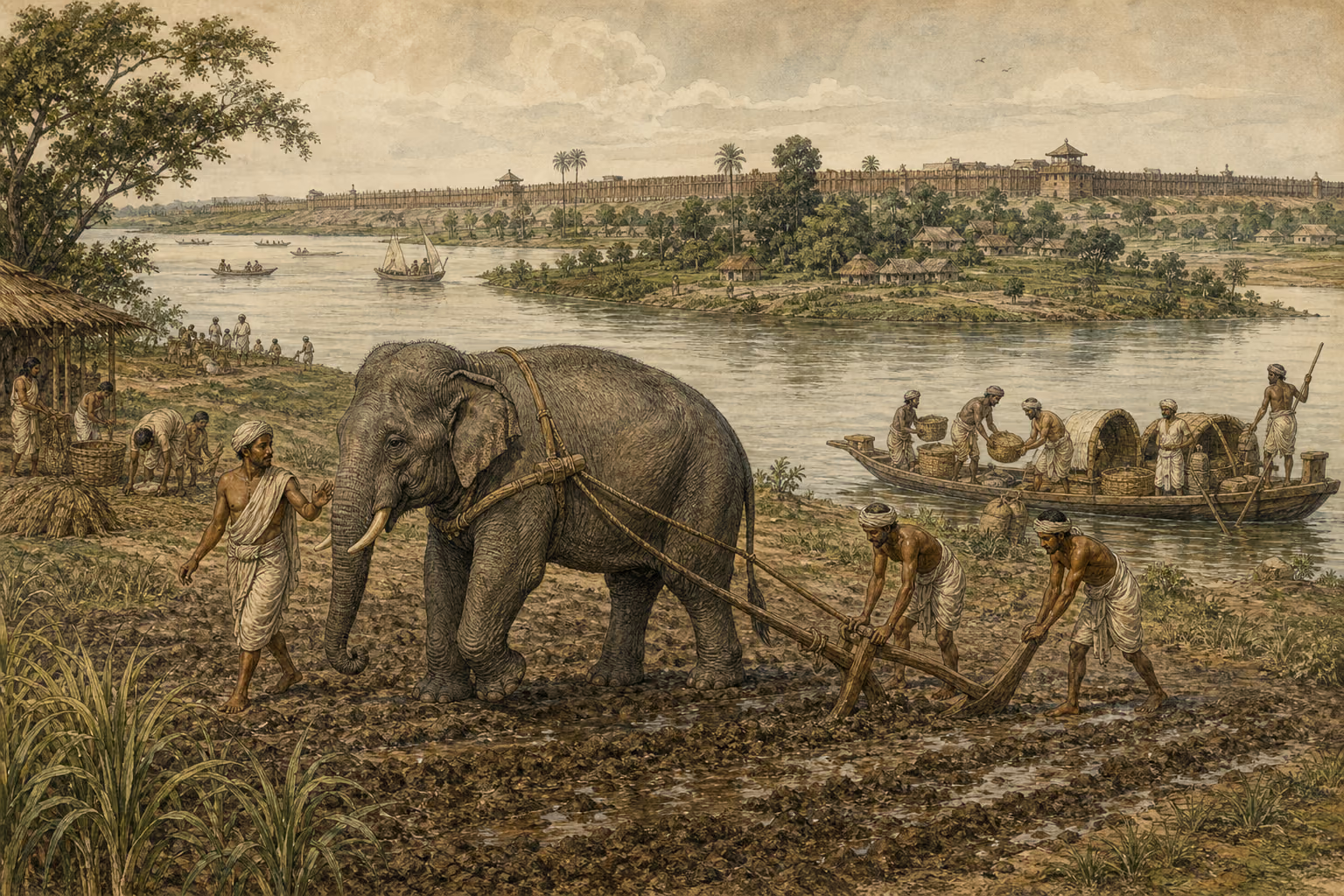
This king has sixty thousand foot-soldiers, one thousand horse, and seven hundred elephants, always caparisoned ready for battle. The people of the more civilized nations of India are divided into several classes. One of these classes till the earth, another attends to military affairs, others again are occupied in mercantile pursuits, while the wisest and the most wealthy among them have the management of the affairs of state—act as judges, and give counsel to the king. The fifth class, entirely devoting themselves to the pursuit of wisdom, which in these countries is almost held in the same veneration as religion, always end their life by a voluntary death upon the lighted pile. In addition to these, there is a class in a half-savage state, and doomed to endless labour; by means of their exertions, all the classes previously mentioned are supported. It is their duty to hunt the elephant, and to tame him when captured; for it is by the aid of these animals that they plough; by these animals they are conveyed from place to place; these in especial they look upon as constituting their flocks and herds; by their aid they wage their wars, and fight in defence of their territories. Strength, age, and size, are the points usually considered in making choice of these animals.
In the Ganges there is an island of very considerable size, inhabited by a single nation; it is called Modogalinga. Beyond the Ganges are situate the Modubæ, the Molindæ, the Uberæ, with a magnificent city of the same name, the Modresi, the Preti, the Caloæ, the Sasuri, the Passalæ, the Colobæ, the Orumcolæ, the Abali, and the Thalutæ. The king of the last-named people has fifty thousand foot-soldiers, four thousand horse, and four hundred armed elephants. We next come to a still more powerful nation, the Andaræ, who dwell in numerous villages, as well as thirty cities fortified with walls and towers. They furnish for their king one hundred thousand foot, two thousand horse, and a thousand elephants. The country of the Dardæ is the most productive of gold, that of the Setæ of silver.
But more famous and more powerful than any nation, not only in these regions, but throughout almost the whole of India, are the Prasii, who dwell in a city of vast extent and of remarkable opulence, called Palibothra; from which circumstance some writers have given to the people themselves the name of Palibothri, and, indeed, to the whole tract of country between the Ganges and the Indus. These people keep on daily pay in their king’s service an army, consisting of six hundred thousand foot, thirty thousand horse, and nine thousand elephants, from which we may easily form a conjecture as to the vast extent of their resources. Behind these people, and lying still more in the interior, are the Monedes, and the Suari, among whom is a mountain known as Maleus, upon which the shadow falls to the north in winter, and to the south in summer, six months alternately. In this district the Constellation of the Greater Bear is seen at only one period in the year, and then but for fifteen days, according to what Bæton states. Megasthenes, however, informs us that the same is the case also in many other localities of India. The South Pole is by the Indians called Diamasa.
The river Jomanes runs into the Ganges through the territory of the Palibothri, between the cities of Methora and Chrysobora. In the regions which lie to the south of the Ganges, the people are tinted by the heat of the sun, so much so as to be quite coloured, but yet not burnt black, like the Æthiopians. The nearer they approach the Indus, the deeper their colour, a proof of the heat of the climate. After leaving the nation of the Prasii, we immediately come to the Indus; in the mountains of the Prasii a race of Pygmies is said to exist. Artemidorus says that between these two rivers there is a distance of two thousand one hundred miles.