LIBER VI · CAPUT 20
THE INDUS
Latine · Mayhoff 1906
Indus, incolis Sindus appellatus, in iugo Caucasi montis quod vocatur Paropanisus adversus solis ortum effusus, et ipse undeviginti recipit amnes, sed clarissimos Hydaspen quattuor alios adferentem, Cantabam tris, per se vero navigabiles Acesinum et Hypasim, quadam tamen aquarum modestia nusquam latior L stadiis aut altior XV passibus, amplissimam insulam efficiens, quae Prasiane nominatur, et aliam minorem, quae Patale. ipse per |XIII|.CL passuum, parcissimis auctoribus, navigatur et quodam solis comitatu in occasum versus oceano infunditur. mensuram orae ad eum ponam, ut invenio, generatim, quamquam inter se nullae congruunt. ab ostio Gangis ad promunturium Calingon et oppidum DandagudaDCXXV, ad Tropina |XII|.XXV, ad Perimulae promunturium, ubi est celeberrimum Indiae emporium, DCCL, ad oppidum in insula quam supra diximus PatalamDCXX.
Gentes montanae inter eum et Iomanem Caesi, Caetriboni silvestres, dein Megallae, quorum regi D elephanti, peditum equitumque numerus incertus, Chrysei, Parasangae, Asmagi, tigri fera scatentes; armant peditum XXX, elephantos CCC, equites DCCC. hos Indus includit montium corona circumdatos et solitudinibus. DCXXV infra solitudines Dari, Surae, iterumque solitudines per CLXXXVII, plerumque harenis ambientibus haut alio modo quam insulas mari. infra deserta haec Malthaecorae, Singae, Maroae, Rarungae, Moruni. hi montium, qui perpetuo tractu oceani in ora pertinent, incolae liberi et regum expertes multis urbibus montanos optinent colles. Nareae deinde, quos claudit mons altissimus Indicorum Capitalia; huius incolae alio latere late auri et argenti metalla fodiunt. ab his Oratae, quorum regi elephanti quidem X, sed amplae vires peditum, Suarattaratae — et hi sub rege elephantos non alunt fiducia equitum peditumque — Odonbaeorae, Sarabastrae Thorace urbe pulchra, fossis palustribus munita, per quas crocodili humani corporis avidissimi aditum nisi ponte non dant. et aliud apud illos laudatur oppidum Automula, inpositum litori quinque amnium in unum confluente concursu, emporio nobili. regi eorum elephanti M.DC, peditum CL, equitum V???. pauperior Charmarum rex elephantos LX parvasque reliquas vires habet. ab his gens Pandae, sola Indorum regnata feminis. unam Herculi sexus eius genitam ferunt ob idque gratiorem, praecipuo regno donatam; ab ea deducentes originem imperitant CCC oppidis, peditum CL, elephantis D. post hanc trecentarum urbium seriem Derangae, Posingae, Butae, Gogaraei, Vmbrae, Nereae, Brangosi, Nobundae, Cocondae, Nesei, Palatitae, Salobriasae. Orostrae Patalam insulam attingentes, a cuius extremo litore ad Caspias Portas |XVIIII|.XXV produntur.
Hinc deinde accolunt Indum, adverso eo scandente demonstratione, Mathoae, Bolingae, Gallitalutae, Dimuri, Megari, Ardabae, Mesae, Abisari, Silae; mox deserta in CCL, quibus exuperatis Organagae, Abortae, Brasuertae, et ab his solitudines prioribus pares. dein Sorofages, Arbae, Marogomatrae, Vmbritae Ceaeque, quorum XII nationes singulisque binae urbes, Asini, trium urbium incolae; caput eorum Bucephala, Alexandri regis equo, cui fuerat hoc nomen, ibi sepulto conditum. montani super hos Caucaso subiecti Sosaeadae, Sondrae transgressisque Indum et cum eo decurrentibus Samarabiae, Sambraceni, Bisambritae, Orsi, Andiseni, Taxilae cum urbe celebri. iam in plana demisso tractu, cui universo nomen Amendae, populi quattuor, Peucolitae, Arsagalitae, Geretae, Assoi. etenim plerique ab occidente non Indo amne determinant, to sed adiciunt quattuor satrapias, Gedrosos, Arachotas, Arios, Paropanisidas, ultimo fine Cophete fluvio, quae omnia Ariorum esse aliis placet.
English · Bostock & Riley 1855–57
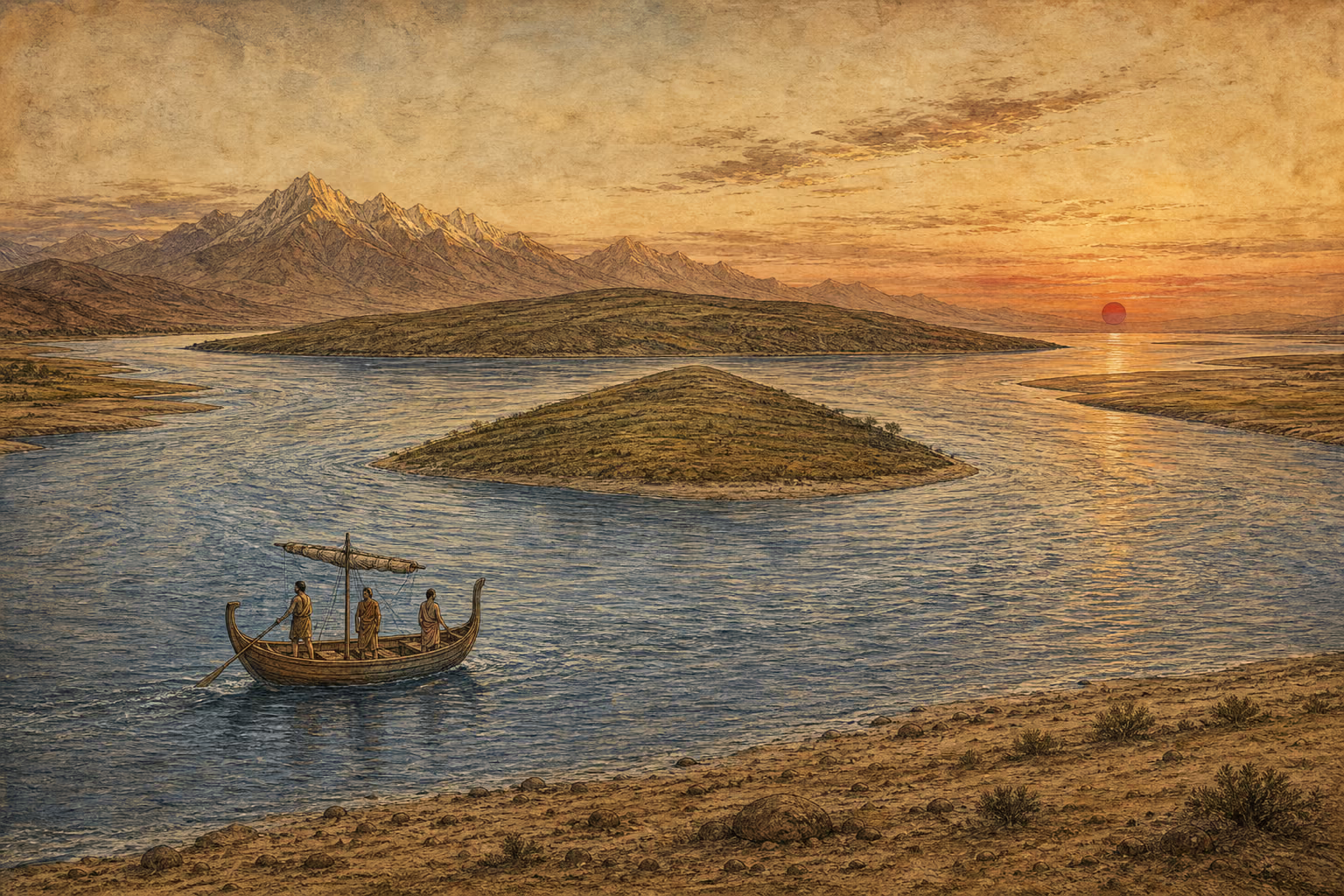
The Indus, called Sindis by the natives, rises in that branch of the Caucasian range which bears the name of Paropanisus, and runs in an easterly direction, receiving in its course the waters of nineteen rivers. The most famous of these are the Hydaspes, into which four other rivers have already discharged themselves, the Cantaba, which receives three other rivers, the Acesinus, and the Hypasis, which last two are navigable themselves. Still however, so moderate, as it were, do the waters of this river show themselves in their course, that it is never more than fifty stadia in width, nor does it ever exceed fifteen paces in depth. Of two islands, which it forms in its course, the one, which is known as Prasiane, is of very considerable size; the other, which is smaller, is called Patale. According to the accounts given by the most moderate writers, this river is navigable for a distance of twelve hundred and fifty miles, and after following the sun’s course to the west, in some degree, discharges itself into the ocean. I will here give the distances of various places situate on the coast to the mouth of this river, in a general way, just as I find them stated, although they none of them tally with each other.
From the mouth of the Ganges to the Promontory of the Calingi and the town of Dandaguda, is six hundred and twenty-five miles; from thence to Tropina twelve hundred and twenty-five; from thence to the promontory of Perimula, where is held the most celebrated mart in all India, seven hundred and fifty, and from thence to the city of Patala, in the island just mentioned, six hundred and twenty miles.
The mountain races between the Indus and the Jomanes are the Cesi, the Cetriboni, who dwell in the woods, and after them the Megallæ, whose king possesses five hundred elephants, and an army of horse and foot, the numbers of which are unknown; then the Chrysei, the Parasangæ, and the Asmagi, whose territory is infested by wild tigers; these people keep in arms thirty thousand foot, three hundred elephants, and eight hundred horse. They are bounded by the river Indus, and encircled by a range of mountains and deserts for a distance of six hundred and twenty-five miles. Below these deserts are the Dari and the Suræ, and then deserts again for one hundred and eighty-seven miles, sands in general encircling these spots just as islands are surrounded by the sea. Below these deserts, again, are the Maltecoræ, the Singæ, the Marohæ, the Rarungæ, and the Morontes. These last peoples, who possess the mountains throughout the whole range of country as far as the shores of the ocean, are free, and independent of all kings, and hold numerous cities upon the declivities of the mountains. After them come the Nareæ, who are bounded by Capitalia, the most lofty of all the Indian peaks: the inhabitants who dwell on the other side of it have extensive mines of gold and silver. After these again are the Oratæ, whose king possesses only ten elephants, but a large army of foot; next come the Suarataratæ, who live under the rule of a king as well, but breed no elephants, as they depend solely on their horse and foot; then the Odonbeores, the Arabastræ, and the Horacæ, which last inhabit a fine city fortified by trenches cut in the marshes. It is quite impossible to approach the city, except by the bridge, as the water in the trenches is full of crocodiles, an animal most insatiate for human flesh. There is another city also in their territory, which has been greatly extolled, Automula by name, situate on the sea-shore, a famous mart, lying at the point of confluence of five rivers: their king possesses sixteen hundred elephants, one hundred and fifty thousand foot, and five thousand horse. The king of the Charmæ is a less opulent potentate; he has only sixty elephants and some small remains of his former strength. After these we come to the nation of the Pandæ, the only one throughout all India which is ruled by women. It is said that Hercules had but one child of the female sex, for which reason she was his especial favourite, and he bestowed upon her the principal one of these kingdoms. The sovereigns who derive their origin from this female, rule over three hundred towns, and have an army of one hundred and fifty thousand foot, and five hundred elephants. After passing through this list of three hundred cities, we come to the Darangæ, the Posingæ, the Butæ, the Gogaræi, the Umbræ, the Nereæ, the Brancosi, the Nobundæ, the Cocondæ, the Nesei, the Palatitæ, the Salobriasæ, and the Olostræ, who reach up to the island of Patala, from the extremity of whose shores to the Caspian Gates it is a distance of nineteen hundred and twenty-five miles.
After passing this island, the other side of the Indus is occupied, as we know by clear and undoubted proofs, by the Athoæ, the Bolingæ, the Gallitalutæ, the Dimuri, the Megari, the Ardabæ, the Mesæ, and after them, the Uri and the Silæ; beyond which last there are desert tracts, extending a distance of two hundred and fifty miles. After passing these nations, we come to the Organagæ, the Abortæ, the Bassuertæ, and, after these last, deserts similar to those previously mentioned. We then come to the peoples of the Sorofages, the Arbæ, the Marogomatræ, the Umbrittæ, of whom there are twelve nations, each with two cities, and the Asini, a people who dwell in three cities, their capital being Bucephala, which was founded around the tomb of the horse belonging to king Alexander, which bore that name. Above these peoples there are some mountain tribes, which lie at the foot of Caucasus, the Soseadæ and the Sondræ, and, after passing the Indus and going down its stream, the Samarabriæ, the Sambraceni, the Bisambritæ, the Orsi, the Anixeni, and the Taxilæ, with a famous city, which lies on a low but level plain, the general name of the district being Amenda: there are four nations here, the Peucolaitæ, the Arsagalitæ, the Geretæ, and the Assoï.
The greater part of the geographers, in fact, do not look upon India as bounded by the river Indus, but add to it the four Satrapies of the Gedrosi, the Arachotæ, the Arii, and the Paropanisidæ, the river Cophes thus forming the extreme boundary of India. All these territories, however, according to other writers, are reckoned as belonging to the country of the Arii.