LIBER VI · CAPUT 21
THE INDUS
Latine · Mayhoff 1906
nec non et Nysam urbem plerique Indiae adscribunt montemque Merum, Libero Patri sacrum, unde origo fabulae, lovis femine editum; item Aspaganos gentem, vitis et lauri et buxi pomorumque omnium in Graecia nascentium fertilem. quae memoranda ac prope fabulosa de fertilitate terrae et genere frugum arborumque aut ferarum ac volucrum et aliorum animalium traduntur, suis quaeque locis in reliqua parte operis commemorabuntur, quattuor satrapiae mox paulo, ad Taprobanen insulam festinante animo.
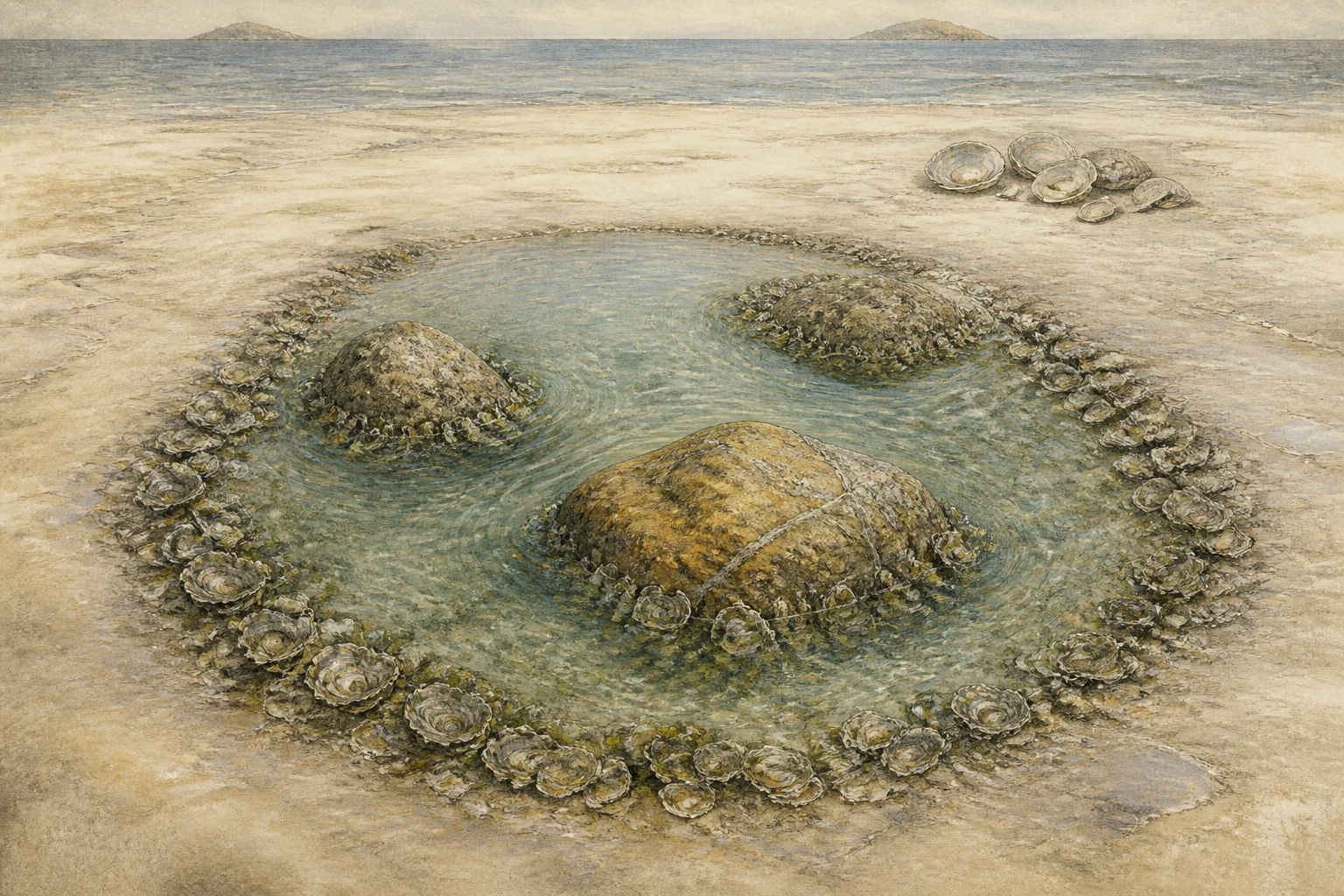
Sed ante sunt aliae: Patale, quam significavimus in ipsis faucibus Indi, triquetra figura, CCXX p. latitudine; extra ostium Indi Chryse et Argyre, fertilis metallis, ut credo: nam quod aliqui tradidere, aureum argenteumque his soluin esse, haut facile crediderim. ab his XX p. Crocala et ab ea XII Bibaga, ostreis ac conchyliis referta, dein Coralliba, VIII a supra dicta, multaeque ignobiles.
English · Bostock & Riley 1855–57
Many writers, too, place in India the city of Nysa, and the mountain of Merus, sacred to Father Bacchus; in which circumstance originated the story that he sprang from the thigh of Jupiter. They also place here the nation of the Astacani, whose country abounds in the vine, the laurel, the box-tree, and all the fruits which are produced in Greece. As to those wonderful and almost fabulous stories which are related about the fertility of the soil, and the various kinds of fruits and trees, as well as wild beasts, and birds, and other sorts of animals, they shall be mentioned each in its proper place, in a future portion of this work. I shall also very shortly have to make some further mention of the four Satrapies, it being at present my wish to hasten to a description of the island of Taprobane.
But first there are some other islands of which we must make mention. Patala, as we have already stated, lies at the mouth of the Indus: it is of a triangular figure, and is two hundred and twenty miles in breadth. Beyond the mouth of the Indus are the islands of Chryse and Argyre, abounding in metals, I believe; but as to what some persons have stated, that their soil consists of gold and silver, I am not so willing to give a ready credence to that. After passing these islands we come to Crocala, twenty miles in breadth, and then, at twelve miles’ distance from it, Bibraga, abounding in oysters and other shell-fish. At eight miles’ distance from Bibraga we find Toralliba, and many others of no note.