LIBER VI · CAPUT 24
THE PERSIAN AND THE ARABIAN GULFS
Latine · Mayhoff 1906
sed in duos dividitur sinus. is qui ab oriente est Persicus appellatur, |XXV| circuitu, ut Eratosthenes tradit; ex adverso est Arabia, cuius |XV| longitudo. rursus altero ambitur sinu Arabico nominato. oceanum qui influit Azanium appellant. Persicum introitu V??? latitudinis, alii IIII fecerunt. ab eo ad intimum sinum recto cursu |XI|.XXV propemodum constat esse et situm eius humani capitis effigie. Onesicritus et Nearchus ab Indo amne in sinum Persicum atque illinc Babylonem Euphratis paludibus scripserunt |XVII| esse.
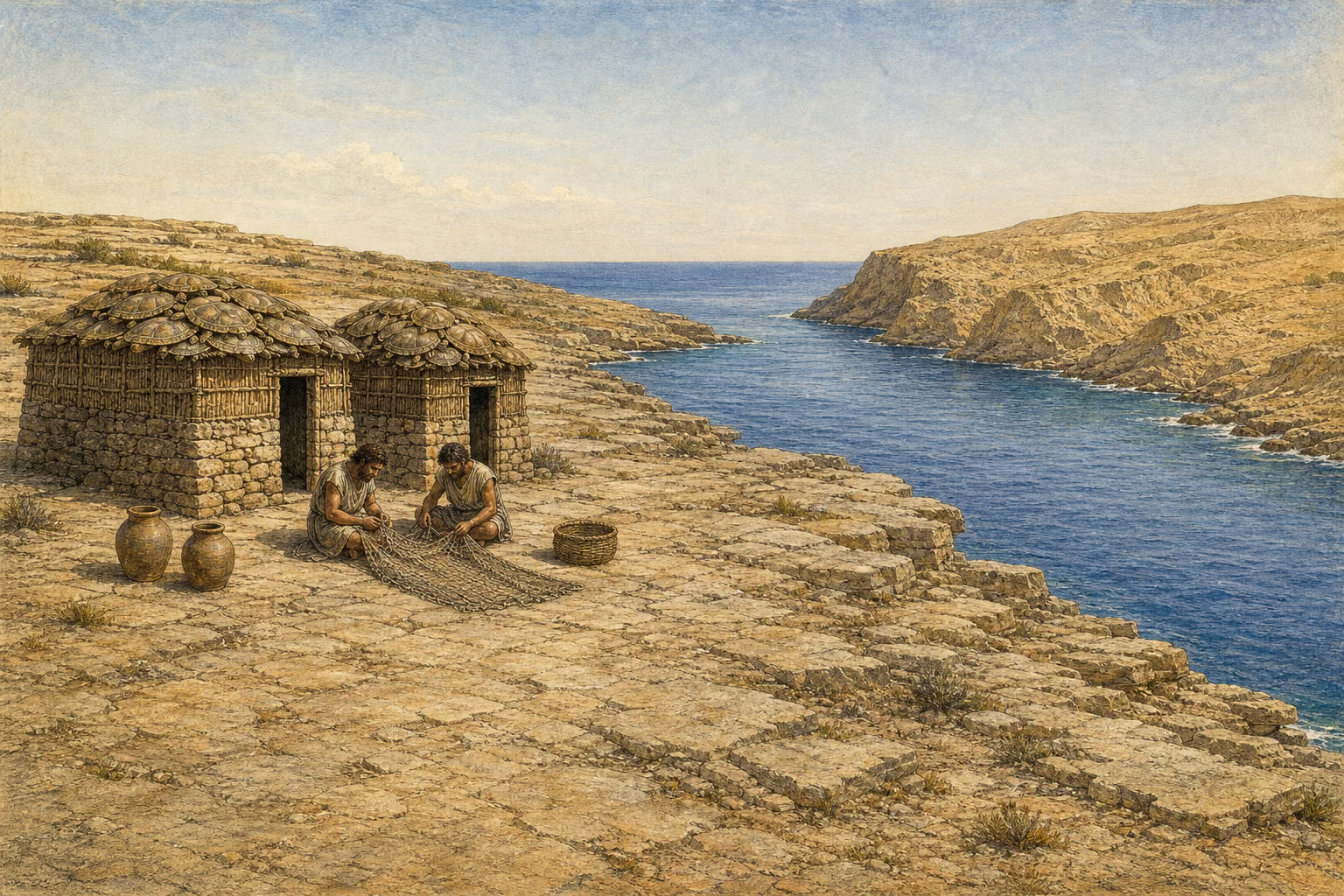
In Carmaniae angulo Chelonophagi, testudinum superficie casas tegentes, carne vescentes. a flumine Arabi promunturium ipsum inhabitant, praeter capita toto corpore hirti coriisque piscium vestiti.
English · Bostock & Riley 1855–57
Be this as it may, this body of water is divided into two gulfs. The one which lies to the east is called the Persian Gulf, and is two thousand five hundred miles in circumference, according to Eratosthenes. Opposite to it lies Arabia, the length of which is fifteen hundred miles. On the other side again, Arabia is bounded by the Arabian Gulf. The sea as it enters this gulf is called the Azanian Sea. The Persian Gulf, at the entrance, is only five miles wide; some writers make it four. From the entrance to the very bottom of the gulf, in a straight line, has been ascertained to be nearly eleven hundred and twenty-five miles: in outline it strongly resembles the human head. Onesicritus and Nearchus have stated in their works that from the river Indus to the Persian Gulf, and from thence to Babylon, situate in the marshes of the Euphrates, is a distance of seventeen hundred miles.
In the angle of Carmania are the Chelonophagi, who cover their cabins with the shells of turtles, and live upon their flesh; these people inhabit the next promontory that is seen after leaving the river Arbis; with the exception of the head, they are covered all over with long hair, and are clothed in the skins of fishes.