LIBER VI · CAPUT 25
THE PARTHIAN EMPIRE
Latine · Mayhoff 1906
ab horum tractu Indiam versus Caecandrus, deserta insula, in oceano L??? p. traditur iuxtaque eam freto interfluente Stoidis, quaestuosa margaritis. a promunturio Carmanis iunguntur Harmozaei. quidam interponunt Arbios, CCCCXXI p. toto litore. ibi portus Macedonum et arae Alexandri in promunturio. amnes Siccanas, dein Dratinus et Salsum. ab eo promunturium Themisteas; insula Aphrodisias habitatur. inde Persidis initium ad flumen Oratim, quo dividitur ab Elymaide. contra Persidem insulae Psilos, Cassandra, Aracha cum monte praealto Neptuno sacra. ipsa Persis adversus occasum sita optinet litoreDL p., etiam in luxum dives, in Parthorum iam pridem translata nomen. horum de imperio nunc in paucis.
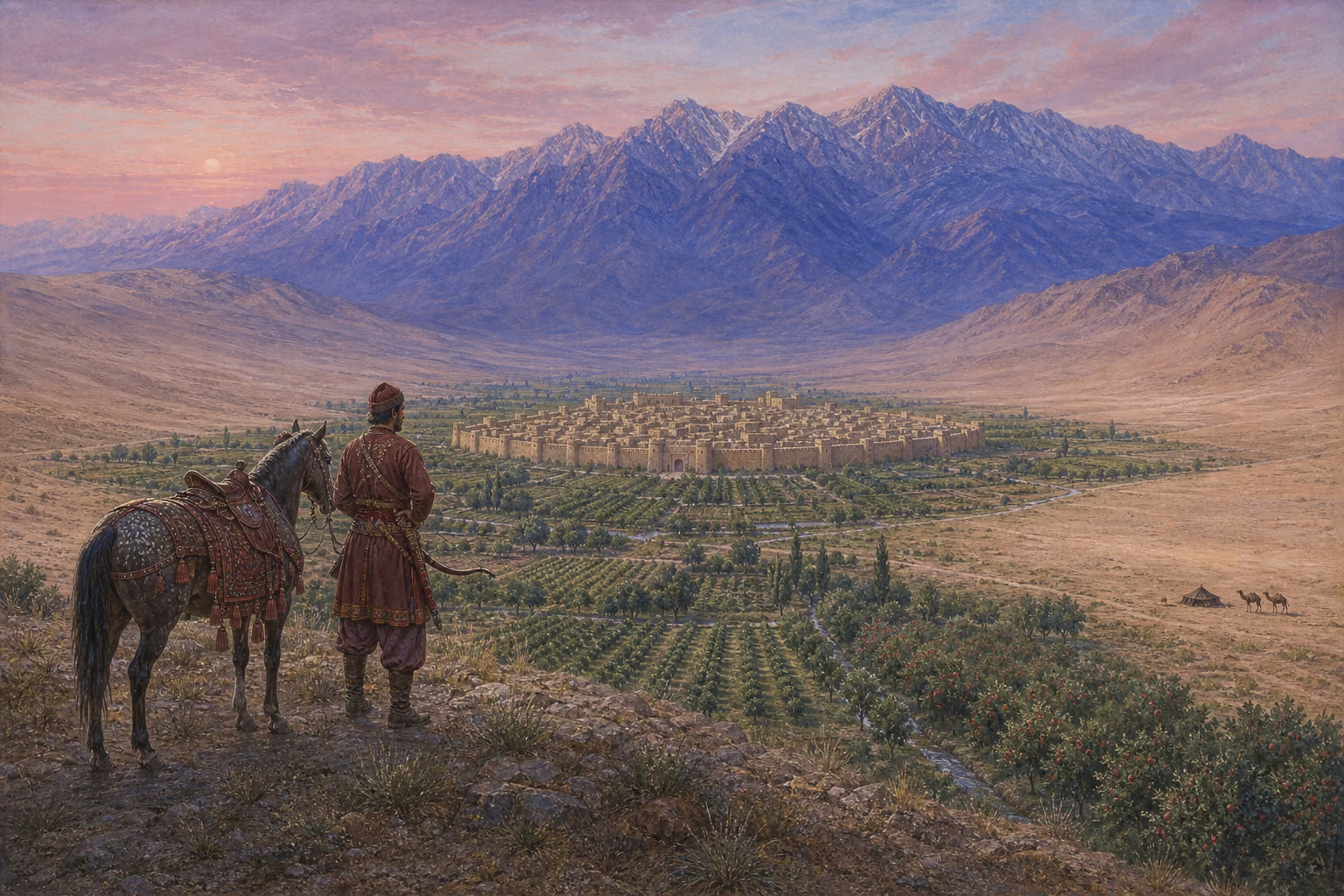
Regna Parthorum duodeviginti sunt omnia; ita enim dividunt provincias circa duo, ut diximus, maria, Rubrum a meridie, Hyrcanium a septentrione. ex his XI, quae superiora dicuntur, incipiunt a confinio Armeniae Caspiisque litoribus, pertinent ad Scythas, cumn quibus ex aequo degunt; reliqua VII regna inferiora appellantur. quod ad Parthos attinet, semper fuit Parthyaea in radicibus montium saepius dictorum, qui omnes eas gentes praetexunt.habet ab ortu Arios, a meridie Carmaniam et Arianos, ab occasu Pratitas Medos, a septentrione Hyrcanos, undique desertis cincta. ulteriores Parthi Nomades appellantur. citra deserta ab occasu urbes eorum quas diximus, Issatis et Calliope, ab oriente aestivo Pyropum, ab hiberno Maria, in medio Hecatompylos, Arsace, regio Nisiaea Parthyenes nobilis, ubi Alexandropolis a conditore.
English · Bostock & Riley 1855–57
Beyond their district, in the direction of India, is said to be the desert island of Caicandrus, fifty miles out at sea; near to which, with a strait flowing between them, is Stoidis, celebrated for its valuable pearls. After passing the promontory are the Armozei, joining up to the Carmani; some writers, however, place between them the Arbii, extending along the shore a distance of four hundred and twenty-one miles. Here is a place called Portus Macedonum, and the Altars of Alexander, situate on a promontory, besides the rivers Saganos, Daras, and Salsa. Beyond the last river we come to the promontory of Themisteas, and the island of Aphrodisias, which is peopled. Here Persis begins, at the river Oratis, which separates it from Elymais. Opposite to the coast of Persis, are the islands of Psilos, Cassandra, and Aracia, the last sacred to Neptune, and containing a mountain of great height. Persis itself, looking towards the west, has a line of coast five hundred and fifty miles in length; it is a country opulent even to luxury, but has long since changed its name for that of “Parthia.” I shall now devote a few words to the Parthian empire.
The kingdoms of Parthia are eighteen in all: such being the divisions of its provinces, which lie, as we have already stated, along the Red Sea to the south, and the Hyrcanian to the north. Of this number the eleven, called the Higher provinces, begin at the frontiers of Armenia and the shores of the Caspian, and extend to the Scythians, whose mode of life is similar in every respect. The other seven kingdoms of Parthia bear the name of the Lower provinces. As to the Parthi themselves, Parthia always lay at the foot of the mountains so often mentioned, which overhang all these nations. On the east it is bounded by the Arii, on the south by Carmania and the Ariani, on the west by the Pratitæ, a people of the Medi, and on the north by the Hyrcani: it is surrounded by deserts on every side. The more distant of the Parthi are called Nomades; on this side of them there are deserts. On the west are the cities of Issatis and Calliope, already mentioned, on the north-east Europus, on the south-east Maria; in the middle there are Hecatompylos, Arsace, and Nisiæa, a fine district of Parthiene, in which is Alexandropolis, so called from its founder.