LIBER VII · CAPUT 51
DEATH
Latine · Mayhoff 1906
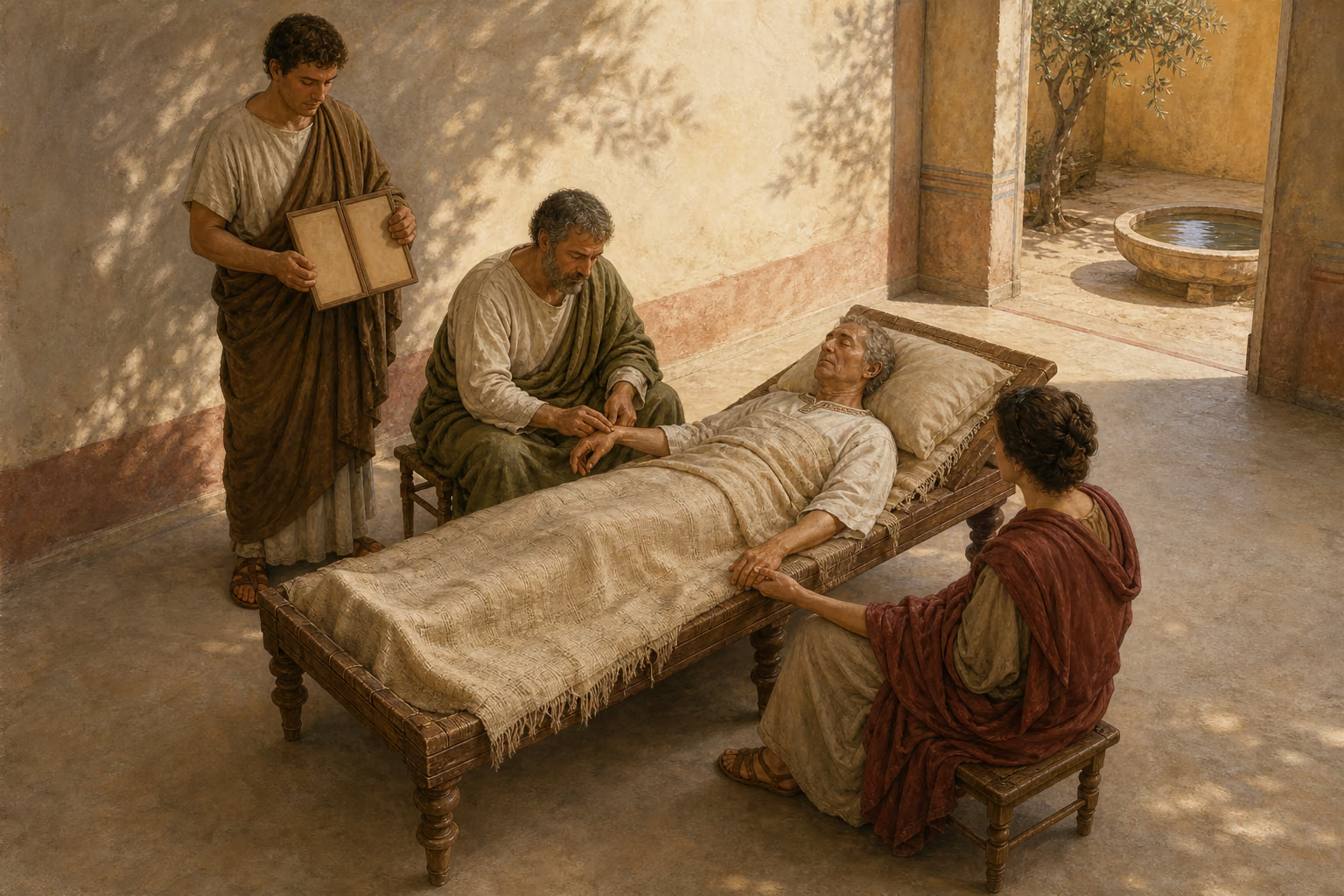
iam signa letalia in furoris morbo risum, sapientiae vero aegritudine fimbriarum curam et stragulae vestis plicaturas, a somno moventium neglectum, praefandi umoris e corpore effluvium, in oculorum quidem et narium aspectu indubitata maxime atque etiam supino adsidue cubitu, venarum inaequabili aut formicante percussu, quaeque alia Hippo crati principi medicinae observata sunt. et cum innumerabilia sint mortis signa, salutis securitatisque nulla sunt, quippe cum censorius Cato ad filium de validis quoque observationem ut ex oraculo aliquo prodiderit, senilem iuventam praematurae mortis esse signum. morborum vero tam infinita est multitude, ut Pherecydes Syrius serpentium multitudine ex corpore eius erumpente expiraverit. quibusdam perpetua febris est, sicut C. Maecenati; eidem triennio supremo nullo horae momento contigit somnus. Antipater Sidonius poeta omnibus annis uno die tantum natali corripiebatur febre et eo consumptus est satis longa senecta.
English · Bostock & Riley 1855–57
And now to speak of the premonitory signs of death. Among these are laughter, in madness; in cases of delirium, the patient carefully folding the fringe or the plaits of the bedclothes; insensibility to the attempts of those who would rouse them from sleep; and involuntary discharges from the body, which it is not necessary here to particularize; but the most unequivocal signs of all, are certain appearances of the eyes and the nose, a lying posture with the face continually upwards, an irregular and feeble motion of the pulse, and the other symptoms, which have been observed by that prince of physicians, Hippocrates. At the same time that there are innumerable signs of death, there are none of health and safety; so much so, that Cato the Censor, when speaking to his son in relation to those who appear to be in good health, declared, as though it had been the enunciation of some oracle, that precocity in youth is a sign of an early death.
The number of diseases is infinite. Pherecydes of Scyros died from vast numbers of worms issuing from his body. Some persons are distressed by a perpetual fever; such was the case with C. Mæcenas; during the last three years of his life, he could never get a single moment’s sleep. Antipater of Sidon, the poet, was attacked with fever every year, and that only on his birthday; he died of it at an advanced age.