LIBER IX · CAPUT 16
THAT AUGURIES ARE DERIVED FROM FISHES
Latine · Mayhoff 1906
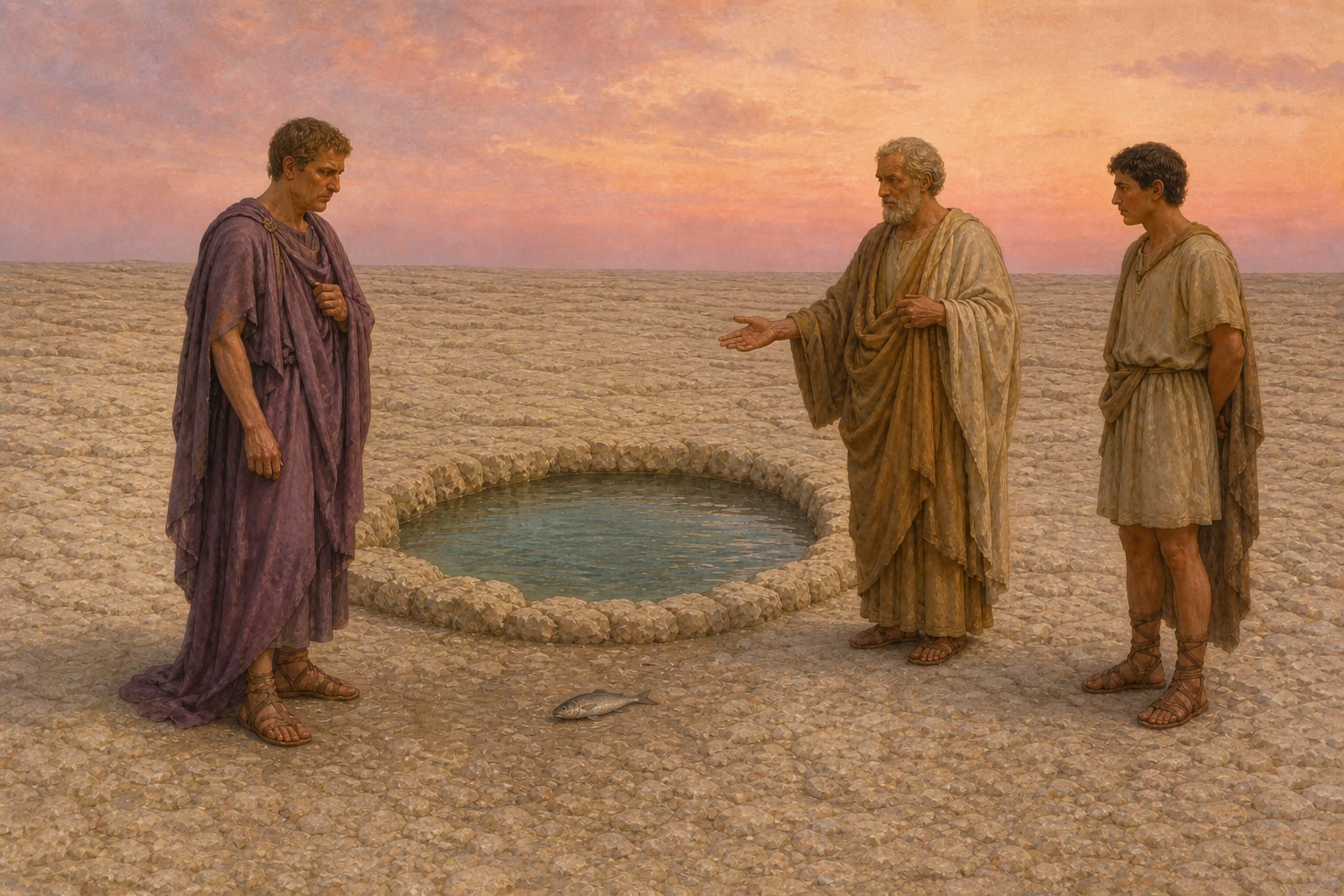
Sunt et in hac parte naturae auguria, sunt et piscibus praescita. Siculo bello ambulante in litore Augusto piscis e mari ad pedes eius exilivit, quo argumento vates respondere, Neptunum patrem adoptante tum sibi Sexto Pompeio — tanta erat navalis rei gloria —, sub pedibus Caesaris futuros qui maria tempore illo tenerent.
Piscium feminae maiores quam mares. in quodam genere omnino non sunt mares, sicut erythinis et channis; omnes enim ovis gravidae capiuntur. vagantur gregatim fere cuiusque generis squamosi. capiuntur ante solis ortum: tum maxime piscium fallitur visus. noctibus quies, set inlustribus aeque quam die cernunt. aiunt et si teratur gurges interesse capturae; itaque plures secundo tractu capi quam primo. gustu olei maxime, dein modicis imbribus gaudent alunturque. quipped et harundines, quamvis in palude prognatae, non tamen sine imbre adolescunt, et alias ubicumque pisces in eadem aqua adsidui, si non adfluat, exanimantur.
Praegelidam hiemem omnes sentiunt, sed maxime qui lapidem in capite habere existimantur, ut lupi, chromis, sciaena, phagri. cum asperae hiemes fuere, multi caeci capiuntur. itaque his mensibus iacent speluncis conditi, sicut in genere terrestrium retulimus, maxime hippurus et coracini, hieme non capti praeterquam statis diebus paucis et isdem semper, item murena et orphus, conger, percae et saxatiles omnes. terra quidem, hoc est vado maris excavate, condi per hiemes torpedinem, psettam, soleam tradunt.
Quidam rursus aestus inpatientia mediis fervoribus sexagenis diebus latent, ut glaucus, aselli, auratae. fluviatilium silurus caniculae exortu sideratur, et alias semper fulgure sopitur; hoc et in maria accidere cyprino putant. et alioqui totum mare sentit exortum eius sideris, quod maxime in Bosporo apparet. alga enim et pisces superferuntur, omniaque ab imo versa.
English · Bostock & Riley 1855–57
Auguries are also derived from this department of Nature, and fishes afford presages of coming events. While Augustus was walking on the sea-shore, during the time of the Sicilian war, a fish leapt out of the sea, and fell at his feet. The diviners, who were consulted, stated that this was a proof that those would fall beneath the feet of Cæsar who at that moment were in possession of the seas—it was just at this time that Sextus Pompeius had adopted Neptune as his father, so elated was he with his successes by sea.
The females of fishes are larger in size than the males, and in some kinds there are no males at all, as in the erythini and the channi; for all of these that are taken are found to be full of eggs. Nearly all kinds of fish that are covered with scales are gregarious. They are most easily taken before sunrise; for then more particularly their powers of seeing are defective. They sleep during the night; and when the weather is clear, are able to see just as well then as during the day. It is said, also, that it greatly tends to promote their capture to drag the bottom of the water, and that by so doing more are taken at the second haul than at the first. They are especially fond of the taste of oil, and find nutriment in gentle showers of rain. Indeed, the very reeds, even, although they are produced in swamps, will not grow to maturity without the aid of rain: in addition to this, we find that wherever fishes remain constantly in the same water, if it is not renewed they will die.
All fish have a presentiment of a rigorous winter, but more especially those which are supposed to have a stone in the head, the lupus, for instance, the chromis, the sciæna, and the phagrus. When the winter has been very severe, many fish are taken in a state of blindness. Hence it is, that during these months they lie concealed in holes, in the same manner as land animals, as we have already mentioned; and more especially the hippurus, and the coracinus, which are never taken during the winter, except only on a few stated days, which are always the same. The same with the muræna also, and the orphus, the conger, the perch, and all the rock-fish. It is said that, during the winter, the torpedo, the psetta, and the sole, conceal themselves in the earth, or rather, I should say, in excavations made by them at the bottom of the sea.
Other fishes, again, are unable to bear the heat of summer, and lie concealed during the sixty days of the hottest weather of midsummer; such, for instance, as the glaucus, the asellus, and the dorade. Among the river-fish, the silurus is affected by the rising of the Dog-star, and at other times it is always sent to sleep by thunder. The same is also believed to be the case with the sea-fish called cyprinus. In addition to this, the whole sea is sensible of the rising of this star, a thing which is more especially to be observed in the Bosporus: for there sea-weeds and fish are seen floating on the surface, all of which have been thrown up from the bottom.