LIBER IX · CAPUT 37
THE DIFFERENT KINDS OF PURPLES
Latine · Mayhoff 1906
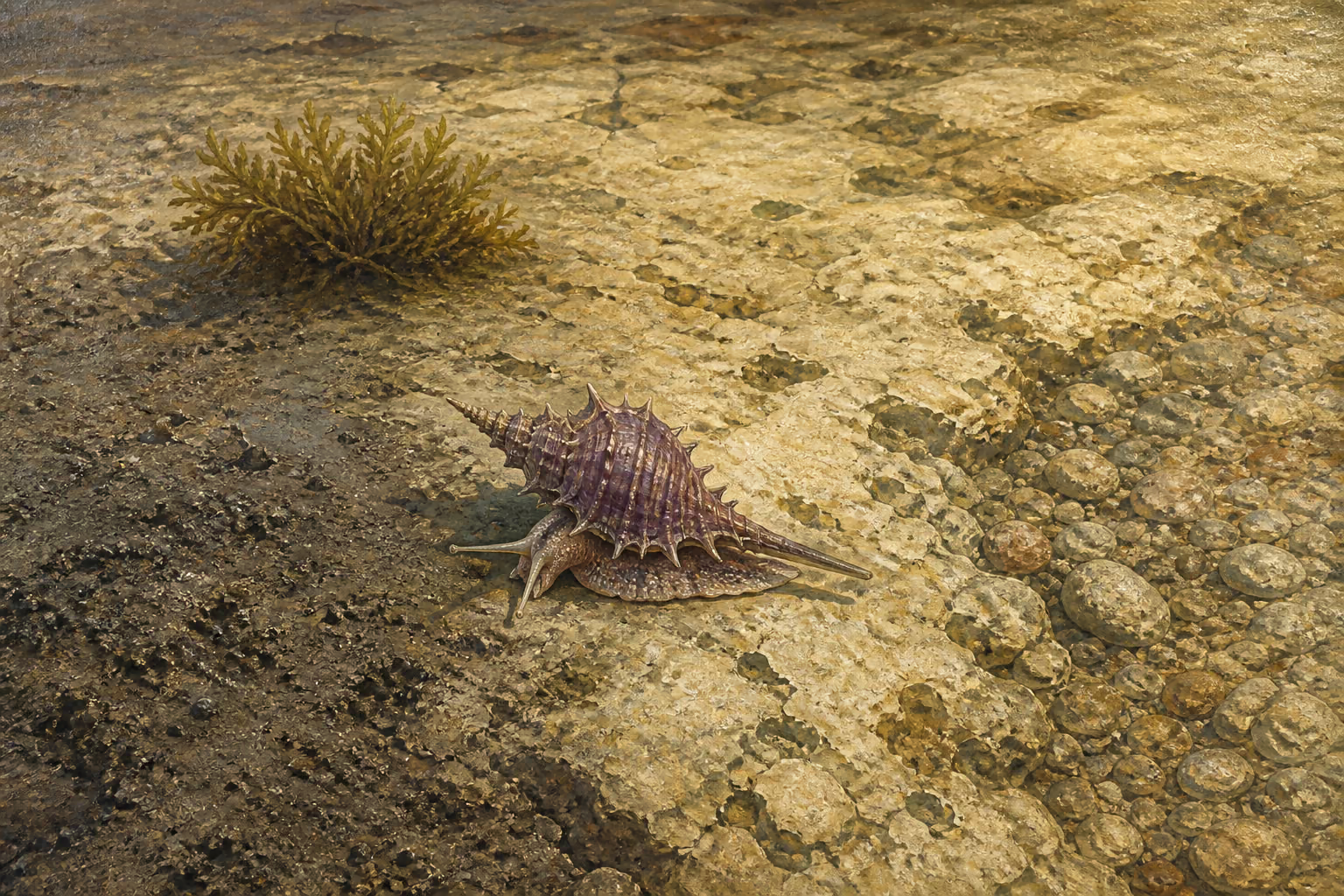
Purpurae nomine alio pelagiae vocantur. earum genera plura pabulo et solo discreta: lutense putre limo et algense nutritum alga, vilissimum utrumque. melius taeniense in taeniis maris collectum, hoc quoque tamen etiamnum levius atque dilutius. calculense appellatur a calculo in mari, mire aptum conchyliis, et longe optimum purpuris dialutense, id est vario soli genere pastum. capiuntur autem purpurae parvulis rarisque textu veluti nassis in alto iactis. inest his esca, clusiles mordacesque conchae, ceu mitulos videmus. has semineces, sed redditas mari avido hiatu revivescentes, appetunt purpurae porrectisque linguis infestant. at illae aculeo exstimulatae claudunt sese conprimuntque mordentia. ita pendentes aviditate sua purpurae tolluntur.
English · Bostock & Riley 1855–57
Purples also have another name, that of “pelagiæ” there are numerous kinds of them, which differ only in their element and place of abode. There is the mud purple, which is nurtured upon putrid mud; and the sea-weed purple, which feeds on sea-weed; both of which are held in the very lowest esteem. A better kind is the reef-purple, which is collected on the reefs or out at sea; still, however, the colour extracted from this is too light and thin. Then, again, there is the variety known as the pebble-purple, so called from the pebbles of the sea, and wonderfully well adapted for dyeing; and, better than any of them, that known by the name of “dialutensis,” because of the various natures of the soil on which it feeds. Purples are taken with a kind of osier kipe of small size, and with large meshes; these are cast into the sea, and in them cockles are put as a bait, that close the shell in an instant, and snap at an object, just as we see mussels do. Though half dead, these animals, as soon as ever they are returned to the sea, come to life again, and open their shells with avidity; upon which the purples seek them, and commence the attack, by protruding their tongues. The cockles, on the other hand, the moment they feel themselves pricked, shut their shells, and hold fast the object that has wounded them: in this way, victims to their greediness, they are drawn up to the surface hanging by the tongue.